If You Could Zoom In Far Enough, Would You Find the Secret of Life?
The Super-Microscope Fantasy
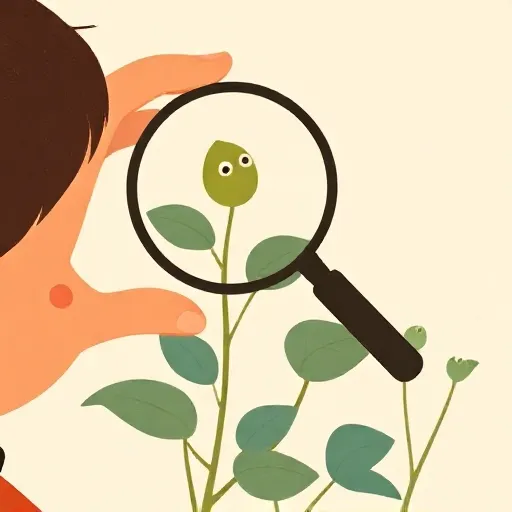
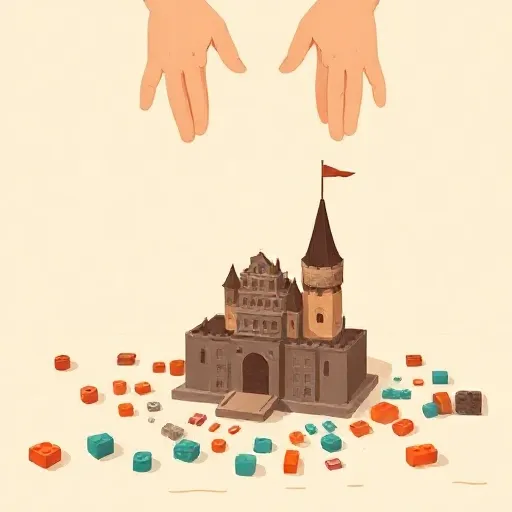
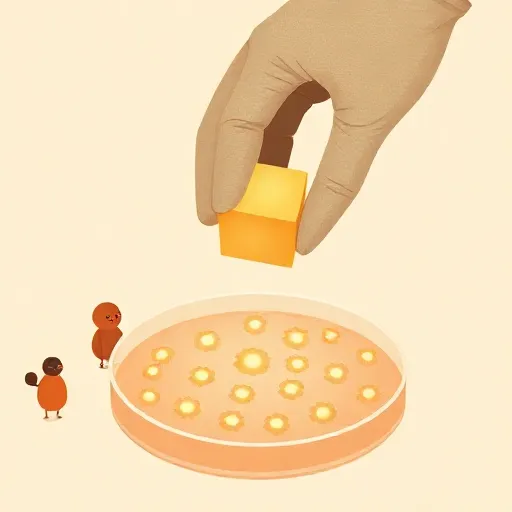
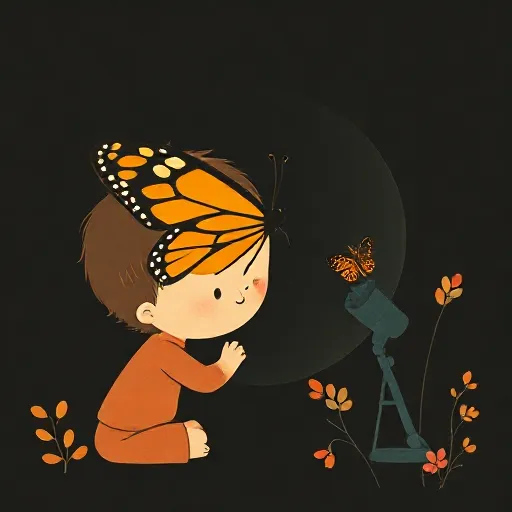
Imagine you have a super‑powerful microscope. You zoom in on a butterfly’s wing. First you see tiny scales, then cells, then proteins, then atoms. If you could map the position and motion of every single atom in that wing, would you have explained everything about the butterfly? Would you understand why it flies, how its pattern formed, or why it is alive?
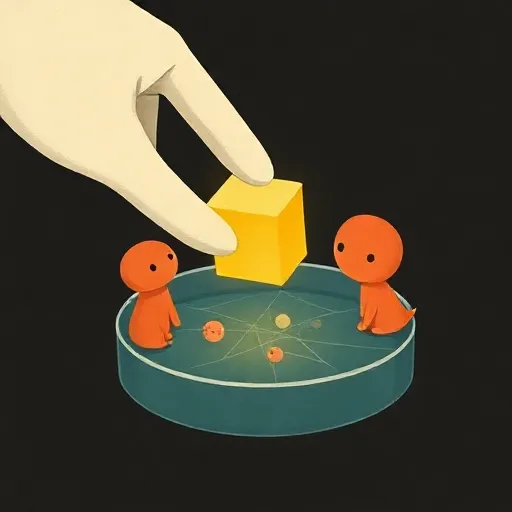
That question is at the heart of a huge debate in the philosophy of biology. The debate is about reductionism — the idea that you can understand something completely by breaking it into its smallest parts and studying those parts in isolation.
Scientists and philosophers have argued about reductionism for decades. The fight isn’t just about butterflies. It is about whether biology is just a kind of super‑complicated chemistry, or whether living things need to be explained in a different way.
Three Kinds of Shrinking

Philosophers separate reductionism into three different ideas. You can be a reductionist in one way but not in another.
Ontological reduction says a living thing is nothing but molecules and their interactions. The butterfly is made of physical stuff, period. There is no mysterious life‑force. Most biologists and philosophers accept this today. But that doesn’t tell you what you should study or how you should explain things.
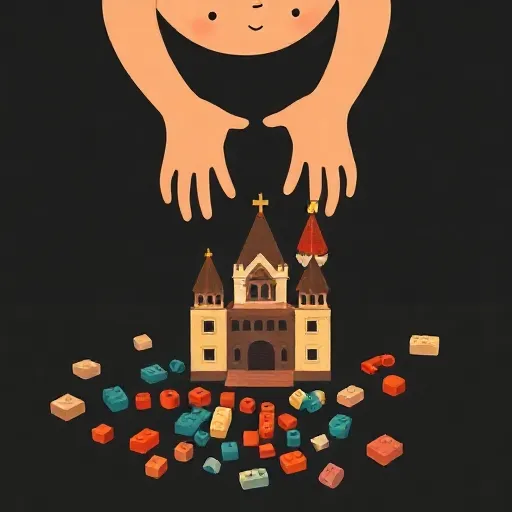
Methodological reduction says the best way to investigate life is to go as small as possible. If you want to understand an organism, dissect it. Study its cells, its genes, its chemical reactions. This strategy has been wildly successful — it gave us modern medicine and genetics. But some researchers warn that you can miss important features if you only study a system by grinding it into pieces.
The real fireworks happen around epistemic reduction. This is the claim that all knowledge about higher‑level biology (like the pattern of a butterfly’s wing or the rules of heredity) can be derived from knowledge about molecules. In other words, if you know all the molecular facts, you could — in theory — read off everything a biologist ever discovered about whole organisms.
The classic test case for epistemic reduction comes from genetics.
The Dream of a Ladder of Knowledge

In the 1960s, the philosopher Ernest Nagel (1901–1985) proposed a model for epistemic reduction that felt like building a ladder. If you have a theory about a higher level — say, the rules of classical genetics that Gregor Mendel discovered — you might be able to deduce those rules from a lower‑level theory (biochemistry), plus some bridge principles. Bridge principles are statements that connect the two languages, like an instruction that says “the classical gene for tallness corresponds to this stretch of DNA.”
Nagel’s hope was that sciences could form a neat hierarchy: sociology rests on biology, biology on chemistry, chemistry on physics. You just need the right bridge principles.
A biologist‑philosopher named Kenneth Schaffner (1931–2022) applied this ladder idea directly to biology. He argued that as molecular biology advanced, classical genetics could be reduced to biochemistry. For example, the classical idea of a dominant trait (like purple flowers in pea plants being dominant over white flowers) could be rewritten in molecular terms — which piece of DNA corresponds to which protein. Schaffner believed that even if the reduction hadn’t been finished, it was possible in principle.
The dream was elegant, but cracks appeared almost immediately.
Why the Ladder Starts to Wobble

Two stubborn problems kept tripping up the ladder. Both come from how messy real biology is.
The first is context‑dependence. The same gene can cause totally different effects depending on the environment inside the organism. Insert the same DNA sequence into two different cells, and you might get two different traits. A molecular part doesn’t have a fixed meaning — it depends on its surroundings. If you want to deduce a higher‑level outcome, you can’t just list the parts; you have to specify the entire context, which is often mind‑bogglingly huge. Theory reduction asks for a complete molecular description of the environment. Critics said this retreats to an “in principle” fantasy that never arrives in the lab.
The second headache is multiple realization. The same higher‑level trait can be built by many different molecular recipes. A wing is a wing — a flat surface that generates lift — but bird wings, bat wings, and insect wings are constructed from very different genes and developmental paths. If one trait can be realized by hundreds of different molecular combinations, then the bridge principle connecting the higher‑level concept to the lower one becomes a messy “this or this or that…” list. It looks less like an elegant law and more like a jumbled shopping receipt. Philip Kitcher (born 1947) and others argued that such disjunctive lists fail to capture the natural kinds that science cares about. The classification that matters for explaining flight sits at the level of the wing, not at the level of 200 different gene sequences.
Taking Apart the Clock: Mechanisms
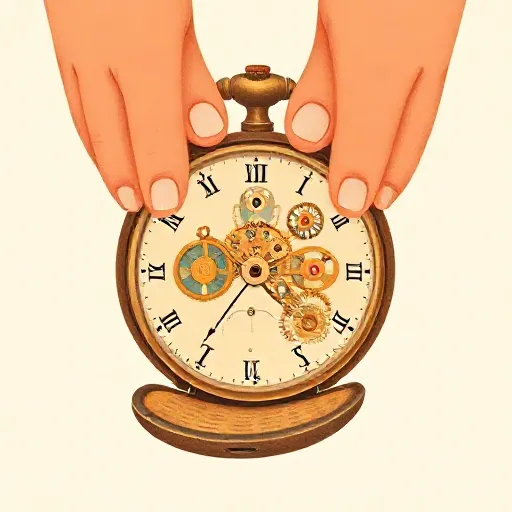
When the ladder of theory reduction became too rickety, philosophers looked at what biologists actually do. They noticed that experimental biologists rarely talk about deducing whole theories. Instead, they talk about mechanisms.
A mechanism is a system of interacting parts that produces a regular outcome — like the interlocking gears, springs, and levers inside a clock. You explain the clock’s behavior by taking it apart, seeing how each gear influences the next, and then putting them back together in your mind. In biology, you decompose a process (like cell division) into its components (proteins, membranes, chemical signals) and show how their activities produce a result.
This explanatory reduction is different from theory reduction. You don’t need to derive an entire theory of heredity from the laws of chemistry. You can explain one specific phenomenon — how a particular enzyme helps copy DNA, or how a nerve cell fires — without claiming everything else can be built from scratch. You also don’t pretend the context doesn’t matter; you include whatever surroundings turn out to be causally relevant.
The mechanism picture freed scientists from the all‑or‑nothing demand of the ladder. It also made room for the fact that biological systems are often best understood by zigzagging between levels — following a signal from an organ down to a molecule and then back up.
Why Biologists Stay at Different Levels
So why hasn’t biology collapsed into biochemistry? Why are there still ecologists watching whole forests, neurobiologists studying whole circuits of neurons, and developmental biologists following the shape of an entire embryo?
One reason is that many biological explanations are more stable at higher levels. A chick’s developing limb bud can self‑regulate if you remove some cells; the shape of the limb stays the same even though the molecular details change. The robust pattern lives at the level of the tissue, not the level of any single gene. Often the most useful explanation uses the most stable level of organization, not the smallest one.
Another reason is pluralism: different scientific questions require different lenses. If your question is “Why does this butterfly have eyespots on its wings?”, you gain real insight by studying wing‑pattern genes. But you also need to know about bird predators, visual perception, and evolutionary history. No amount of molecular detail answers those larger questions; you have to hop up the ladder.
Understanding this has changed how we do science. Cancer researchers, for instance, need to know the mutated molecules driving a tumor, but they also need to understand how the tumor interacts with the immune system — a whole‑body conversation. Farmer’s decisions about pesticide use hang on both the chemistry of a bug’s nervous system and the ecology of a field.
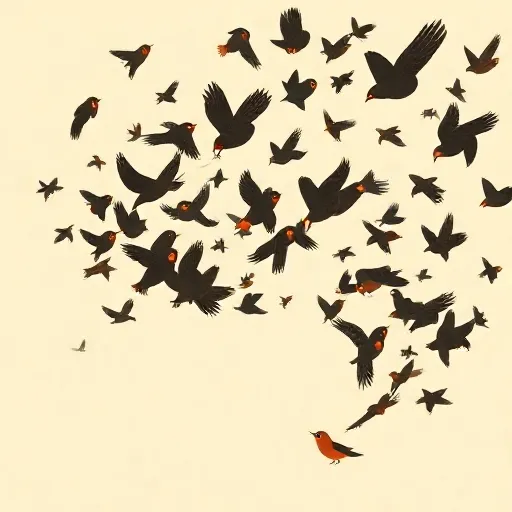
When you see a flock of starlings swirling at dusk, you can choose to look at the wing muscles of a single bird, or at the pattern of the whole flock. Neither view alone tells the full story. That’s not a failure of science. It’s a sign that living things are organized in layers — and we become smarter when we learn to move between them.
Think about it
- If you had a detailed map of every atom inside a kitten, would that map tell you why the kitten pounces — or is something missing?
- A video game runs on a chip that follows strict physics, but the rules of the game (scoring points, unlocking levels) aren’t physics. Is the game “reduced” to its hardware, or does it live on its own level?
- Should we study a forest by looking only at individual trees, or by looking at the whole ecosystem too — and what might get lost if we pick only one?