When Good Reasons Aren’t Good Enough: Defeasible Thinking
A Soaked Sidewalk and a Change of Mind

You step outside and notice the sidewalk is glistening wet. Immediately you think, “It must have rained.” It’s a perfectly good guess. But then you turn the corner and spot the garden sprinkler spraying water everywhere. Now you’re no longer sure about the rain. You changed your mind — not because your first thought was silly, but because you got a new piece of information. Philosophers call this kind of thinking defeasible reasoning. You had a reason to believe something, but that reason could be knocked down (or “defeated”) by a better one.
Most of the thinking you do every day is defeasible. You figure out what time to leave for school based on ordinary traffic, but if your mom says there’s an accident ahead, you adjust your estimate. You assume your friend will meet you at the usual spot — unless she texts you otherwise. Some reasoning, however, is not defeasible at all. For example, “All squares have four sides.” That truth never changes, no matter what else you learn. Logical proofs like that are deductive reasoning, not defeasible.
The big question is: how do we know when we have a good enough reason, and when should we change our minds? For more than two thousand years, thinkers have been trying to figure that out.
Aristotle’s Most-of-the-Time Rules

The ancient Greek philosopher Aristotle (384–322 BCE) was one of the first to notice the difference between airtight proofs and everyday common sense. In science, he wanted laws that were absolutely true — for instance, “All mammals breathe air.” But when it came to practical advice, such as “If you drop a glass, it will break,” he knew that wasn’t always the case. A glass might land on a pillow. Aristotle said such rules hold only “for the most part.” He called the kind of reasoning that uses them dialectical reasoning, and he filled a whole book, the Topics, with examples of it.
For centuries after Aristotle, most logicians focused on deductive logic — the kind that never bends. It wasn’t until the mid‑1900s that philosophers returned to the bendy kind, driven by new questions about how our senses connect us to the world.
The Philosopher Who Saw Red

Imagine you’re looking at an apple and it seems bright red. Your eyes give you a powerful reason to believe the apple really is red. The American philosopher Roderick Chisholm (1916–1999) argued that such sensory experiences create prima facie reasons. “Prima facie” (say it pree‑ma fay‑she) is Latin for “at first sight.” A prima facie reason is a reason that’s good enough to trust — unless something overrides it.
For example, suppose you later learn that the room is bathed in red light. Now your reason for thinking the apple is red has been defeated. Chisholm’s student, John Pollock (1940–2009), dug deeper and sorted defeaters into two main kinds.
- A rebutting defeater gives you a reason to believe the opposite of your original conclusion. If a friend tells you the apple is actually green, you now have a reason to think it isn’t red.
- An undercutting defeater doesn’t give you a reason to believe the opposite. Instead, it makes you doubt that your original reason was a reliable guide in the first place. The red light is an undercutter: you still don’t know the apple’s real color, but you can’t trust your eyes right now.
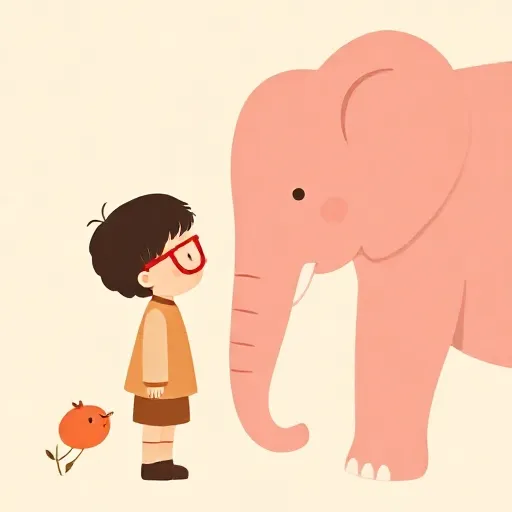
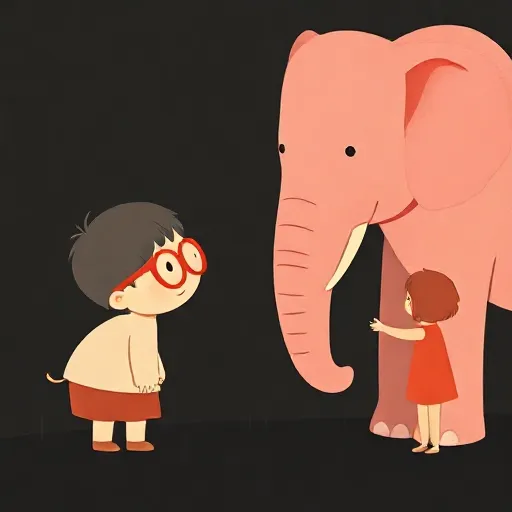
Here’s a strange example Pollock himself used. You see an elephant that looks pink to you. Ordinarily, that would be a prima facie reason to believe the elephant is pink. But then a zookeeper tells you that your color vision becomes unreliable around pink elephants. That fact undercuts your reason. You don’t have proof that the elephant isn’t pink — you just can’t count on your eyes in this case.
Pollock’s big idea: a belief is warranted (truly justified) only if it’s supported by an argument that survives all attacks — with no undefeated undercutters or rebuttals left standing.
The Gun That Wouldn’t Cooperate — Computers Get Confused

In the 1960s, computer scientists dreamed of building robot brains that could plan everyday actions. They quickly hit a wall. Suppose you tell a computer, “The gun is loaded and the person is alive. If you wait one minute, nothing obvious changes. Then, if you pull the trigger, the bullet will fire.” What should the computer conclude happens next?
The natural human answer: after waiting, the person is still alive and the gun is still loaded. After shooting, the person is dead. But early computer reasoning systems couldn’t reliably figure that out. This puzzle became known as the Yale Shooting Problem, after the researchers who described it. The trouble was that the computer used a default rule: “Normally, things stay the same.” That gave it three possible stories: either the person stayed alive and the gun stayed loaded (good), or the person magically died while waiting, or the gun mysteriously unloaded itself. Because the computer had no way to tell which changes made sense, it got stuck.
Philosophers and AI researchers realized the missing ingredient was causal structure. We know that a loaded gun causes death when fired, and waiting does not cause a gun to unload. That causal knowledge guides which facts we assume stay the same. So a good defeasible reasoner needs not just default rules but a picture of how things in the world affect each other.
This kind of logic, where adding new information can take away a conclusion, is called nonmonotonic logic. In classical deductive logic, adding a new fact never destroys a previous conclusion. But in nonmonotonic logic, learning that the sprinkler was on makes you retract the conclusion that it rained. That’s exactly the flexibility that makes defeasible reasoning so powerful — and so tricky.
Why Your Brain Loves an Escape Hatch

Defeasible reasoning isn’t just for philosophers and computers — it’s what you use when you’re not sure and must make a decision. Doctors use it when they diagnose an illness from a handful of symptoms, staying ready to reconsider if test results surprise them. Scientists use it because even the best laws of nature (like “water boils at 100°C”) have hidden exceptions — if you’re high up a mountain, water boils at a lower temperature. Judges use it in court: a signed contract is usually binding, but if someone proves it was signed under threat, the agreement is void.
The power of defeasible thinking is that it lets you act on good but incomplete information. It gives your beliefs an escape hatch. You don’t have to be 100 % certain to get through the day. At the same time, you stay ready to update your picture of the world when fresh evidence shows up.
So the next time you see a wet sidewalk and think “rain,” then spot the sprinkler and think “oh, maybe not,” give yourself a little credit. You’re not being wishy‑washy. You’re doing exactly what careful thinkers have always done: holding your conclusions lightly, and letting reasons compete.
Think about it
- If a scientist could predict exactly which way you would change your mind in the next week, would that mean your reasoning wasn’t free? Why or why not?
- Can you think of a time when you were absolutely certain about something, and then discovered a fact that made you reverse your decision? What made the new fact so powerful?
- Is it ever okay to hold onto a belief even when you can’t be sure it won’t be defeated someday, like a scientific law that might have exceptions? Why or why not?