Do Mountains on Earth Prove There Are Mountains on the Moon?
A Telescope, a Shadow, and a Bold Guess
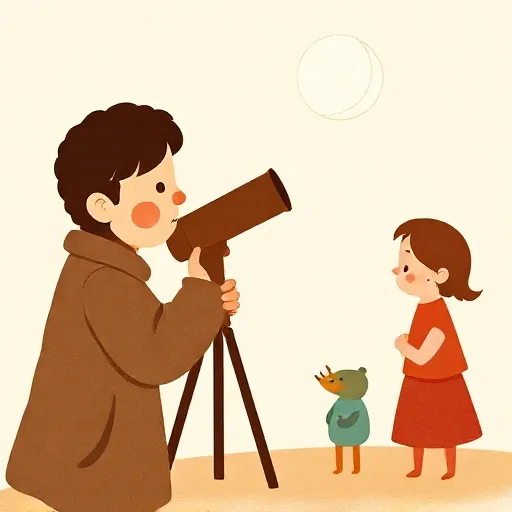
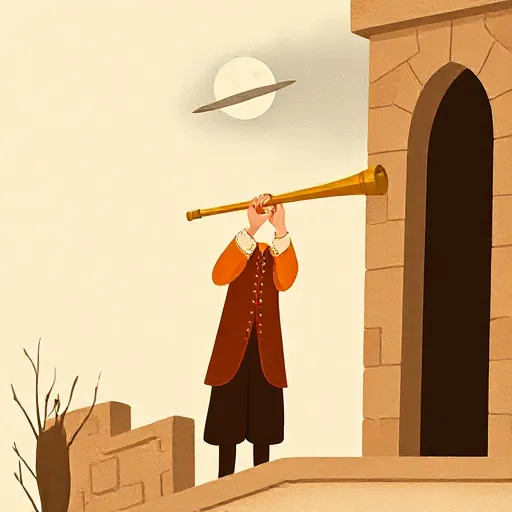
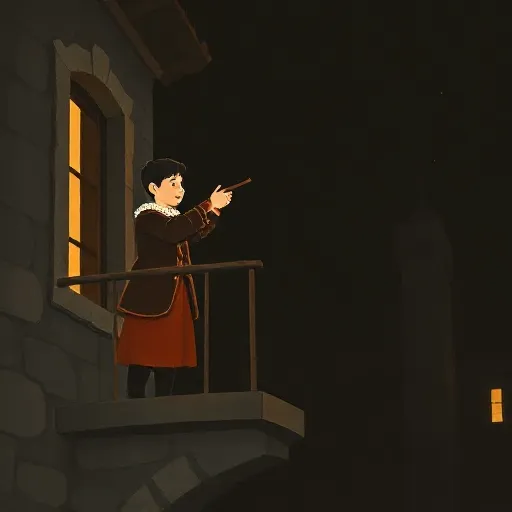
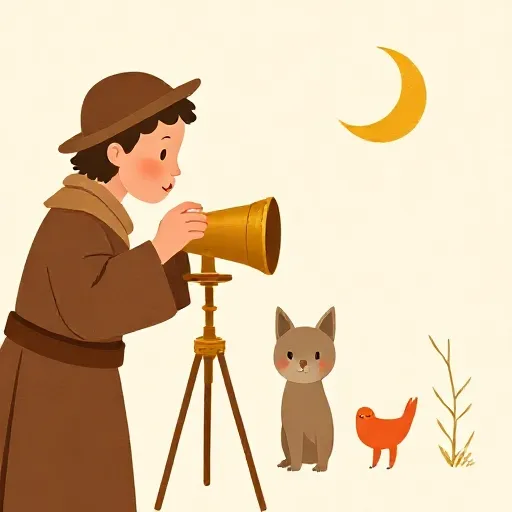
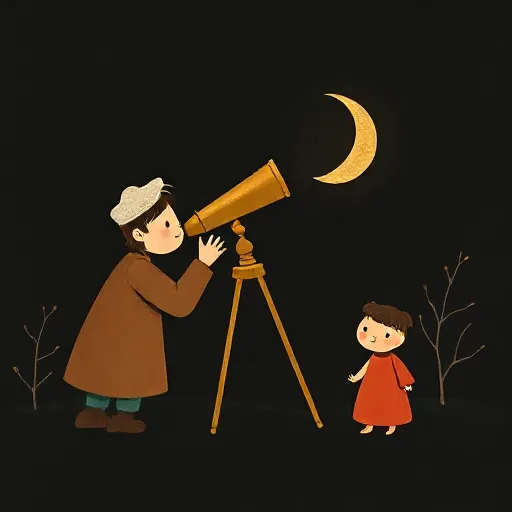
In 1610, the Italian scientist Galileo Galilei pointed a new instrument at the night sky — a telescope. When he looked at the moon, he noticed something odd: tiny points of light just inside the dark part, right before the advancing sunlight. On Earth, he had seen exactly the same thing when the rising sun struck the peaks of mountains while valleys stayed in shadow. He reasoned that if Earth’s mountains produce that pattern, then perhaps the moon has mountains too. This was an analogical argument — a kind of guess based on similarity.
When you notice that two things are alike in some ways you already know, you might think they are also alike in another way you don’t yet know. The thing you know well is the source domain; the thing you’re investigating is the target domain. In Galileo’s case, the source was the Earth with its mountains and shadows, and the target was the moon. The known similarities — that light and shadow behave in certain ways — are the positive analogy. The hidden feature he hoped to find (actual lunar mountains) is the hypothetical analogy. An analogical argument doesn’t prove the conclusion; it just makes it plausible, meaning it’s reasonable enough to take seriously. But not every analogy is a good one. How can we sort the trustworthy guesses from the wild leaps?
Why Some Analogies Work and Others Flop
Philosophers have long tried to list commonsense rules for evaluating analogies. You might think: the more similarities, the stronger the analogy. Or: if the similarities involve causes and effects, the guess is more reliable. These ideas go back to Aristotle (384–322 BCE). He pointed out that analogies gain power when they rest on an underlying cause. For example, ancient thinkers noticed that the sea is salty, just like sweat. Aristotle explained this by a common principle: heating leaves behind an earthy, salty residue. The causal link made the comparison far more convincing than simply listing salty things.
The 20th‑century philosopher Mary Hesse sharpened such ideas into three requirements for a good analogy in science. First, there must be material analogy — observable, concrete similarities. Second, a causal condition: the feature you want to transfer from source to target must be causally connected to the known similarities. Third, no essential difference: the source domain’s key causal features must not be missing in the target. Galileo’s moon argument satisfied all three: the play of light and shadow on mountains is a visible, causal process, and nothing suggested the moon lacked the physics of light.
But even Hesse’s rules can be too strict. In 1749, Benjamin Franklin noticed that lightning and laboratory electricity shared a dozen properties — giving light, making a crack, melting metals, and more. He had no causal theory linking all of them, yet his analogy was strong enough to justify his famous kite experiment. Sometimes a solid pattern of correlations, without a known cause, can make an analogy plausible.
An even bigger problem is that not all similarities matter. The philosopher Peter Achinstein pointed out that the relation “has the same color as” is symmetric and transitive, just like the relation “is congruent with” for line segments. It would be absurd to guess that congruent lines are often found in groups, simply because swans of the same color are. Formal similarity alone, without relevance, adds nothing. So counting similarities is never enough; you always have to ask why they might be connected.
The Search for a Magic Rule of Analogy

Is there a universal rule that says when an analogy is valid? Many thinkers have tried to turn analogical reasoning into a form of deduction. The idea is simple: if you secretly know a determination rule — for instance, that a used car’s value is completely determined by its year, make, mileage, and accident history — then two cars that match on all those points must have the same value. The analogy becomes a deductive argument in disguise. The trouble is that in real life we almost never possess such a complete rule. Galileo had no rule that “any rocky body will have mountains if light behaves thus.” Animal researchers test new medicines without knowing all the factors that determine a drug’s effects. So the deductive rescue doesn’t get us far.
Others, like John Stuart Mill (1806–1873), treated analogies as a kind of sampling. If two things share 9 out of 10 known properties, then — Mill thought — there’s a high chance they share any further property. But what counts as a property? The answer changes completely depending on how you slice the world. Worse, the list of known properties is never a random sample; the person making the argument picks similarities that suit their conclusion. For these reasons, the sampling idea crumbles.
Most philosophers now agree that there is no single logical formula for good analogies. According to John Norton, each analogy is powered by a local fact — a specific uniformity that links the two domains. To judge Galileo’s argument, you examine the physics of light, not a general equation. This means evaluating analogies is always a case-by-case job, drawing on background knowledge, not on a one-size-fits-all rulebook.
Even a Computer Can Get Fooled: Structure-Mapping
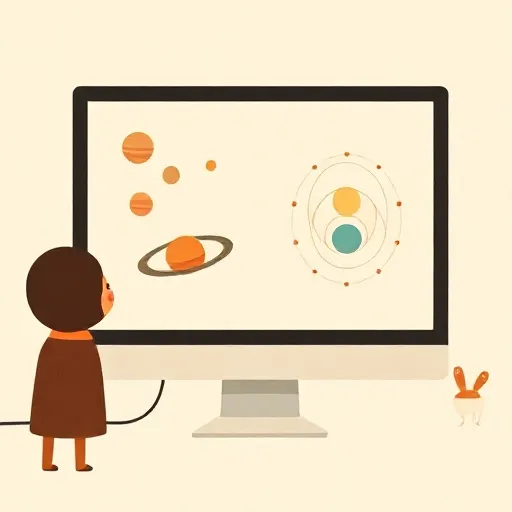
Modern researchers have built computer programs that try to find the best analogies by looking at structure. The most famous idea, developed by Dedre Gentner, is the structure-mapping theory. It says analogies are about relations, not just isolated properties. The more that higher‑order relations correspond — things like “orbits” or “attracts” — the stronger the analogy. This is the systematicity principle. The classic example is the analogy between the solar system and the atom: planets orbit the sun, electrons orbit the nucleus; a massive central body exerts force on smaller circling ones. The pattern of relations is rich, so the analogy feels powerful.
Yet systematicity can be a misleading guide. Consider a biological puzzle: microbes have been found living in frozen Antarctic lakes. Mars today is freezing, so the analogy suggests life could exist on present‑day Mars. Ancient Mars, however, was warmer — so the present‑day analogy is actually more systematic (it has more matching features like temperature). But freezing is a counteracting cause for life, not a supporting one. The more systematic match may be the weaker argument, because it ignores causal relevance. Structure alone does not guarantee a good guess.
This is why no computer program, no matter how clever, can fully replace human judgment. It must be tuned with real‑world knowledge about which similarities matter and why — exactly the kind of thinking you do when you stop and ask, “Is this really the part that counts?”
Why Your Own Analogies Matter

You used analogy today, probably without noticing. When you decided which video game to try because it looked like one you loved, you were building an analogical argument. When you guessed how a substitute teacher would behave based on memories of a similar‑seeming teacher, you relied on analogy. From the supermarket (this brand was good last time, so that one might be too) to the courtroom (this legal case resembles an earlier one, so the same principle should apply), analogies are everywhere.
Understanding how analogies can go wrong gives you a superpower. Instead of just counting similarities, you can ask: What’s the real link here? Could a hidden difference ruin the comparison? That’s what separates Galileo’s careful moon observation from a wild guess. His analogy worked because he tied the pattern of light to a robust causal process — a process that could be tested with further observation.
Philosophers still debate exactly how analogical reasoning provides justification, but they agree on this: being awake to the strengths and traps of analogies helps you think more clearly, in science and in daily life. The next time you hear “it’s just like…,” pause and ask why the resemblance matters — and whether the difference you don’t yet see might change everything.
Think about it
- Your friend says, “I liked that mystery novel, so you’ll like this historical novel too — both have surprising endings.” What would you need to know to decide if the analogy is strong?
- A lawyer argues that a case about a stolen bicycle should be decided like a past case about a stolen car, because both involve vehicles. In what way could “vehicle” be a misleading similarity?
- Why might an analogy that worked perfectly in the past fail badly in a new situation, even if the two situations look almost identical?