Why Won't Anyone Pay for the Lighthouse?
The Lighthouse Nobody Wants to Pay For
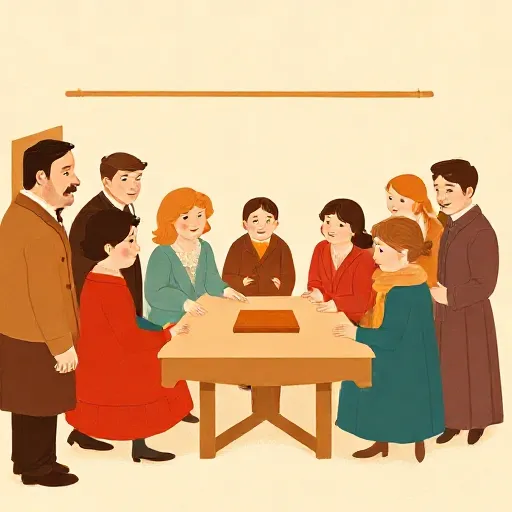
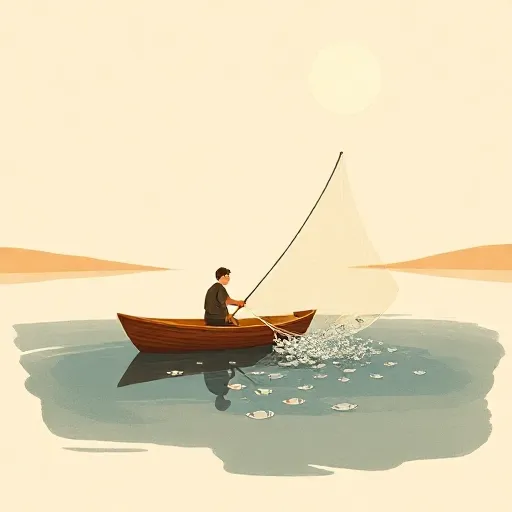
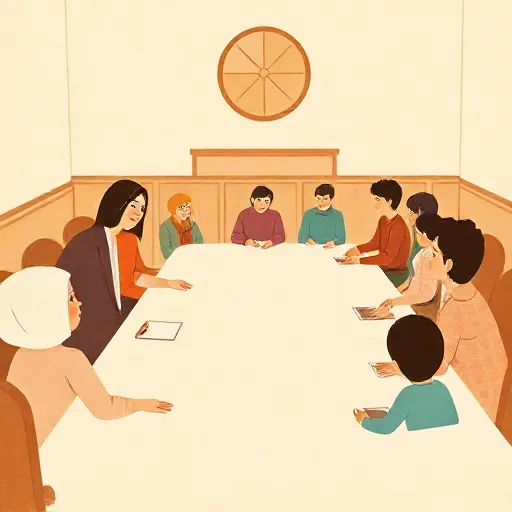
It’s 1850 in a small coastal village. The rocks outside the harbour have wrecked three ships this year alone. At a packed town meeting, everyone agrees a lighthouse would make the sea far safer—but when the mayor asks who will chip in to build it, the room goes quiet. Each person hopes someone else will cover the cost, because once the light is shining, no one can be stopped from using it. The meeting ends with no money raised, and the lighthouse stays only a model on the table.
This real-world puzzle is what economists call the public goods problem. The idea was given its modern shape by Paul Samuelson (1915–2009), but thinkers from Adam Smith (1723–1790) to John Stuart Mill (1806–1873) had already noticed it. The puzzle isn’t about whether a good is useful; it’s about whether it will ever get made at all if everyone can enjoy it without paying.
What Makes a Good “Public”? Rivalry and Exclusion

To see why some goods cause trouble, we need two simple filters. A good is rivalrous if one person’s use leaves less for others. Eat a grain of rice, and nobody else can eat that same grain. Listen to a symphony, and your enjoyment doesn’t reduce anyone else’s—music is non-rivalrous.
A good is excludable if you can fence it off or keep people from using it. Land can be fenced; a streetlight cannot be fenced easily. If Bob pays to install a streetlight outside his house, he can’t stop his neighbour Sally from walking safely under its glow.
Samuelson defined a collective consumption good—what we now call a public good—as something that is both non-rivalrous and non-excludable. National defence is a classic example. Sally being protected doesn’t leave Bob less protected, and there’s no way to exclude a single citizen from that protection. Clean air, fire protection in a neighbourhood, and scientific ideas are often public goods too. Meanwhile, a sandwich is a private good: rivalrous and excludable.
Richard Musgrave (1910–2007) later sharpened the idea of excludability, and economists soon filled in the corners. Common pool resources, like fish in the ocean, are rivalrous (each fish caught is one less) but hard to exclude people from catching them. Club goods, like a film in a cinema, are non-rivalrous up to a point but excludable—you need a ticket. The boundaries, however, are far from solid.
Blurry Lines: When Goods Change Their Clothes
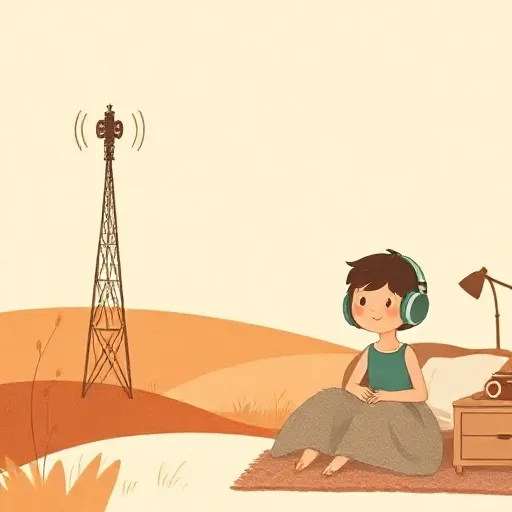
Whether a good counts as “public” often depends on technology, laws, and even fashion. For decades, radio broadcasts were a public good because anyone with a receiver could tune in without paying or reducing the signal for others. Today digital encryption can turn the same kind of content into an excludable club good.
Property rights matter just as much. A plot of land is a private good not only because you can build a fence, but because the legal system backs your right to keep others out. Those rights can shift. In one society, planting tall hedges might legally block a neighbour’s ocean view. In another, such a view might be protected as something all neighbours share. Even something as odd as wearing white socks with sandals shows how norms shape excludability: in our society, you simply have to endure the sight because the sock‑wearer has the right to dress that way. In an imagined stricter society, the bothered neighbours could enforce a ban—turning “pleasant public footwear views” into an excludable good.
Technology, laws, and tastes weave together, so the label “public good” is often a matter of context rather than a permanent sticker on the thing itself.
The Free‑Rider Trap: A Prisoner’s Dilemma
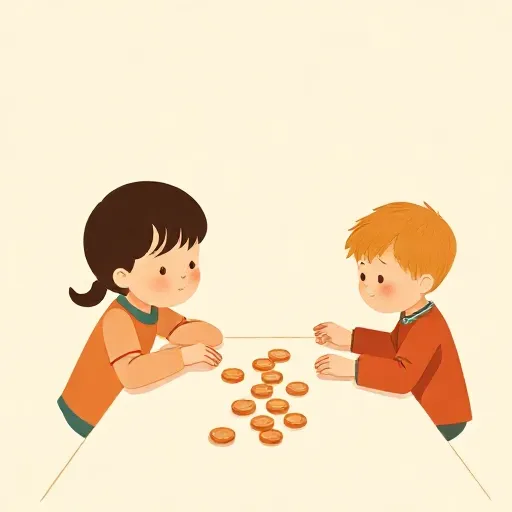
Here’s where the lighthouse sting really bites. Suppose Bob and Sally both value the lighthouse at 100 coins each. It costs 150 coins to build. If they both contribute 75 coins, the light goes up and each gets a benefit of 25 (100 minus 75). If Bob pays the full 150 while Sally pays nothing, Bob ends up with −50 and Sally gets +100—she free rides on Bob’s effort. The payoff matrix looks exactly like a Prisoner’s Dilemma: each person’s favourite outcome is to let the other do the work, but if both follow that logic, nobody contributes and the lighthouse is never built—even though both would be better off contributing.
Economists call this situation the free‑rider problem. Because each person can benefit whether or not they help pay, rational self‑interest pushes toward zero provision, even when the good would make everyone better off—a Pareto improvement, where at least one person gains and nobody loses.
Real people, however, aren’t always as coldly self‑interested as that bare model suggests. In laboratory public goods games, university students receive some money and can put any amount into a shared pot that gets doubled and split equally. The purely “selfish” move is to contribute nothing, yet participants typically chip in 40% to 60% of their endowment. Over many rounds, contributions slowly drop as players learn to free ride, but they almost never fall to zero. Communication face‑to‑face can keep giving high. These patterns suggest that motives like fairness, a wish to do one’s bit, or a simple enjoyment of cooperating often push back against the temptation to free ride.
Sneaky Solutions: Clubs, Ports, and Good Neighbours
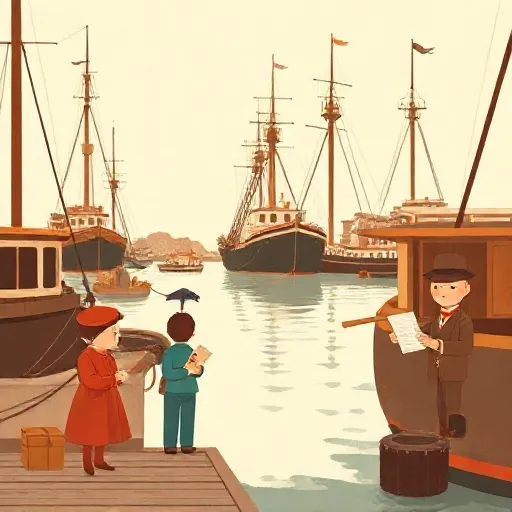
Even without a government stepping in, communities have found ways to supply public goods. One clever trick is coupling—tying the free benefit to something people do have to pay for. In eighteenth‑century Britain, many lighthouses were built and run privately. How? Ship owners paid “light dues” when they docked at a port. Port space is an excludable private good; the lighthouse beam was public. By bundling the two, the cost could be covered by the very people who benefited. That pattern pops up everywhere: a shopping centre offers free parking, lighting, and security, but you pay for them indirectly when you buy things in the shops. An apartment building may provide a shared garden that all residents use, while the cost is folded into rent.
Another engine is social norms. If neighbours litter a shared park, everyone suffers the mess—a public‑goods problem in miniature. Even without fines, a strong norm of “don’t litter” can keep the park clean, especially when people meet one another’s eyes. If you know you’ll run into the same neighbours tomorrow, lying about your willingness to chip in starts to feel self‑destructive. Over repeated interactions, people can develop a habit of truthful dealing and doing their bit.
Norms don’t need a government to police them. Social disapproval, a pointed glare, or simply not wanting to be seen as a free rider can be enough—at least in small communities. Mancur Olson (1932–1998) pointed out that many organisations exist precisely to provide some shared good, but they often survive by also offering private benefits that only members receive, giving people a reason to join.
Should the Government Force Everyone to Pay?
Knowing all this, should the government take out its wallet when a good is public? Many economists since Adam Smith have argued yes: because free markets will undersupply lighthouses, clean air, and basic research, the state should step in and fund them through taxes. The argument seems tidy: if a government intervention makes everyone better off than doing nothing, it’s justified.
But even that neat claim carries hidden assumptions. To say everyone is “better off” we must know what people actually want—and people’s preferences can be shaky, uninformed, or contradictory. A smoker may flush away the day’s cigarettes only to buy a new pack tomorrow. Which preference counts? And when a public good helps Bob but hurts Sally, can we really say the good should be provided anyway? Compensating the losers rarely happens in practice. So the choice of whether to fund a public good is never just a calculation—it always involves questions of fairness and whose interests matter more.
Some philosophers go further. Elizabeth Anderson argues that certain goods—roads, schools, parks—should be kept outside the market altogether. Market exchange is impersonal (it doesn’t care about your relationship), egoistic (it aims to satisfy the buyer’s wants), and exclusive (non‑payers are shut out). A public park run by a private owner could, in principle, exclude people the owner dislikes or dictate what can be said there. If we want spaces where citizens meet as equals and speak freely, the park has to be provided in a way that embodies those values—by the community, for everyone, regardless of ability to pay. That’s a moral argument for public provision that doesn’t depend on whether the park could survive on ticket sales.
So the lighthouse question never left us. It appears every time a town debates a new playground, a country discusses funding a space telescope, or the world tries to slow climate change. The free‑rider problem is deep, but so are the tools—and the thorny ethical debates—that it opens up.
Think about it
- If a student group project is graded as one shared mark and everyone gets the same grade, is it fair to call the student who does no work a “free rider”? What would you change about the project to solve the problem without the teacher forcing contributions?
- Imagine a neighbourhood where some people never help shovel snow from the shared sidewalk, but they still walk on it safely. Would a social norm of shovelling be enough, or would you want a rule with fines? Why?
- Should a private company be allowed to buy all the best playgrounds in a city and charge families to enter, even if that means poorer kids can’t play there? If you say no, what should a community do to keep playgrounds open to everyone?