Can God Feel Your Pain? The Fight Over a Changing God
A World That Cannot Touch God
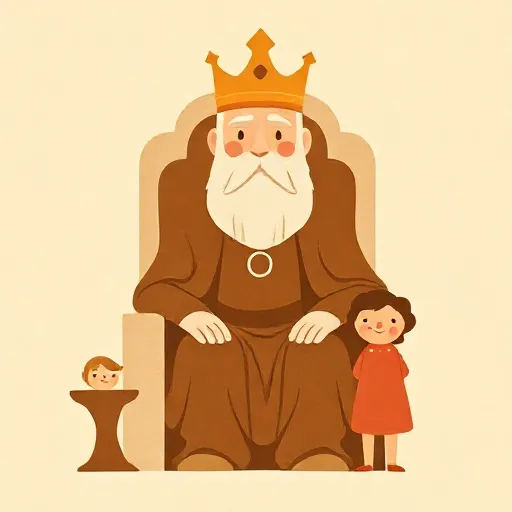
Imagine you’re talking to a friend who is absolutely perfect in every way. No matter what you say, she never laughs, never cries, never even blinks with surprise. You could tell her the worst pain of your life, and her expression wouldn’t shift. Would you call that love? Would you say she really listens? For most of Western history, many philosophers and theologians described God that way — a being so perfect that nothing in the world could make a dent in him.
This view is called classical theism. According to classical theism, God is immutable (never changes), impassible (cannot be affected or suffer), and timeless — outside time, seeing all of history at once, like looking at a finished painting. Thinkers like Augustine (354–430), Anselm (1033–1109), and Thomas Aquinas (1225–1274) built this picture. They believed that if God could change or be moved by creatures, that would mean God is imperfect, like us. So God must be pure act, the “unmoved mover.”
But in the twentieth century, two philosophers — Alfred North Whitehead (1861–1947) and Charles Hartshorne (1897–2000) — said this picture not only doesn’t fit a God of love, it falls apart logically. They proposed process theism: the idea that God is real, perfect in a dynamic way, and genuinely changed by the world. For them, God is the “fellow-sufferer who understands.” Their challenge sparked a debate that still burns today: can God feel your pain?
When Love Means Being Moved
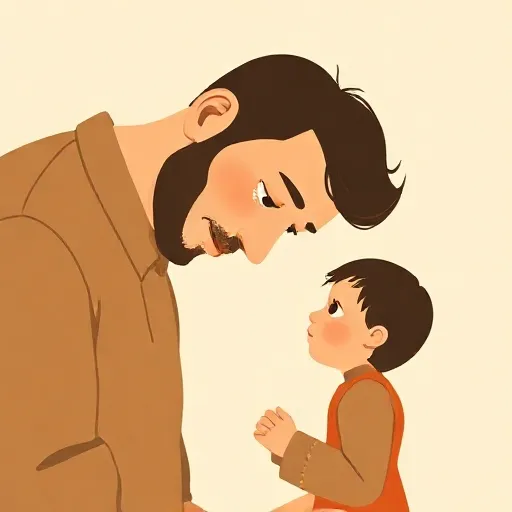
Classical theism insists that God relates to the world only one way: God creates, knows, and loves us, but we can’t affect God back. Aquinas put it bluntly: the relation from God to us is real (it makes a difference to us), but the relation from us to God is only in our minds — it doesn’t change God at all. That means your prayers, your joys, your suffering cannot add anything to God’s life. God is forever unmoved.
Hartshorne found this incoherent. If God knows a changing world, God’s knowledge must itself change as the world changes. If you hear a bird singing right now, God’s knowledge includes that fact — but if the bird falls silent, God’s knowledge shifts. That already is a real relation. So the classical God who knows everything but never changes is impossible, Hartshorne argued: a changing world requires a God with contingent aspects. More deeply, could a God who cannot be moved truly love? Classical thinkers like Anselm said God shows compassion by making us feel better, while God feels nothing — a sort of divine robot that dispenses comfort without feeling it. Hartshorne replied that this strips love of its heart. In human experience, part of love’s value is that the beloved’s life actually matters to the lover. A parent doesn’t just cause their child to feel loved; they really share the child’s happiness and grief. Process theists insist that God must be passible — capable of being affected — or else divine love is hollow.
Thus, process theism introduced the idea of real relations in God. God’s existence is secure, but God’s experience grows richer as creatures live, choose, and feel. And because creatures have some freedom (more on that later), what they do really matters to God. This turned classical theism on its head.
The Two Sides of God: Dual Transcendence

If God is both eternal and changing, infinite in some ways but finite in others, how can one being hold all that together? Whitehead and Hartshorne developed dual transcendence, the idea that God has two poles or aspects. For Whitehead, God is a single actual entity with two “natures”: a primordial nature (God’s vision of all possibilities, like an infinite menu of what could ever be) and a consequent nature (God’s constant absorption of what actually happens — the world’s joys and sorrows living in God’s memory forever). God is permanent in the primordial nature, and fluent (changing) in the consequent nature.
Hartshorne gave a more everyday version: he drew a distinction between an individual’s existence and its actual states. You exist, but what you experience moment by moment — hearing a blue jay, feeling hungry — is your actuality. For us, both existence and actuality are fragile. But for God, existence is necessary, eternal, and unchanging, while God’s actuality is contingent, temporal, and open. So God is perfect in both an absolute way (nothing could make God cease to exist or to be supremely loving) and a relative way (God’s own future states surpass God’s past states). As Hartshorne liked to say, God is “the self-surpassing surpasser of all.” This means God can be infinitely loving and yet never boring, never stuck; God’s life expands as the universe unfolds. The two philosophers disagreed on some technical details — whether God is a single actual entity or a society of occasions — but they shared the breathtaking idea that God is at once the still point of the turning world and its most involved lover.
Is the Universe God’s Body? Panentheism

If God is really affected by every creature, where exactly does God “live”? Process theism generally endorses panentheism (from pan = all, en = in, theos = God): the world is in God, but God is more than the world. That’s different from pantheism (the world is God) and from classical theism (the world is completely outside God). Hartshorne revived an ancient image from Plato’s Timaeus: the world-soul. Just as your mind is closely tied to your body — a stubbed toe hurts “you” — God’s “body” is the entire universe, and every creature’s experience is felt by God with perfect clarity. But unlike us, God has no external environment that can destroy God; God’s body is the ultimate inside.
This analogy makes God deeply intimate. Hartshorne even compared God to a mother carrying a fetus: the connection is more profound than any father‑child image. Feminist philosophers like Carol P. Christ found this appealing, since it counteracts male‑centered pictures of a distant king. Yet panentheism raises tough questions: if everything is inside God, does evil also happen inside God? Hartshorne acknowledged yes, but as a whole is not evil just because its parts are. God grieves over suffering, but remains perfectly good, always working to bring new beauty out of tragedy. This leads directly to how an affected God handles evil.
Power, Suffering, and the Risk of Freedom

The classic problem of evil says: if God is all-powerful and all-good, why does terrible suffering exist? Process theists answer by rethinking divine power. Classical theism often assumes God can do anything logically possible — and since creating a free creature that never does evil seems logically possible, why didn’t God create that? Process theists reply that power is always shared. No being, not even God, can unilaterally control the decisions of a genuinely free creature. Like a parent who can’t force a child to love them, God lures, invites, and persuades. God never coerces. Whitehead called this “the poet of the world” who leads with tender patience.
A favorite analogy: if you want true friendship, you must risk being rejected. A world with the chance of real good must also include the risk of real evil. God takes that risk too — process theism speaks of tragedy in God’s own heart when creatures harm each other. But because God holds the whole past in living memory and constantly offers fresh possibilities, no sorrow is meaningless. This doesn’t completely solve the puzzle of horrific evil; George Shields called this ‘the hard problem’ of a specifically process theodicy (2014, 33), and Hartshorne admitted that if he played at questioning God, it was at this point (1984, 126). Yet process thinkers think it’s a fairer story than a God who could stop a child’s agony by a single thought but stays silent.
Does God Know the Future? The Open Future
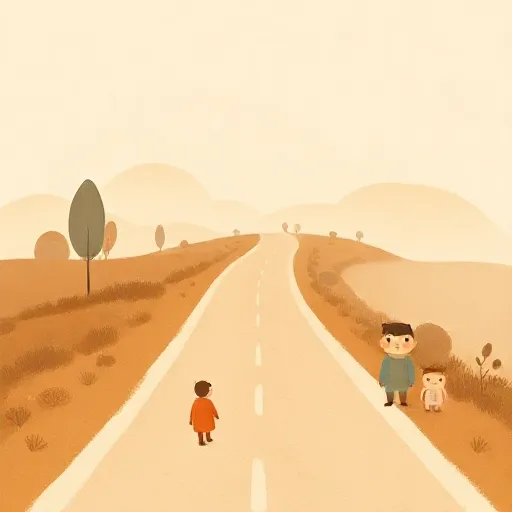
A God who lives in real relationships with free creatures can’t know the future as a settled fact, because the future doesn’t yet exist to be known. Hartshorne argued that our ordinary language gets this right: “It will rain tomorrow” and “It will not rain tomorrow” can both be false, while “It may rain” is true. The future is partly open. God knows everything knowable — the entire past, all possibilities, and the present as it becomes — but the decisions of free beings are not yet made. That means God’s knowledge grows as the world grows.
To many classical theists, this sounded like limiting God. But process thinkers reply they’re limiting time, not God. If the future is genuinely unsettled, a perfect knower must know it as unsettled. God’s omniscience is more like a supremely attentive companion than a fortune-teller. God isn’t caught off guard: God understands every possibility and has infinite wisdom for responding to whatever we choose. The future is a story God writes with us, not a movie already filmed.
Why This Still Matters to You
Why argue about a God who feels or not, changes or not? Because these ideas touch your life right now. If God can be moved by your suffering, then your pain genuinely matters — it “reaches” God. If the future is open, your choices are truly creative, not just acting out a script. Prayer becomes a real conversation, not just talking to a wall. And if God’s power is persuasive and never bullying, then religious communities can’t use God as an excuse for coercion or abuse — the divine pattern is invitation, not force.
Process theism also crosses boundaries: Buddhist impermanence, Jewish covenant relationship, Christian incarnation — many traditions have glimpsed a God who changes. The debate is still alive today among “open theists” (who borrow process ideas while keeping some traditional beliefs) and philosophers of religion who take real relations seriously. Whitehead once said that “philosophy never reverts to its old position after the shock of a great philosopher.” Process theism has been that shock — and it keeps inviting us to imagine a God who walks with us, not just above us, in the risky, beautiful process of becoming.
Think about it
- If you were designing a god, would you want one who never changes or one who shares every feeling? What would be good or bad about each?
- If the future is partly open and God doesn’t know exactly what you’ll do tomorrow, does prayer make more sense or less sense?
- Can you love someone without ever letting their life affect you? Why or why not?