When You Pray, Can It Actually Make a Difference to God?
Rain and the Dog: What Counts as an Answer?

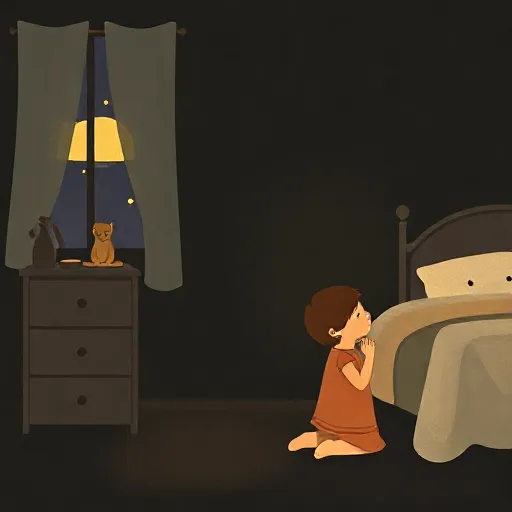
Imagine you are twelve. Your best friend’s dog is sick, and that night you kneel by your bed and ask God to heal him. The next morning, your friend texts: the dog is fine. Was that an answer to your prayer, or would it have happened anyway?
Philosophers who think about petitionary prayer — the kind where you ask God for something — say that a prayer is truly answered only if God brings about what you asked because you asked. If the dog would have recovered without your prayer, then your prayer didn’t actually make a difference to God. It’s like asking your dad for pancakes and he already had them on the griddle: the pancakes came, but your request didn’t change anything. An effective prayer, most philosophers agree, is one that influences God to act in a way God wouldn’t have otherwise.
That simple idea opens a nest of puzzles. If God never changes and can’t be affected by anything outside God, can a prayer really move God? If God already knows the future down to the last detail, doesn’t that mean whatever will happen is already settled, prayer or no prayer? And if God is perfectly good, wouldn’t God do what’s best for everyone anyway, so prayer is unnecessary? These questions aren’t just for scholars — they cut to the heart of what it means to ask, to trust, and to hope.
The Unchanging God: Can Prayer Move a Rock?
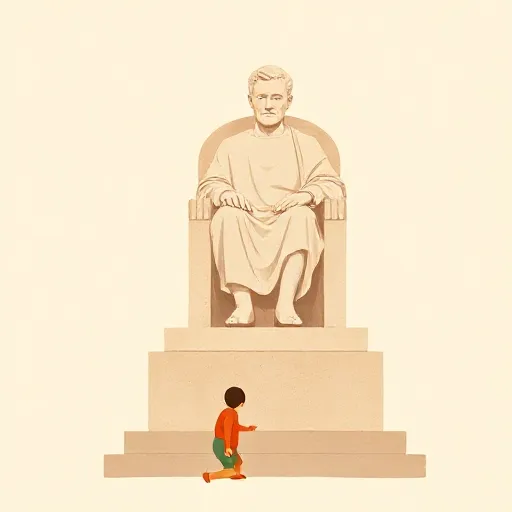
Many theistic traditions describe God as immutable (unable to change) and impassible (unable to be affected by anything outside God). If both are true, then it seems no petitionary prayer can be effective. After all, how can your words cause a being to do something new if that being cannot change or be bothered by anything you do?
Some thinkers reply that God isn’t immutable or impassible in the first place. They point out that God is described as compassionate and forgiving, and being compassionate seems to require responding to other people’s joy or suffering. So maybe the old labels simply don’t fit a God who cares.
Others try to keep the labels but define them in a more careful way — arguing, for example, that God can answer prayers without undergoing any real change. That’s a tricky philosophical project, and its success is still up for debate.
A third approach treats prayer as part of a timeless plan. The medieval theologian Thomas Aquinas (1225–1274) said something like this: we pray not to change God’s mind, but to receive what God already decided to give through prayer. On this view, your prayer and the good outcome were both planned by God from the start. The problem is that if God would have done it anyway, prayer doesn’t make a difference — it’s just one more domino in a chain that was already laid down. So this doesn’t solve the puzzle for anyone who wants to say prayer genuinely moves God to act.
God Already Knows Tomorrow — What Room Is Left for Prayer?

The next puzzle grows out of omniscience — the idea that God knows everything it’s possible to know. If God knows the future in full detail, then either the thing you’re praying for will happen or it won’t. Either way, your prayer looks powerless: on one side the event was already coming, and on the other it was already absent. So how could prayer change anything?
Philosophers have developed three main replies, and none of them is uncontroversial.
Open theism says God doesn’t know everything about the future. God still knows everything that can be known — so God is still omniscient — but some future events, like the free choices humans will make, aren’t settled yet. There are no truths about them to know. So your free prayer and God’s free decision whether to answer are genuinely open, and God can be moved by them. Critics worry that this gives up something theists have long held: that God knows the whole future.
The middle knowledge view takes a different path. It says God knows all possible situations and what every creature would freely choose in each one. God also knows which situations will actually come about. So God can see the future in full detail, but that future depends on what you and others freely choose — not on God forcing anything. In this picture, God can plan to answer a prayer you haven’t offered yet, taking it into account from the very beginning. The view is controversial because many doubt there are definite truths about what a free person would do in situations that never actually happen.
The timeless eternity view claims God sees all of time at once, from outside of time. So God doesn’t foresee anything; God just sees all moments together. That single eternal seeing can include both your prayer and God’s response, without one causing the other in a chain. But critics wonder: if God sees what God will do in the future, does that leave God any real choice? The debate rumbles on.
Finally, theological determinism — the idea that God directly determines every detail of everything — explains God’s knowledge easily: God knows because God makes it happen. But that view raises tough questions about whether humans are truly responsible for anything they do.
All these views show that the link between knowledge and freedom is deeply puzzling, whether you’re talking about God, your friend, or your own mind.
A Perfectly Good God: Why Wait for an Ask?

Suppose God is morally perfect — infinitely good. A straightforward worry arises: wouldn’t a perfectly good God do what is best for each person anyway, whether anyone prayed or not? If so, then petitionary prayer can never tip the scales. The best outcome will arrive regardless.
Philosopher Eleonore Stump (1947–) suggests that in some cases God waits for us to ask in order to avoid spoiling or overwhelming us. If every good thing arrived automatically, we might become like kids who never say thank you and start to think we don’t need anyone. By asking, we stay aware that good things come from somewhere beyond us.
Michael Murray and Kurt Meyers add another thought: requiring prayer can protect us from idolatry — the sense of being completely self-sufficient. Prayer for ourselves teaches dependence. Prayer for others builds community and shared responsibility, because God can make the well-being of others partly dependent on our willingness to ask for it. Richard Swinburne (1934–) and philosophers Daniel and Frances Howard-Snyder argue that God gives us more responsibility by making some goods depend on our prayers, almost like handing us the keys to someone else’s help.
Critics push back. Some ask: doesn’t this make other people into tools for your moral training? Others wonder whether prayer really extends our responsibility or just adds a step to what God would do anyway. Still, many philosophers think God’s goodness doesn’t mean God must give everything in the same way — perhaps a world where goods arrive because people care enough to pray is richer than a world where they drop from the sky.
How Could You Ever Know?

Even if prayer could make a difference, can you ever know that a particular prayer was answered? Some philosophers say no. They argue that for any event — a healed dog, a passed test, a safe trip — God might have had independent reasons for allowing it. You can’t peek behind the scenes to check whether your prayer was the cause.
Others reply that if you already have good reason to believe God sometimes answers prayers, then seeing the good thing happen can be enough to reasonably believe your prayer was part of the story. The belief doesn’t require a foolproof receipt.
In the last few decades, some researchers have tried to settle the question with science. They set up studies where one group of hospital patients receives prayer and another group doesn’t, then they measure recovery. Early studies seemed to show a small positive effect; a large, careful study in 2006 found no such effect. But many philosophers think the whole setup is flawed. You can’t stop people from praying for those they love, so the “no-prayer” group probably gets prayed for anyway. And God, if God exists, is a free person, not a force like gravity that behaves the same way in every trial. A study that treats prayer like a medicine dose might be asking the wrong question entirely.
What This Means for You

You may never solve the philosophical puzzles around prayer completely. Yet the very fact that thoughtful people have disagreed for centuries tells you something important: asking, receiving, and not receiving are all tangled up with what we believe about time, change, goodness, and knowledge.
Even if you never pray, you face a version of this puzzle every time you ask someone for help. Why do we sometimes wait to be asked? Is it better to jump in and fix things, or to let someone find the words first? Does knowing that a friend will probably say yes change the meaning of your request?
The debate reminds us that relationships — human or divine — aren’t simple transactions. They involve timing, freedom, and the strange power of a question spoken aloud. Philosophers can’t yet tell you whether your prayer changes God. But they can show you why the question is worth asking, and why asking itself might matter more than you think.
Think about it
- If you wished for something and it happened, would you ever be sure it happened because of your wish? What else might explain it?
- Suppose a friend never asks for your help, but you help them anyway because you know they need it. When is it better to wait for them to ask first?
- If you could know the future perfectly, would that take away your sense that you have real choices? Why or why not?