Is It Okay to Believe in God Just Because It’s a Good Bet?
A Bet That Could Change Everything
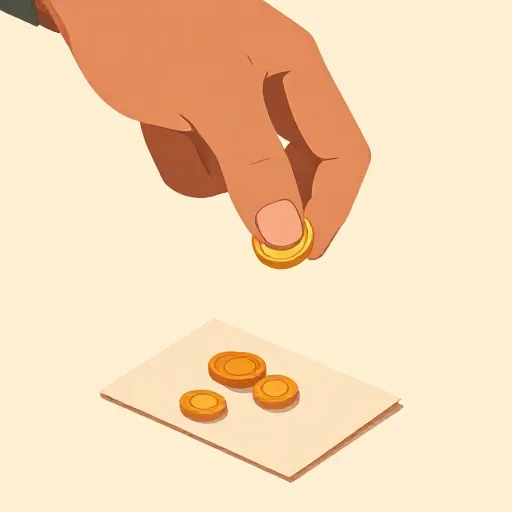
Imagine a stranger offers you a bet. You pay one dollar. If a coin lands heads, you lose the dollar forever. If it lands tails, you win a billion dollars. Most people would take that bet in a heartbeat — the tiny cost is worth the tiny chance at an enormous prize.
Now twist the bet: instead of money, you pay by changing your whole life. You start going to a place of worship, you pray, you treat the world as if God exists. If God is real, you gain an eternity of perfect happiness. If God is not real, you lose… well, some free time, some comforts, maybe a little pride. Many philosophers have argued that this is a rational bet. They say you can have a pragmatic reason to believe something — a reason that comes from the benefits of believing, not from evidence that the belief is true.
A pragmatic argument for religious belief doesn’t claim “God is real.” Instead it claims: “It is useful, or wise, or even morally good to believe in God.” This idea has sparked one of the most heated debates in philosophy. Should you ever let hope or happiness guide what you believe? Or must your beliefs follow only where the facts lead?
Pascal’s Wager: The First Big Pragmatic Argument
The most famous pragmatic argument comes from the mathematician and philosopher Blaise Pascal (1623–1662). In his notebooks, published after his death, he laid out what we now call Pascal’s Wager.
Pascal’s reasoning, at its simplest, goes like this. There are two possibilities: either God exists or God does not exist. You can either commit your life to believing in God or not. If you commit and God exists, you gain infinite happiness. If God does not exist, you lose only some finite things — time, certain pleasures, perhaps some social status. If you refuse to commit and God exists, you lose that infinite happiness forever. So even if the chance God exists is very, very small, as long as it is not zero, the expected utility — the value of the outcome multiplied by its probability — of believing is infinite, while the expected utility of not believing is only finite. Reason, Pascal thought, tells you to choose the infinite gain.
Pascal’s Wager is a truth‑dependent pragmatic argument: the huge benefit only kicks in if the belief turns out to be true. Still, it doesn’t require you to first find proof that God exists. The practical payoff alone, he argued, makes belief the smart move. But even in Pascal’s own day, critics spotted a problem. What if a different religion promises an even bigger reward? Pascal’s table seemed to assume only the Christian God. People called this the many‑gods objection: a wager could be built for any faith. So if pragmatic reasons alone justify belief, you’d have no reason to pick one religion over another. Pascal would need to show that Christianity, uniquely, offers the infinite reward — and that is a much harder task.
James vs. Clifford: When Evidence Runs Out

Late‑19th‑century scientists and philosophers were wrestling with how much evidence a person needs before believing something. The English mathematician W.K. Clifford (1845–1879) gave a famously strict answer: “It is wrong always, everywhere, and for anyone, to believe anything upon insufficient evidence.” To Clifford, believing without enough evidence weakens your mind and poisons society, even if the belief happens to be true. A person who gets into the habit of believing without good reasons becomes credulous, and a credulous person can be fooled into all sorts of dangerous ideas. Cliffords’s rule, called evidentialism, is itself a moral rule — it says belief is an action you can do rightly or wrongly.
The American psychologist and philosopher William James (1842–1910) fired back in his 1896 essay “The Will to Believe.” James insisted that Clifford’s rule was irrational, because following it would lock you out of certain true beliefs forever. To make his case, James introduced several key ideas.
A hypothesis is something you might believe. An option is a choice between two hypotheses. An option is living when both hypotheses feel possible to you personally. It is forced when you cannot escape the choice — not choosing is still a choice. It is momentous when something important hangs on it. A genuine option is one that is living, forced, and momentous. Finally, an option is intellectually open when the evidence doesn’t clearly settle the issue either way.
James argued that whenever you face a genuine option that is intellectually open, you are allowed — rationally and morally — to decide based on your passions and your hope. He gave examples outside of religion. Imagine a group of strangers who must work together. Unless each person first believes the others will cooperate, the whole project fails. That trust is a belief that makes its own truth possible. James thought something similar might be true of religious belief: you might need to take the first step in faith before you can see the evidence for God.
James was not saying you can believe whatever you like. If evidence clearly points one way, you must follow it. But in the messy middle, where the evidence is silent, he thought Clifford’s demand to stay neutral was just one strategy among many. And it’s a strategy that risks missing out on truths that require a leap of trust.
Hope Without Belief: Mill’s Middle Path

The philosopher John Stuart Mill (1806–1873) had a different idea. In his posthumously published essays, he argued that the evidence for a creator was weak — strong enough perhaps for a hope, but not for full belief. Mill’s license to hope had two rules: first, you must not know anything that makes the hoped‑for thing impossible; second, you must believe that hoping itself makes your life better or helps others.
Mill seemed to agree with Clifford about belief: where the evidence is lacking, belief is off‑limits. But hope is a different attitude. You can hope for immortality, he said, without pretending you have proof. You can act as if God exists — going through the practices of a religious life — and reap the comfort and moral encouragement, while still admitting you don’t know the truth.
But here a strange problem appears. Social psychology shows that when you repeatedly act as if something is true, you often end up believing it. Mill’s hopeful person who imitates the actions of the faithful is using a kind of slow, indirect belief‑inducing technology. Over time, the line between hoping and believing blurs. If you follow Clifford’s rule strictly, you might have to actively fight yourself to avoid catching the belief you are acting out. That tension could make a wholehearted commitment impossible. So even Mill’s gentle middle path isn’t as simple as it first looks.
When Practical Reasons Might Win: The Duty Argument

Many philosophers still feel the pull of evidentialism. If you really care about truth, shouldn’t you proportion your belief exactly to the evidence? A set of thought experiments, however, suggests that sometimes morality demands that you set evidence aside.
Imagine the pain case. You are about to undergo a medical procedure. Studies show that patients who expect less pain actually feel less pain. You have no evidence about how much this particular procedure hurts. You decide to form the belief “this will be painless” — not because you have proof, but because that belief will lower your suffering. Is that wrong? Most people feel it is not; it seems like wise self‑care.
Now make it bigger. In the Devious ETs scenario, aliens tell you that the only way to save humanity is for you to acquire and maintain a belief for which you have no evidence. They even give you a pill that causes the belief. If you swallow it, you violate Clifford’s rule — but you save every human on Earth. It’s hard to argue that taking the pill is immoral or irrational. In fact, you might have a moral duty to do it.
These stories support what philosophers call the Duty Argument: if you can be morally required to believe something without adequate evidence, then evidentialism can’t be an absolute rule. And if a belief formed for pragmatic reasons can sometimes be your moral duty, then pragmatic reasons are not always the enemy of good thinking.
Critics point out that in these cases you’re using a form of self‑deception or a special pill — not the ordinary, everyday path of just deciding to believe. But pragmatic thinkers reply that as long as you have indirect control over your beliefs (through what you read, who you spend time with, what habits you build), you don’t need to be able to believe “at will” to follow a pragmatic argument. You can start down a path that gently shapes your mind.
Why the Fight Over Pragmatic Belief Still Matters

The debate between Pascal, James, Clifford, and Mill is not just about God. It shows up every time you wonder whether to trust a friend who hasn’t proved themselves yet, or whether to believe in your own ability to pass a test when the evidence is shaky. It lives in the tension between fake news that feels satisfying and difficult truths that make you uncomfortable.
If you lean toward evidentialism, you’ll say: only believe what the facts demand. Trust cannot be borrowed from a hoped‑for future without losing something essential in yourself. If you lean toward the pragmatic view, you’ll say: some of the most important truths in life will never appear unless you first step toward them with a little unwarranted hope.
Philosophers still haven’t settled where the line should be drawn. What they have given us is a clearer map of the costs and benefits on each side — and a sharper sense of when our hunger for comfort might be leading us astray, and when it might be leading us exactly where we need to go.
Think about it
- If a friend offered you a bet like Pascal’s — but the reward was something huge in this life, not an afterlife — would you change your behavior even if you still doubted the bet would pay off?
- Can you think of a time when believing something without strong evidence helped you or someone you care about? Was that belief worth holding even if it turned out to be false?
- Is there a difference between hoping for something and believing it? Could a person live a whole, meaningful life based on hope alone?