

Are Your Choices Really Yours? The Puzzle of Practical Reason
One Desk, Two Pulls
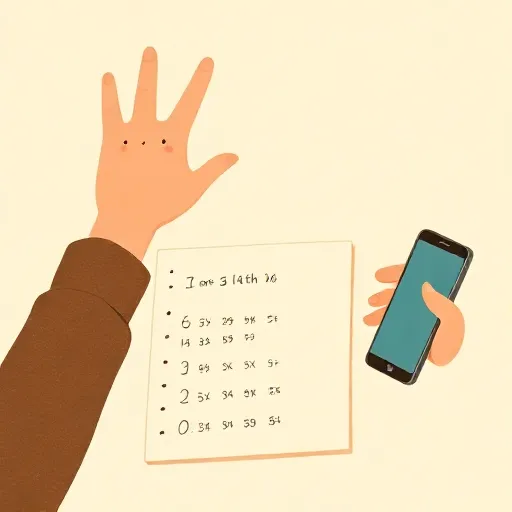
It’s a Tuesday evening. You’ve got a math assignment due tomorrow, and your favorite game is calling from the next room. You know you should finish the homework. Yet somehow your feet carry you to the console, and twenty minutes later you haven’t solved a single equation. Later, you think: What was I thinking? This is not just a question of willpower. It’s a window into a huge philosophical puzzle: practical reason, the kind of thinking that is supposed to guide what we do—not just what we believe.
Every day you use reason in two different ways. The first is like being a detective: you look at clues, figure out what’s true, and form beliefs. This is theoretical reason. The second is like being a chef staring into a fridge of ingredients, deciding what to cook. That’s practical reason. But while a detective’s job ends with a conclusion about what happened, the chef’s job has to end with action—a real dish on a real plate. How does thinking turn into doing? And why does it sometimes fail?
Two Kinds of Thinking

Philosophers draw a line between theoretical reason and practical reason. Theoretical reason asks what is true: Why did the cake collapse? What will the weather be tomorrow? It deals with facts, explanations, and predictions, and it’s the kind of thinking that drives science. Practical reason asks a different kind of question: What should I do? It doesn’t try to describe the world; it tries to change it, by telling you which action is best, or at least good enough, given your options.
The difference shows up in the attitudes each kind of thinking produces. When theoretical reasoning works, it changes your beliefs—for instance, after reading the weather report, you now believe it will rain. When practical reasoning works, it changes your intentions—your settled plan to act. You form the intention to grab an umbrella. Intentions are strange creatures. Unlike beliefs, which try to match the world, intentions try to make the world match them. A belief that it’s raining is supposed to fit the sky. An intention to go shopping on Saturday is supposed to make you go to the store, not reflect that you’ve already gone.
The Scottish philosopher David Hume (1711–1776) noticed this contrast early. Reason, he thought, is good at discovering facts, but it can’t by itself push us into motion. For that, you need desires or passions. This hints at a deep problem: if reasoning is all about processing information, how can it ever output a command like “go study now”?
When Your Brain Ignores Itself

The messiest part of practical reason is something philosophers call akrasia (pronounced uh-KRAY-zhee-uh), or weakness of will. It happens when you judge that one action is better, yet you intentionally do another. You know finishing the math homework is the right thing, but you pick up the controller anyway.
This isn’t just bad luck; it seems like a breakdown of practical reason itself. Practical reason is supposed to produce an intention that matches your best judgment. But akrasia reveals that our intentions don’t always obey our verdicts. That means practical reason, unlike a calculator, is not guaranteed to work. It’s a capacity we can fail to exercise correctly. If you’re irrational, your deliberation about what to do might not produce the intention it calls for.
The possibility of akrasia pushes philosophers to ask: what exactly is happening when practical reason succeeds? If a process is purely about weighing facts, it seems hard for it to produce an intention—a state that points toward action with a kind of oomph. Some argue that when we talk about what we ought to do, we aren’t really stating a fact at all. We’re expressing a desire or an emotion.
Is “Should” Just a Feeling?

The view that normative statements—sentences like “you should help your friend”—don’t report truths is called expressivism. According to the expressivist, when you say “I ought to exercise,” you are not describing a mysterious fact in the world. You are giving voice to a plan, a desire, or a motivating attitude. This makes practical reason look very different: it’s not about discovering an invisible realm of ought-facts, but about organizing and expressing the attitudes that already move you.
Expressivism appeals to a naturalistic worldview—the idea that everything real can be studied by science, and that there are no spooky value-entities floating around. But many philosophers think it goes too far. If “I should do my homework” is just an expression of a desire, what happens when you don’t do your homework? On the expressivist picture, it’s hard to see how you could genuinely be at odds with yourself. Yet akrasia suggests exactly that: you are in conflict, believing one thing but intending another. So expressivism struggles to explain why weakness of will feels like a mistake rather than just a change of mood.
A rival view, realism, insists there are genuine truths about what you have reason to do—truths that exist whether you know them or not. Practical reason, on this account, is the skill of detecting those truths. Realists have an easier time explaining akrasia: you can be mistaken about what reasons there are, and you can fail to act on the reasons you see. But realism faces its own puzzle: if reasons are like facts about the world, how can noticing a fact—say, that an action would be helpful—push you into motion? After all, noticing that water is H₂O doesn’t make you want to drink it.
Reasons Inside You vs. Reasons Out There

This puzzle leads to the big divide between internalism and externalism about reasons. Internalists, following the philosopher Bernard Williams (1929–2003), claim that you have a reason to do something only if that action connects to something you already care about—your “subjective motivational set.” If dancing leaves you cold, you simply have no reason to hit the dance floor, no matter what anyone else says. This seems to explain how reasons can move you: they’re built out of motivations you already have.
Externalists disagree. They argue that some reasons apply to you regardless of your current tastes. If watching a friend’s recital would show loyalty, you have a reason to go even if, right now, you don’t feel like it. Practical reason, in this view, can introduce you to new goods; it doesn’t just process the wishes you already carry. The externalist must then explain how a new reason can create a brand-new motivation. One answer is that humans have a basic ability to respond to reasons, just as we have the ability to form beliefs when we see evidence. The same mental machinery that makes you change your mind when you hear a convincing argument might also make you form an intention when you recognize a good reason to act.
The Rule You Can’t Escape: Means and Ends
Even if philosophers disagree on where reasons come from, most agree on at least one rule: instrumental rationality. In its simplest form, it says: if you have an end, you should take the means necessary to achieve it. Want to ace the test? Then you ought to study. This seems so obvious that some thinkers, following Hume, have treated it as the only genuine demand of practical reason. Reason, they say, is the slave of the passions—it can only calculate how to get what you already want.
But there is a catch. The instrumental rule seems to give you a reason to study only if you already have a reason to want to ace the test. If your goal is something worthless or harmful, is it rational to pursue it efficiently? If I decide to count every blade of grass in my yard, does reason command me to buy a magnifying glass? That seems absurd, a trick philosophers call bootstrapping: you can’t create a real reason just by wanting something for no good reason.
To handle this, some philosophers argue that the instrumental rule is not a simple “if you want X, do Y” command. Instead, it’s a wide requirement: be coherent. Either take the means, or give up the end. This way, you aren’t forced to pursue a silly goal; you can drop it instead. But this raises a deeper question: if coherence is all that matters, why should anyone care about being rational? If reasons tell us what to do, and coherence is something separate from reasons, it’s not clear why coherence deserves our respect. Some suggest that what looks like a demand for coherence is really just a side effect of responding well to the real reasons you have. The debate remains heated.
From Homework to Fairness

So why does any of this matter when you’re staring at a pile of homework? Because practical reason doesn’t stop at personal projects. It reaches into prudence—what’s good for you over your whole life—and into morality. Should you save your allowance or spend it all today? Should you keep a promise even when it’s inconvenient? These are questions of practical reason, and they won’t go away by sheer willpower.
Many philosophers believe morality makes claims on us that aren’t optional: you have a reason to keep your promise not just because you want to, but because promising puts you under an obligation. That obligation seems to have a special shape. It is agent-relative—it binds you specifically, not just anyone, to the action. And it often functions as a kind of requirement that shuts down further weighing: if you’ve promised your friend you’ll come over, you don’t treat it as just one more thing to balance against watching a movie. The promise seems to settle the question.
Understanding practical reason is about understanding your own life as a person who can step back and ask, “What is worth doing?” The same capacity that makes you pause before reaching for the controller also lets you wonder: What do I owe to the people around me? There’s no single answer that all philosophers accept. But the questions are yours, every time you have to choose.
Think about it
- If you strongly want to finish a video game but also know you should study, is one desire just stronger than the other, or is something else going on? What would count as a real reason to study?
- Suppose a brilliant scientist could predict every choice you’ll make today. Would that mean you never really had a choice? Or could you still be using practical reason?
- Can a computer have practical reason? It can calculate the best means to an end, but can it ever decide what’s worth doing?