
Why Did You Do That? The Fight Over What Counts as a Real Reason
A joke, a choice, and two reasons

It’s lunchtime. You’ve just thought of a perfect joke. It will make everyone laugh, but you know it will embarrass one person at the table. Your mouth opens — then you pause. Something tells you the joke would be wrong. Something else whispers: it’s just a joke!.
In that pause you are weighing normative reasons. A normative reason is a fact that counts in favor of doing something, or against doing it. The fact that the joke is funny is a reason to tell it; the fact that it will embarrass someone is a reason not to. Normative reasons help you figure out what you ought to do. If the reason against the joke is stronger, you ought to keep quiet.
Normative reasons are facts — real things about the world. Only what is actually true can truly support an action. If it turns out the joke wouldn’t embarrass anyone after all, then the reason against it disappears. Philosophers have thought about this since ancient times. Plato and Aristotle asked how reason guides our lives. In the 1700s, David Hume (1711–1776) and Immanuel Kant (1724–1804) argued fiercely about whether our feelings or our reason should rule. Today, the discussion has shifted to the reasons themselves — what kind of thing they are and how they move us.
When your reason is built on a lie: Othello’s tragic mistake
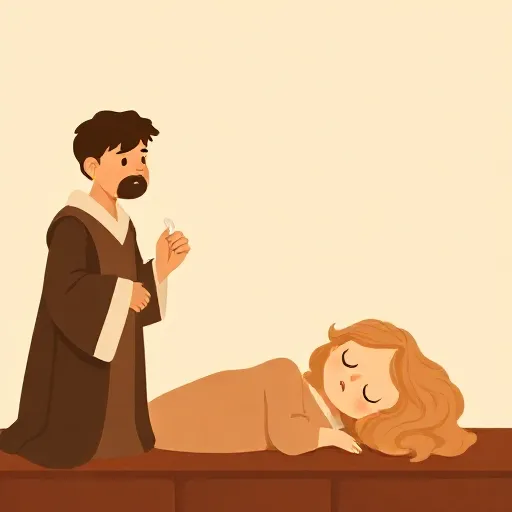
In Shakespeare’s play, Othello believes his wife Desdemona has been unfaithful. Consumed by jealousy, he kills her. But Desdemona is innocent. She never betrayed him. So did Othello have a reason to kill her?
There was no normative reason. No fact in the world favored murder, because Desdemona was faithful. Yet Othello clearly acted for some reason. That reason came from inside his own mind: the false thought that she had betrayed him. Philosophers call this a motivating reason — the consideration that actually moves you to act, the thing you take to be a reason whether or not it is true.
Normative reasons are about what’s good to do. Motivating reasons are about what, in your head, pushes you. Sometimes they match. (You keep quiet because the joke really would shame someone.) But often they don’t. A corrupt politician might introduce a sugar tax not because it protects children’s health, but because it will help her husband’s drinks company. That’s her motivating reason — but it’s no normative reason at all.
Othello’s case forces us to ask: when your motivating reason is a false belief, what kind of thing is it? Is it a mental state inside you? Is it the false fact you believed? The answer sparks a big debate.
Are reasons inside your head or out in the world?

For much of the twentieth century, many philosophers gave a straightforward answer: motivating reasons are mental states. Donald Davidson (1917–2003) argued that when you act for a reason, what actually causes your action is a pair of mental states — a belief and a desire. Othello’s reason was his belief that Desdemona was unfaithful combined with his desire to defend his honor. This view is called psychologism (because it places reasons inside the psyche).
But Jonathan Dancy (born 1946) pushed back. He proposed a normative constraint: a motivating reason must be the sort of thing that could be a reason in favor of acting. Otherwise you could never act for a good reason. According to Dancy, a mental state — like “I believe she betrayed me” — is not a fact about the world. It can’t be a reason that favors an action. So psychologism fails.
So what are motivating reasons? One alternative is factualism: when you act for a good reason, your motivating reason is the fact itself. But that leaves Othello’s case unexplained, because there is no fact of Desdemona’s unfaithfulness. Some philosophers respond that in error cases you act for an “apparent reason” — something you treat as a fact but which isn’t one.
Another idea is propositionalism: motivating reasons are propositions — the thoughts or claims you believe, which can be true or false. Othello’s reason is the false proposition “Desdemona is unfaithful.” That neatly handles error cases. Yet critics find this odd. As one philosopher noted, it sounds contradictory to say, “His reason was that the store was going to close, but it wasn’t going to close.” So perhaps we should never call falsehoods “reasons” at all. The dispute is still alive.
Can a reason hide from you?

Imagine Nate. His friends have planned a surprise party for him because he loves successful surprise parties. The fact that a party is waiting at home is a normative reason for Nate to go home. But if Nate knew about the party, the surprise would be spoiled and the reason would vanish. So this reason seems elusive — it disappears if you try to use it.
This challenges a natural idea: that a normative reason must be something you could be aware of and act on. If a reason can’t guide you without destroying itself, is it really a reason for you? Some philosophers say no — a reason that can’t play any role in your deliberation is defective. Others say yes — it’s still a genuine reason, just an unusual one.
There are other cases. Captain Chelsey Sullenberger famously landed a damaged plane on the Hudson River without focusing on the threat to the passengers’ lives. That threat was a powerful normative reason, but he deliberately kept it out of his mind so it wouldn’t distract him. Here the reason was real but worked best when not consciously entertained. These examples show that the link between a reason and your thinking isn’t always simple. Some reasons whisper from the facts themselves, not from your stream of thought.
Why your reasons shape who you are

A house is on fire and a child is trapped inside. You run in and pull them out. That’s brave and right. But now ask: why did you do it? Was it because you cared about the child’s life, or because you knew you’d get a reward? You did the right action, but if your motivating reason was the reward, something important is missing.
Many philosophers hold that an action has moral worth only if you act from the right reason — that is, when your motivating reason lines up with the normative reason that makes the action good. Saving a child deserves praise precisely when you respond to the value of the child’s life itself, not to the prize. This is why we care about the difference between normative and motivating reasons: it helps us decide whether a person is truly good, not just lucky to perform good deeds.
This connects straight back to the lunch table. If you stop yourself from telling the hurtful joke because you genuinely care about the other person’s feelings, your restraint has moral weight. If you stop only because a teacher might overhear, something is missing — even though the outcome is the same. Philosophers continue to disagree about exactly what it takes to “act for a normative reason.” Do you need the right kind of desire? The right kind of knowledge? Both? The answers matter for how we understand responsibility, friendship, and what makes someone a decent person.
Think about it
- If a friend tells you a joke that’s hilarious but will embarrass someone else, they say, “I didn’t mean to hurt their feelings — I just thought it was funny.” Would that change how you judge what they did? Why?
- Could a computer that picks the best action by calculating outcomes ever act “for the right reason,” or does it need to actually care?
- Think of a time you did something kind. Did you do it because it was the right thing, or because you expected something in return? Does your answer change how you feel about that choice?