
Could There Be Real Worlds Where Dogs Fly and You're a Rock Star?
A dog, two dogs, and a canary that almost was

Picture a boy named John with two dogs, Algol and BASIC. Both dogs are mammals, so the sentence “All John’s dogs are mammals” is true. Now the sentence “All John’s pets are mammals” is also true, because his only pets are those dogs. So far, so simple.
But add one word: necessarily. Is it necessarily true that all John’s pets are mammals? Well, John could have chosen a pet canary instead. He might have brought home a bird named COBOL. In that scenario, not all his pets would be mammals. So the sentence “Necessarily, all John’s pets are mammals” feels false, even though “Necessarily, all John’s dogs are mammals” feels true.
This little puzzle reveals a big crack in ordinary logic. If you replace “dogs” with “pets” inside the “necessarily” box, the truth value can flip — even though, in the real world, John’s dogs are his pets. Something about the word “necessarily” makes it care about more than just the actual facts. It cares about what could have been.
How “must” and “can” mess up normal logic

Philosophers call this the failure of extensionality. The extension of a word like “dog” or “pet” is simply the set of things the word picks out in the real world. In John’s world, the set of dogs and the set of pets happen to be the same. Classical logic says you can swap two words with the same extension without changing a sentence’s truth. The “necessarily” operator breaks that rule. It is an intensional operator — it reaches beyond the actual world’s extensions into how things could have differed.
So what makes a sentence like “Necessarily, all dogs are mammals” true? In the middle of the 20th century, the philosopher Rudolf Carnap (1891–1970) and later Saul Kripke (1940–2022) helped develop a powerful tool: possible world semantics. The idea is simple. A sentence is necessary if it is true in every possible world. A sentence is possible if it is true in some possible world. “Necessarily, all dogs are mammals” holds because, no matter how the world might be, dogs are mammals. “Necessarily, all John’s pets are mammals” fails because there is a possible world where John owns a bird.
This move turns the mysterious word “necessarily” into a kind of hidden quantifier over worlds, just as “all people” is a quantifier over people. The tricky logic of necessity becomes, at bottom, a logic about what happens across many possible worlds. But that solution only works if we can say what a possible world is.
Concretism: a real multiverse out there

The most radical answer comes from David Lewis (1941–2001). He argued that possible worlds are just as real as the one we live in. Each is a huge, concrete, physical thing — a maximal collection of objects connected by space and time. Our universe is only one world among countless others. There is a world where John owns a canary. There is a world where the dinosaurs never died out. There is even a world where you are a rock star. All these worlds exist, full of flesh-and-blood inhabitants, separated from ours not by a magic portal but simply by having no spatiotemporal relation to us.
Lewis calls this view concretism. To exist in a world is just to be one of its physical parts. Because worlds don’t overlap, an individual like Algol the dog exists only in one world. So how can we truthfully say Algol might have been a stray? Lewis uses counterparts. In another world, there is a creature that closely resembles Algol but was never adopted. Statements about what Algol could have been are really statements about her counterparts in other worlds.
Lewis also insisted that his worlds are not a fairy tale; they are part of a reduction of modality to non‑modal terms. If you understand words like “necessarily” as quantifiers over these concrete worlds, and you define the worlds purely in physical, spatiotemporal terms, then you have explained necessity without using any primitive notion of “must.” He also proposed that a principle of recombination guarantees there are enough worlds: take any physical parts from different worlds and you can duplicate and rearrange them to form another possible world.
Many philosophers find Lewis’s picture dazzling, but they also stare at it in disbelief. The “incredulous stare” objection says his theory multiplies reality far beyond what common sense allows. Lewis’s reply: the theoretical payoff is so huge — for understanding meaning, causation, and mind — that the cost is worth paying.
Abstractionism: worlds as perfect, complete stories

A very different approach, called abstractionism, says a possible world is not a physical place at all. It is an abstract entity: a way things could be. Think of it as a complete story that decides every detail. Alvin Plantinga (1932–2020) built a version of this using states of affairs — things like “Algol’s being a dog” or “There being exactly ten solar planets.” Some states of affairs obtain (are actual); others do not. A possible world is a maximal, consistent state of affairs: it includes or excludes every possible state of affairs such that the whole story could be true.
On this view, worlds exist as abstract objects, not as concrete stuff. They actually exist, even the non‑actual ones, just as the number 7 exists. To exist in a world is not to be a physical part of it but to have that world include the state of affairs of your existing. Crucially, the same individual — Algol herself — can exist in many worlds, sometimes as a pet, sometimes as a stray. There is no need for counterparts; transworld identity is straightforward.
Abstractionism comes with a trade‑off. It defines worlds using modal words like “possible” and “consistent,” so it does not reduce modality to non‑modal terms. Instead, it clarifies how our basic concept of possibility connects to the idea of a total way things could be. Abstractionists often pair this with actualism, the view that everything that exists is actual. Non‑actual worlds are abstract objects, not ghostly floaters. But actualists still face a puzzle: how can there be true possibilities about individuals that don’t actually exist, like an exotic animal that never evolved? Some abstractionists introduce special abstract proxies — properties called haecceities that would have been the thisness of such an individual — to handle those cases.
Combinatorialism: shuffling the real furniture of the universe
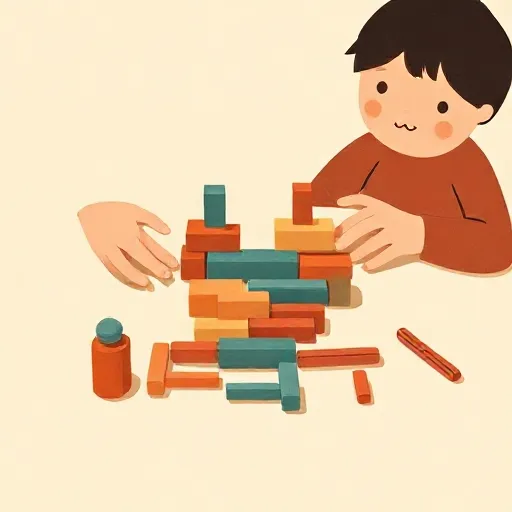
A third family of views, combinatorialism, tries to keep worlds grounded in the one real universe. The starting point comes from D. M. Armstrong (1926–2014). Take the actual world’s most basic ingredients: simple objects (things with no smaller parts) and simple universals (fundamental properties and relations). These objects and universals combine into atomic facts — like a specific electron having a certain charge. The actual world is the gigantic molecular fact containing all atomic facts plus a totality fact that says those are all the atomic facts there are.
A possible world is simply a recombination of those building blocks. You take the actual simples and rearrange them in any pattern that respects the form of atomic facts. If a simple object and a simple universal can join to form a fact in the actual world, you can pair them differently — and that gives you a new possible world. Because recombination is completely free at the level of simples, you get a rich landscape of worlds, all built from the same furniture.
This view is staunchly actualist: nothing exists beyond the actual world’s ingredients. It also attempts to avoid both Lewis’s extravagant multiverse and the abstract world‑stories of the abstractionists. But it struggles with the intuition that there could have been other simples — a different fundamental particle, say. The simplest version of combinatorialism says the actual simples are all the simples there could be. Some combinatorialists simply accept that. Others explore a “fictionalist” move: we talk as if there are non‑actual simples, but strictly speaking there are none. Neither solution satisfies everyone.
Why you can’t stop thinking in possible worlds

You might not realize it, but you use possible worlds every day. When you decide between cake and ice cream, you are weighing two possible futures. When you say “If I had studied, I would have passed,” you are comparing the actual world with a world where you studied. Scientists do the same when they ask “What would happen if the Earth were twice as big?” and engineers when they test “If this bolt fails, could the bridge collapse?” All that reasoning relies on a silent picture of alternative ways reality could be.
The debate over possible worlds isn’t just academic. If you lean toward Lewis’s concretism, then could have done otherwise means there is a flesh‑and‑blood counterpart of you in another physical universe making a different choice. If you prefer abstractionism, those alternatives are abstract states of affairs, not spooky duplicates. And if you like combinatorialism, you are shuffling the actual world’s simplest pieces. Each picture carries different consequences for how we talk about freedom, responsibility, and luck. The next time you say “I could have…”, remember that a three‑way philosophical tug‑of‑war is still deciding what that little word actually means.
Think about it
- If there really are other concrete worlds where another you made a different choice, does that make your choice now any less free? Why or why not?
- Could an abstract “way things could be” exist as a real object, the way a number does? What would that even mean?
- Imagine you are building a reality‑simulating computer game. Which picture of possible worlds — concretism, abstractionism, or combinatorialism — would be easiest to program, and what would still be missing?