

What Is It Like to Be You, Right Now?
Staring Out the Window: What’s Going On?

It is a warm afternoon. You are sitting in class, gazing out the window at an old oak tree. Sunlight flickers through the leaves. You feel the desk under your elbows. But you are not just catching light rays — you are having an experience of that tree. The shape, the green, the thought “Oh, an oak.” That rich, first-person point of view is exactly what phenomenology studies.
Phenomenology is a branch of philosophy that tries to describe the structure of our conscious experiences, from the inside. It does not ask what the tree is made of physically, or how your brain processes color. Instead, it asks: what is it like to see a tree, to imagine a monster, to feel angry, or to decide to kick a ball? The word comes from the Greek phainomenon — appearance. So phenomenology is the study of how things appear to us in our own minds.
This way of thinking began with a group of philosophers in the early 20th century. The story starts with Edmund Husserl (1859–1938), and it twists through Martin Heidegger (1889–1976), Jean-Paul Sartre (1905–1980), and Maurice Merleau-Ponty (1908–1961). They disagreed fiercely, but all of them believed that to understand reality, you first have to understand your own experience.
Husserl: Every Thought Reaches Out

Husserl started with a deceptively simple observation: whenever you are conscious, you are conscious of something. You see that tree, you think about your homework, you fear that loud noise. This “aboutness” he called intentionality. Your mind is not just a container of sensations; it always reaches out toward an object, whether real or imaginary.
To study this, Husserl invented a trick: epoché (pronounced eh-po-khay), often called “bracketing.” When you look at a tree, you put aside any questions about whether the tree really exists or what physics says about light waves. You just focus on your experience of the tree — the way it appears to you, the green blur of leaves, the recognition that it is an oak. That appeared object he called the noema, a Greek word for the thing-as-meant. The mental act of seeing, thinking, or imagining is the noesis. So every conscious moment has a two-part structure: the act (noesis) and the content or meaning (noema).
Husserl wrote that by describing experiences this way, we can find the essential structures of consciousness itself. For instance, you do not just see an oak tree; you see it from a particular angle, with a hidden back side you anticipate but do not literally see. Time flows in your awareness: the present tree is colored by your memory of what you saw a second ago and your expectation of what you will see next. All this is part of the “lived experience.” But not everyone agreed that we should bracket the world.
Heidegger: You’re Already in the World

Martin Heidegger, Husserl’s student, thought the whole idea of “bracketing” missed the point. We do not sit around as pure observers watching trees. Most of the time, we are doing things: hammering a nail, walking down stairs, speaking with friends. Our most basic way of being is not staring — it is coping with the world around us.
Heidegger argued that you are not a mind in a box looking out at a world. Instead, you are always already being-in-the-world (in German, In-der-Welt-sein). You understand a hammer not by analyzing its shape but by picking it up and using it. When you hammer, the tool almost disappears into your activity; you are focused on the nail, on the task. Only when the hammer breaks do you step back and stare at it like a curious object.
For Heidegger, phenomenology means “letting things show themselves.” Our lives are full of meaningful contexts — equipment, other people, moods, language. Your own existence is something you have to live out. He used the word Dasein to name that being for whom being is an issue: you, caring about what kind of person you are, moving toward your future, and aware that you will die. This sounds somber, but Heidegger wanted to show that experience is deeply practical and social, not just a silent movie in your head.
Sartre: You Are Nothing Except What You Do

Jean-Paul Sartre agreed with Husserl that consciousness is always about something. But he added a twist: consciousness itself is a kind of nothingness. When you are absorbed in reading a book, you are not aware of the book as a separate “me” watching it — you just live through the story. Yet at any moment, you can shift to a pre-reflective consciousness: you are aware of yourself experiencing, without needing to stop and think about it. That immediate self-awareness is, for Sartre, what makes an experience conscious at all.
This leads to a striking claim: you are not a fixed thing. A chair is what it is — it has a definite essence. But humans have no fixed essence. You are what you do, what you choose. Sartre argued that existence precedes essence: you are thrown into the world, and then you define yourself through your actions. That radical freedom can be dizzying. In his novel Nausea, he described a character who senses pure existence lurking beneath ordinary objects, until even a chestnut tree feels alien and absurd.
Sartre also emphasized how we experience other people. When someone looks at you, you suddenly feel yourself as an object for them — a “look” that can cause shame or defiance. This idea of the Other became important for later political thought, including Simone de Beauvoir’s feminist analysis of women as “the Other.”
Merleau-Ponty: Your Body Shapes Every Experience
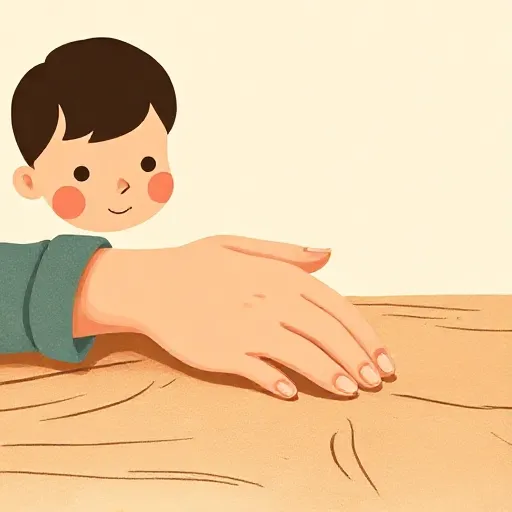
Maurice Merleau-Ponty read the work of psychologists who interviewed amputees. Some patients felt vivid sensations in their missing limb — a phantom hand that clenched, a phantom foot that ached. This fascinated Merleau-Ponty because it revealed that the way we experience our body is not the same as the physical body. There is a “body image,” a felt, lived body that cannot be captured by just naming nerves and muscles.
He rejected the old idea of Descartes that mind and body are two separate substances. Instead, he argued that consciousness is bodily through and through. When you reach for a glass, you do not calculate the distance; your body simply knows how to move. Your perception of the world is already shaped by your ability to walk, touch, tilt your head.
For Merleau-Ponty, the deepest fact about experience is that you are an embodied being in a world you share with others. Even language and thinking are rooted in bodily habits — speaking is a physical act, and abstract concepts are often metaphors borrowed from the body (we say “grasp an idea,” “stand your ground”). His phenomenology of perception wove together insights from Husserl, Heidegger, and Sartre into a single vision: the mind is not a ghost in the machine; it is a living, moving body.
Why It Still Matters: The Bat and the Mind-Body Puzzle

In 1974, philosopher Thomas Nagel asked: what is it like to be a bat? A bat experiences the world through echolocation, bouncing sounds off objects to “see.” We can study the bat’s brain, measure its calls, and explain its neural circuitry. But we still cannot know what it feels like to be a bat, from the inside. That subjective, first-person quality is exactly what phenomenology has been describing all along.
Today, scientists can scan your brain while you look at a tree and show which areas light up. But they cannot capture the what-it-is-like of seeing green, of recognizing a friend’s face, or of deciding to take a different route home. This is sometimes called the “hard problem of consciousness.” Phenomenology does not solve it, but it teaches us something essential: any complete picture of the mind must respect the first-person point of view. It is not enough to talk about neurons firing; we also have to talk about the meaning that fills your experience.
Next time you look out a window, or pick up a pencil, or feel embarrassed when someone stares, you are doing phenomenology without knowing it. You are inside a stream of experiences, each one about something, shaped by your body, your history, your habits. The phenomenologists gave us a language to describe that stream — and their questions are still wide open.
Think about it
- Think of an ordinary moment, like eating an apple. Can you describe everything that is going on in your experience — what you see, taste, feel, and think — without mentioning any scientific facts about the apple? What makes that hard?
- If a perfect brain-scanning device could predict exactly what you are feeling, would that description capture everything that matters about your experience, or would something be missing?
- Sartre said that other people’s looks can make you feel like an object. Have you ever felt that someone’s stare changed how you saw yourself? What might that tell you about the difference between being a subject and being an object?