
Do You See the Back of Your Desk, or Just Believe It’s There?
Seeing Your Passport: When Thinking Meets Looking

Imagine you’re getting ready for a big trip. You think, “My passport is in the drawer.” Then you walk over, pull the drawer open, and there it is. Before you looked, the passport was just something you meant — a thought, an expectation. When you actually see it, everything changes. The object that was only imagined is now bodily present, warm and blue, taking up space under your hand.
Edmund Husserl (1859–1938), a German philosopher, thought this everyday shift was enormously important. He called the difference between merely thinking of something and experiencing it directly the difference between an empty intention and a fulfilled intuition. An intention is empty when it points to an object without giving you the object itself. An intuition is fulfilled when the thing shows up in your awareness and fills that pointing with real presence. From this simple observation, Husserl built an entire way of doing philosophy he named phenomenology: the careful study of how things appear to our consciousness.
To understand appearances, Husserl argued we first need to get clear about intentionality. Every mental act is about or of something. You hope your team wins, see a tree outside the window, judge that your friend is telling the truth. The same object can be meant in very different ways: you can doubt, fear, or firmly believe that your passport is in the drawer. Husserl called the part of an act that tells you what is intended the matter of the act, and the part that tells you how it is intended (wishing, seeing, remembering) its quality. The same matter can be combined with different qualities, and the other way around, which is why one single drawer can tempt you toward hope, doubt, or the solid evidence of a glance.
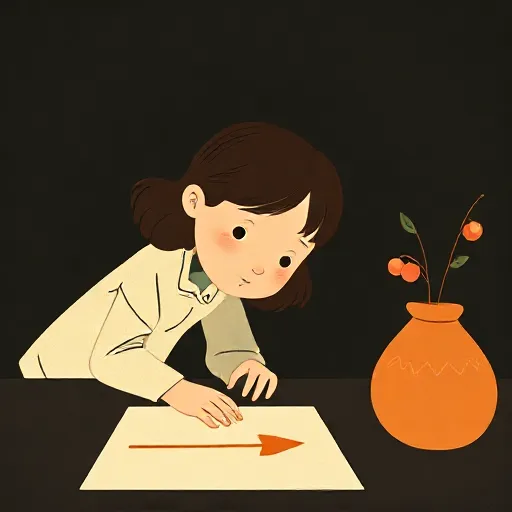
When you look at your desk, something else comes into focus. You see the front and the top, but you don’t see the back. Yet you don’t perceive half a desk — you see a whole one. The hidden sides are co-intended; your mind already expects more. This is why perception always gives you inadequate evidence: the desk is present, but never in its entirety at a single moment. Still, Husserl insisted, inadequate evidence is genuine evidence. It grounds your belief, even though it can always be corrected by later looks. He summarized his approach in the principle of all principles: trust what shows up in intuition, but only within the limits in which it actually appears. Truth, for Husserl, is the coincidence between what you mean and what is given — the moment your empty intention meets a fulfilled intuition.
Go Back to the Things Themselves!

In his early masterwork, the Logical Investigations (1900–01), Husserl fought against a view called psychologism — the idea that logic and mathematics are just facts about how our minds happen to work. He argued that logical truths are ideal and timeless. The Pythagorean theorem is the same theorem whether you think it or I do, even if our mental processes are different. If the truth of mathematics depended on your private brain, you could never share a proof.
But Husserl didn’t stop there. He realized that ideal truths still have to be known by real, subjective minds. Rather than just celebrate pure logic, he insisted we also investigate how those truths can show up for us. That meant turning to experience itself. He made this demand with a famous call: to the things themselves. By that he didn’t mean “study physical objects.” He meant: stop taking big words and theories for granted. Look at what is actually given in your awareness. If you want to understand what justice is, don’t just repeat a dictionary definition; look for the moment a situation strikes you as fair or unfair and describe what that is like.
This kind of looking does not come naturally, because in daily life we live in what Husserl called the natural attitude: we simply assume the world is real, solid, and waiting for us. We’re absorbed in tasks and objects. Phenomenology asks us to take a reflective step back and examine how the world shows up at all. It doesn’t reject the natural attitude; it brackets its taken-for-grantedness so we can see something deeper — the work our own consciousness does in making things meaningful.
Hit Pause on the World: The Epoché

To get at that “how,” Husserl introduced a method he called the epoché (from a Greek word meaning to pause or suspend). The epoché is not about doubting that the world exists. It’s about putting your belief in the world “in brackets,” like a mathematician putting parentheses around an expression. With that move, you stop asking “Is this thing real?” and start asking “How is this thing presented to me as real? What do I actually experience?”
After the epoché, you perform the transcendental reduction. “Reduction” here means “leading back” — you trace the world, as it appears, back to the conscious acts that make it appear. You discover a tight correlational a priori: a lasting, necessary link between the experiencing subject and the experienced world. This doesn’t make the world disappear. Husserl insisted: “The world is not lost as a result of the epoché.” Instead, you now look at the world as a phenomenon — as it shows up in your conscious life.
A powerful example is how Husserl rejected the idea that we see the world through internal pictures. If your mind were a box containing little images, you’d need another mind to look at those images, and so on forever. When you see a passport, you see the passport itself, not a picture of it. Consciousness is not a container; it is an openness. This conviction led Husserl to a form of transcendental idealism: reality is never mind-independent in the sense of being wholly outside any possible experience. But that doesn’t mean everything is a dream. It means mind and world are woven together, and studying how they connect is the central job of philosophy.
Your Mind’s Time Machine: How You Hear a Tune
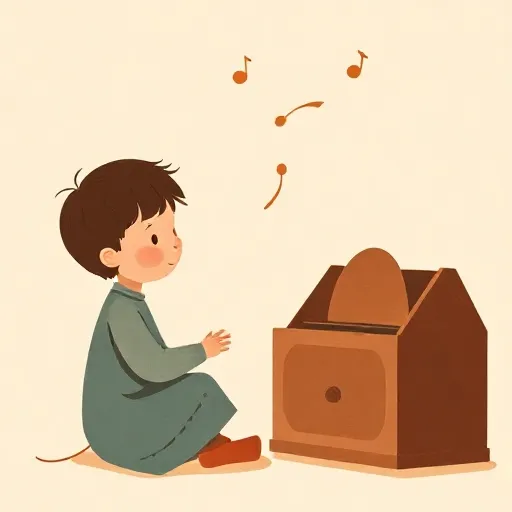
Husserl soon realized that no theory of experience would work unless it included time. Suppose you hear the three tones C, D, E in a simple melody. If you only ever lived right now — if your consciousness were a string of isolated moments — you would never hear a tune at all. You’d have one note, then another, then another, with nothing holding them together.
Yet you definitely do hear a continuous succession. Husserl explained this by describing the width of presence. At any moment, your experience is built from three interwoven parts. There’s a primal impression focused on the note sounding right now. That impression is accompanied by a retention — a special kind of awareness that still holds onto the note that has just passed, not as a memory but as a present echo of “just-pastness.” And it also includes a protention, a forward-leaning expectation of what is about to come next. Together, impression, retention, and protention create a unified field of experiencing. They let a flowing melody, a bird’s flight, or a friend’s changing expression show up as a connected whole.
This structure also explains surprise. If you open what you think is your bedroom door and instead find a brick wall, your protention is violated. The shock only makes sense because you silently expected something else. Similarly, when you listen to a favorite song and a wrong note hits, your disappointment is the flip side of your mind having already protended the right one. None of this is automatic. It’s how consciousness constantly stitches time together, right now, without you doing a thing.
The World We Live In Vs. the World Science Measures

In his last great work, The Crisis of European Sciences (1936), Husserl turned his attention to the lifeworld — the everyday world where you taste food, keep promises, and find your way to school. The lifeworld is not neutral; its objects have meaning and value. A spoon is not just metal; it’s something you eat with. A hill is not just dirt; it’s a place to climb.
Modern science, Husserl argued, owes a huge debt to Galileo’s idea of redescribing nature in mathematical terms. This gave us incredible power, but it also tempted people to forget where science starts. Slowly, people began to treat the abstract models of physics — numbers, equations, invisible particles — as the only true reality, while dismissing the colored, fragrant, meaningful world of experience as a mere illusion. Husserl called that a dangerous blind alley. The scientist who weighs an orange on a scale still needs the orange she can see and touch. Experiments have to be set up in the lifeworld, results discussed in ordinary language, instruments read with human eyes. Science is a magnificent achievement, but it’s a human achievement, rooted entirely in the same soil your own experience grows from.
When we forget that, Husserl warned, we risk a crisis of meaning. We end up with stunning technology but no sense of why any of it should matter. The reply is not to reject science; it’s to remember that the world you live in, the one full of passions and friends and morning light, is the original source. Without it, even the most exact equation would have nothing to be about.
Why Look Closer?

Return to that passport for a moment. Before you looked, the thought “It’s in the drawer” was just a label hung on the world. After you look, the world answered, and the label becomes full. This small, everyday happening is a truth-event, and Husserl spent his life trying to help us notice it. Phenomenology doesn’t ask you to believe a new set of facts. It asks you to pay a new kind of attention.
Once you see the difference between empty intentions and fulfilled intuitions, you can’t help but use it. You start noticing when you are merely assuming something about a friend, versus when you actually listen. You feel the difference between a rumor you repeat and an injustice you witness firsthand. Husserl’s big idea was that reality isn’t hiding behind a curtain. It’s right here, waiting to be seen — but only if you stop and really look.
Think about it
- If you can’t see the back of someone’s head right now, do you still perceive the whole person? What would happen to your experience of others if you couldn’t expect more than you see?
- Science tells you a table is mostly empty space between atoms, but you experience it as solid. Are both descriptions real in different ways, or does one come closer to the truth?
- Think about a time you felt sure of something, then later discovered you were wrong. Could you have caught the mistake earlier by paying closer attention to what was actually given in your experience?