Can You Train Yourself to See the World Differently?
When Your Senses Get a Permanent Upgrade
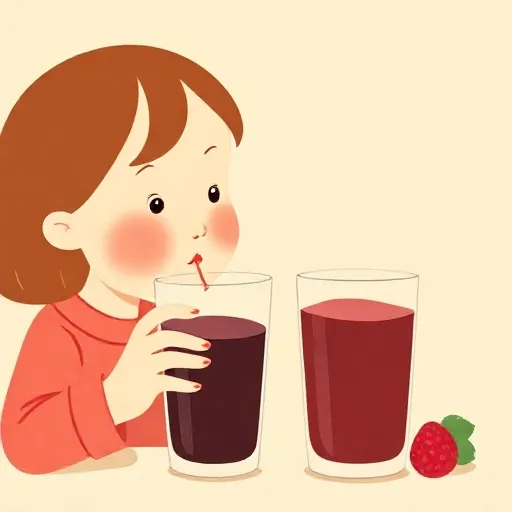
Imagine you’re tasting two slightly different berry juices. At first they seem identical. A friend says one has a whisper of raspberry, the other blackberry. Weeks later, after trying many sips, the difference hits you like a switch flipping: you can taste it, firmly and instantly. You haven’t just learned a fact about the juices — your perception has changed.
Philosophers and psychologists call this perceptual learning: a long-lasting change in what you see, hear, taste, or feel, caused by practice or experience. The psychologist Eleanor Gibson (1910–2002) defined it in 1963 as a relatively permanent change in how you perceive a stimulus after encountering it again and again. Three features stand out. First, the change sticks around — it’s not a fleeting trick of light or tiredness. If you stare at a waterfall and then look at stationary rocks, the rocks seem to drift upward for maybe twenty seconds. That’s a short-term illusion, not perceptual learning. Second, the change must be genuinely perceptual, not just a new belief or a shift in taste. Suppose you decide you now like a song because your friends do; the song may sound exactly the same. That’s a change in judgment, not in perception. Third, the change comes from experience, not from surgery or a brain injury. Laser eye surgery improves vision, but it isn’t learning.
Scientists used to think adult senses were pretty fixed. By the 1990s, neuroscientists discovered that the brain’s early sensory areas — even the primary visual cortex — could physically reshape themselves with training. This neural plasticity helped convince researchers that improvements in spotting tiny differences could be genuinely perceptual, not just a clever trick of thinking.
Is It Really Your Senses Changing, or Just Your Mind?
One tricky question is where to draw the line between a mere change in belief and a real change in perception. If you look at a cup on a table and learn that it’s empty, your senses haven’t permanently altered — you just acquired a fact. Philosopher Fred Dretske (1932–2013) warned that we mustn’t confuse perceptual learning with learning that relies on perception. When you learn to put that cup in the dishwasher every evening, you’re using your eyes, but your seeing hasn’t been retrained.
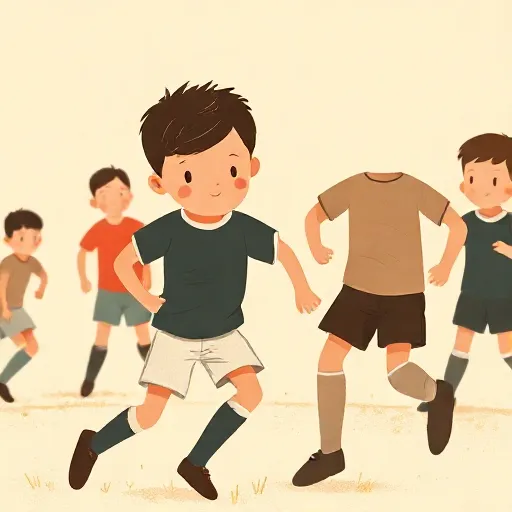
Something closer to true perceptual learning happens when expert soccer players defend an attacker. Researchers found that experts fix their attention on the opponent’s hips much longer than beginners do. The hips give an early clue about which direction the player will move. This tuned attention becomes automatic — the defender no longer decides to look there; practice has wired it in. Philosophers sometimes call this a change in attentional weighting, one of the core varieties of perceptual learning. And while this change enables a skill, it isn’t the skill itself. You can’t simply choose to stop seeing the hips as the crucial cue; the perception has become part of your perceptual setup.
Philosophers also discuss whether beliefs can seep into perception over long stretches of time. Jerry Fodor (1935–2017) drew a careful distinction. Immediate, synchronic influence of a belief on perception — like suddenly seeing a friend’s neutral face as angry just because you just now believe she’s mad — is unlikely, he thought. But diachronic influence — where years of training or repeated exposure reshape how your sensory system responds — seems real. Many cases of perceptual learning fall into that slower, experience-shaped category. The boundary between “purely perceptual” and “cognitively shaped” perception remains a live debate.
Four Ways Your Brain Rewires Perception
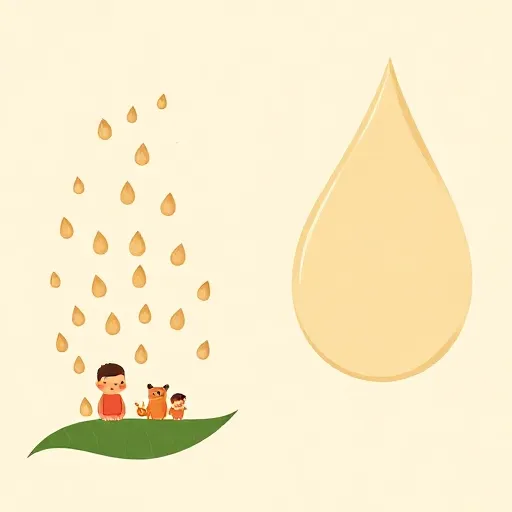
Psychologist Robert Goldstone sorted perceptual learning into four types. All of them show that your brain isn’t a passive camera; it’s an active sculptor of your experience.
Differentiation is learning to perceive a difference where before you saw only sameness. William James described a person learning to tell the upper and lower halves of a certain wine apart. After practice, what was once one taste becomes two. In the lab, native Japanese speakers who had lived in the United States were trained to better distinguish the English “r” and “l” sounds — a difference that doesn’t exist in Japanese. Their ears literally changed.
Unitization is the flip side. It’s when what looked like separate parts fuses into a single unit. Written words are a perfect example: you no longer see the letters “b-o-o-k” as separate shapes; you perceive the word as one chunk. Your brain has built a specialized detector for that familiar pattern. The same happens with bird species, faces, and even random squiggles if you see them enough times.
Attentional weighting is what happened with the soccer defender. Your attention becomes systematically drawn toward certain features and away from others. Expert fencers, for instance, focus more on an opponent’s upper trunk, while beginners stare at the legs. A golfer with bad coaching might develop the unfortunate habit of attending to the putter instead of the ball — a change in perception that actually harms performance.
Stimulus imprinting occurs when repeated exposure to a whole pattern or object builds a dedicated detector, even if you never saw it as parts before. Cells in the temporal cortex can fire more strongly for a familiar face. This helps you recognize a friend instantly, even in blurry conditions.
Why Does Perceptual Learning Exist?

Why would a perceptual system stay plastic instead of becoming hardwired in childhood? One answer is that it offloads work from slow, effortful thinking onto fast, automatic perception. Kevin Connolly calls this the Offloading View. When you first learn a new language, you painfully translate each word using rules you memorized. As you become fluent, the sounds of sentences start to strike your ear as meaningful directly, without mental translation. Perception takes over the job, freeing your mind to plan a reply or notice other things.
But some philosophers challenge this. Casey O’Callaghan argues that perceptual learning aims at perceptual know-how: you acquire new capacities to detect and tell apart features — like the phonological sounds of the new language — not just to lighten the load on thinking. Zoë Jenkin proposes a simpler Perceptual View: the function is simply to make perception itself more accurate or efficient. Even infants and non-human animals undergo perceptual learning for basic stimuli; it doesn’t need to be about helping higher-level thought.
Scientists and philosophers agree, however, that perceptual learning isn’t always a success story. The same rewiring mechanisms can create biases. Seeing racist tropes repeated in media can train visual perception to associate Black faces with threat or weapons, even when no threat is present. This raises hard questions about whether we hold some responsibility for how our perception gets warped — and for working to undo those distortions.
Seeing Things That Weren’t There Before
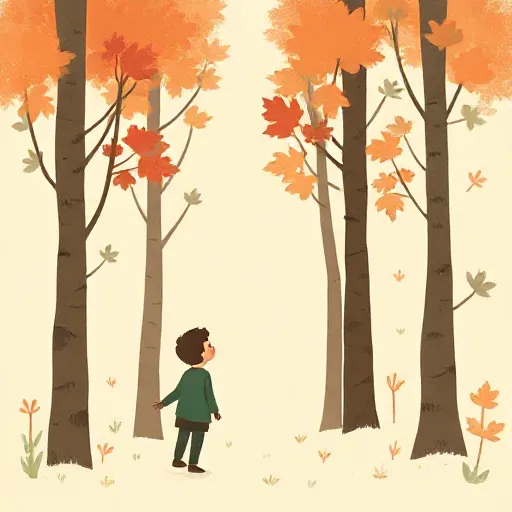
Susanna Siegel noticed something strange about perceptual learning: it might let us see entirely new properties that weren’t in our experience before. Imagine someone tasked with cutting down all the pine trees in a grove. After months, she finds that pine trees look different — almost popping out from the maples and oaks. Siegel argues that the best explanation is that her perception now represents the kind property being a pine tree, not just a patch of green and brown. The property is part of what it’s like to see.
The 18th-century philosopher Thomas Reid described acquired perception: a farmer learns to literally see the rough amount of corn in a heap, and a coachman hears the sound not just as noise but as “a coach passing.” Some philosophers think meanings of words can become part of what you hear when you know a language. Others, like Casey O’Callaghan, disagree. They think you learn to hear low-level phonological features — like the difference between “ba” and “pa” — but the meaning itself isn’t in the sound of your perception. Still, the sensation of hearing your native language is undeniably different from hearing a language you don’t know. Whether high-level properties like “pine tree” or “meaning” enter perception remains one of the most exciting debates.
Perceptual learning also shows that perception can be rationally evaluable. A chess player learns to see groups of pieces as cohesive chunks. That change isn’t purely driven by blind exposure; it depends on the player’s understanding of strategy. In that sense, the player’s perception is sensitive to reasons. You might reasonably ask: given what the player knows, is this chunking a smart way to see the board? Some philosophers think this means we can appraise not just how someone responds to what they see, but the very seeing itself.
Why It Matters: From X-Rays to Art
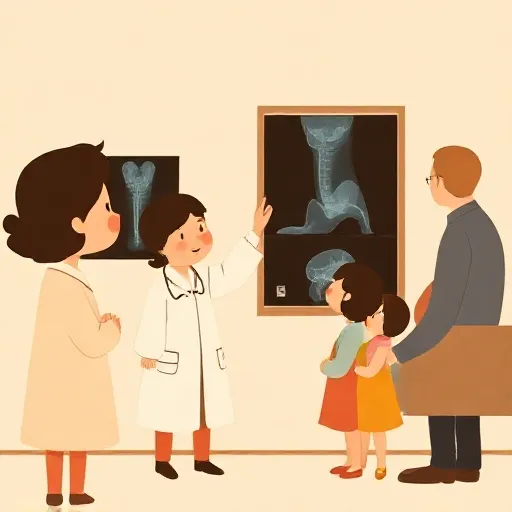
Perceptual learning separates novice from expert in almost every field. A radiologist isn’t just guessing about fractures; her visual system has actually changed so that a faint crack on an X-ray practically leaps out. Philosophers call this perceptual expertise. Some argue it expands the range of things you can know just by looking — you gain immediate, justified beliefs about what you see without needing a list of reasons. Others say the expertise is a form of know-how, a set of fine-tuned capacities to detect features.
In art, perceptual learning even challenges whether beauty is “in” an artwork or shaped by the viewer. The mere exposure effect shows that people tend to prefer artworks they’ve seen before — repeated exposure alters perception and liking. An architect trained to read 2-D blueprints might have such sharpened depth perception that she can’t enjoy the illusion of 3-D street art the way a novice can. On the other hand, a trained art historian may literally see stylistic properties — like “being Impressonist” — that are invisible to the untrained eye. Our perceptual history sculpts aesthetic experience itself.
These insights matter for your own life right now. Every Instagram scroll, every video game, every hour of practicing an instrument or sport is subtly retuning your senses. You aren’t a passive camera; you’re a sculptor of your own perception. That means you can choose to train your eyes and ears to notice more — but also that you inherit the visual biases of the images you’re fed. Understanding perceptual learning gives you a clearer view of how you see, hear, and taste the world — and how you might change it.
Think about it
- If you learned to spot a certain bird instantly in a forest, could you ever truly “un-see” it when you just want to enjoy the trees without noticing birds?
- Could a lifetime of watching certain kinds of movies or videos actually reshape your vision of people’s faces — and if so, would that difference be real perception or just interpretation?
- If a machine learned from biased data and started “seeing” certain faces as threatening, how is that similar to what might happen to a person exposed to the same images — and who is responsible for correcting it?