Can You Start Your Beliefs from Scratch? Neurath Says No
The Ship That Can’t Leave Port?

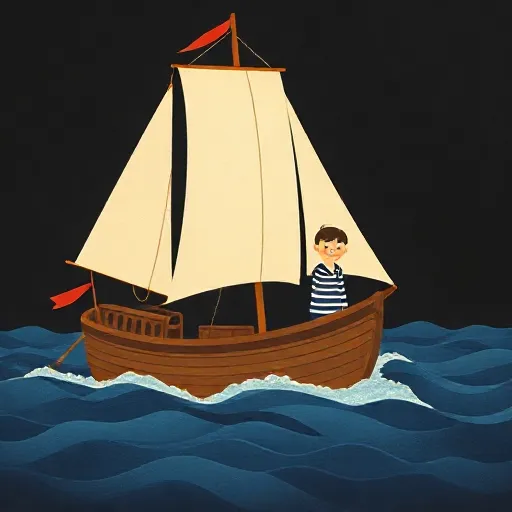
Imagine you’re on a wooden sailboat in the middle of the ocean. You notice a plank below your feet has started to rot. If you do nothing, the whole boat might sink. But you have no dry dock to pull into — you’re out here, alone. So you grab a saw and new timber, and while balancing on the very planks you need to replace, you begin to fix the boat. This is exactly the picture that philosopher Otto Neurath (1882–1945) used to describe how all human knowledge works. He believed we can never start from scratch. Every attempt to improve what we think must happen inside the shaky system of our current beliefs — and that turns upside down the oldest dream of philosophy.
Who Was Otto Neurath?

Neurath was a Viennese polymath who studied mathematics, economics, history, and logic. In the 1920s he became a leading member of the Vienna Circle, a group of philosophers and scientists who wanted to rebuild all knowledge on a clear, scientific foundation. They called their project logical empiricism. While many of his colleagues dreamed of a perfect logical language, Neurath kept his feet on the ground — or rather, on the boat’s deck. He was also a socialist reformer who briefly served as head of a Central Planning Office during a short-lived Bavarian government, and he spent his life designing tools to share knowledge with ordinary people. After the rise of the Nazis he fled first to the Netherlands and then to England, where he continued to write, teach, and invent visual languages.
The Dream of Perfect Foundations

For centuries, philosophers longed for a clean slate. René Descartes (1596–1650) tried to doubt everything until he reached one unshakable truth: his own thinking proved that he existed. He wanted to build all knowledge upward from that single certain point, like a tower resting on bedrock. In the 1920s, Rudolf Carnap (1891–1970), another Vienna Circle thinker, attempted something similar in his book The Logical Structure of the World. Carnap proposed that all scientific concepts could be constructed out of an individual’s private, immediate experiences — a kind of “red circle here now” sensed by a single mind. This approach was foundationalist (it assumed knowledge has a solid base), atomist (it treated simple sense data as atomic building blocks), and subjectivist (it started from what only one person could experience).
Neurath thought this was a dead end. If knowledge is something we share and test together, you cannot begin with private experiences that no one else can check. He rejected Carnap’s dream of a perfect starting point and proposed a radically different picture.
A Language Everyone Can Test
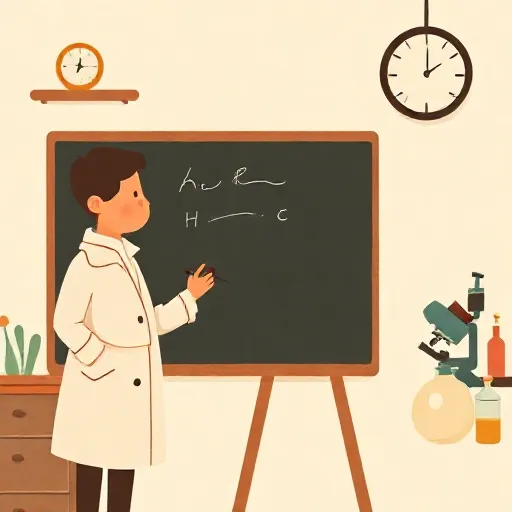
Instead of private sensations, Neurath insisted that all meaningful scientific statements must be in a public language about things in space and time. He called this rule physicalism. Physicalism doesn’t mean only physics counts — it means you describe observations, behaviors, and events that anyone could spot. To show how this works, he introduced protocol sentences, the official records of what a scientist observed. His example looked something like: “Otto’s protocol at 3:17 o’clock: [Otto’s speech-thinking at 3:16 was: (at 3:15 o’clock there was a table in the room perceived by Otto)].” Notice everything packed in: the name of the observer, the exact time, the act of perceiving, and the plain fact about a table.
This structure matters. Because it names the person, the moment, and the act of seeing, a whole scientific community can decide whether the report is trustworthy. Was Otto hallucinating? Was the light good? Could others repeat it? For Neurath, language is always shared. He drove this home with a story about Robinson Crusoe stranded alone on an island. Even if Crusoe writes a protocol only for himself, he still uses the same intersubjective language he used with Friday — “the Robinson of yesterday and the Robinson of today stand precisely in the same relation in which Robinson stands to Friday.” There is no such thing as a purely private language.
Neurath admitted that this public jargon would always be messy. Protocol sentences contain imprecise, cluster-like terms he called Ballungen (the German word for “clumps”). Words like seeing, microscope, or even table cannot be made perfectly exact. You can refine them, but you can never eliminate them. Science is stuck with ordinary, fuzzy language.
Rebuilding the Boat at Sea
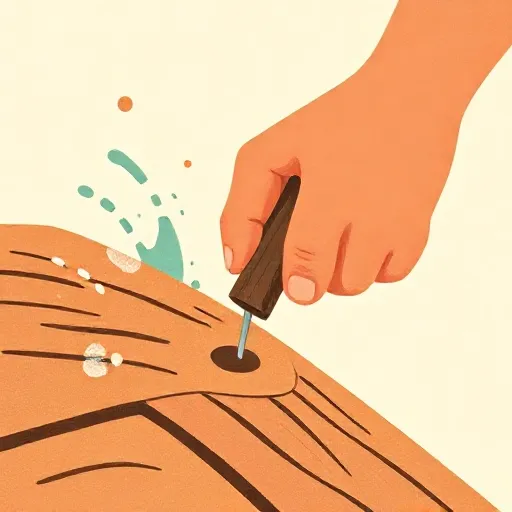
If the starting point cannot be a private, unshakeable experience, then protocols themselves cannot be sacred. Neurath’s most famous picture is the boat. He wrote: “We are like sailors who have to rebuild their ship on the open sea, without ever being able to dismantle it in dry-dock and reconstruct it from its best components.” In his view, all scientific statements — including the very observation reports we use to test other statements — are revisable. When an observation clashes with a theory, we might reject the observation rather than the theory. This is the Neurath Principle: no sentence is immune to cancellation.
This is not a recipe for chaos. We decide, as a community of inquirers, which parts of the total web of statements to keep and which to replace. Neurath called his approach holism: we test whole clusters of claims together, never one isolated sentence. A statement counts as correct, he suggested, if it can be fitted into the existing totality of statements that have already been harmonized with each other. The aim is coherence, not a mythical foundation.
Because pure logic underdetermines these choices, we also rely on what Neurath called extra-logical factors — pragmatic decisions, habits, and sometimes what he termed auxiliary motives. Faced with two equally good hypotheses, a scientist might simply flip a coin. Neurath mocked the fantasy that sheer calculation could always settle a question as pseudorationalism. Real rationality means admitting that your reasoning always leans on a mix of evidence, judgment, and a little bit of honest guesswork.
Unifying Science and Opening Knowledge
Neurath pushed this holistic picture further. In a complex world, predicting even one real event — like whether a forest will burn down — demands laws from many sciences: chemistry for the fire, meteorology for the weather, and sociology for whether humans will intervene. Therefore, all sciences must become connectable. He rejected the idea of a pyramid model where physics sits at the bottom and every other science reduces to it. Instead, he offered an encyclopedia model: a sprawling, ever-changing mosaic of local connections among disciplines, like islands in an archipelago linked by bridges that are constantly being rebuilt. Unified science, for Neurath, was exactly this ongoing cooperative project — a “great, rather badly coordinated mass of statements” — not a finished system.
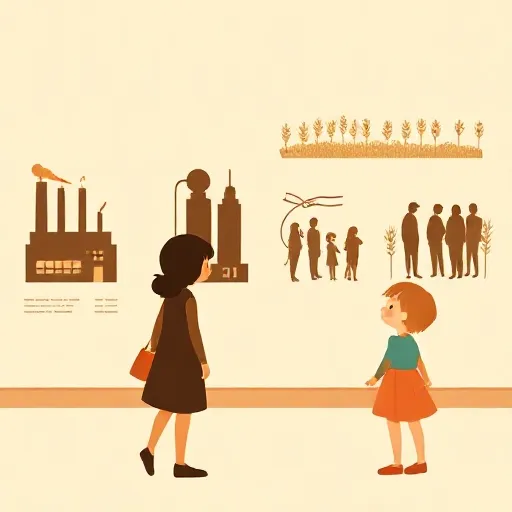
That same cooperative spirit drove his visual education campaign. In Vienna, he developed the ISOTYPE pictorial language, a set of simplified pictograms — silhouettes representing people, factories, grain — that could communicate complex statistics without words. He believed that “words divide, pictures unite.” In a democracy, he argued, ordinary citizens needed access to the knowledge that experts had, so they could participate in decisions. His museum exhibitions, posters, and children’s books put scientific and social facts into the hands of anyone who could look. Education, like science, became a collective, bottom-up enterprise.
Why Your Boat Never Docks

Neurath’s ideas matter beyond science. You inherit beliefs from your family, your culture, and your own past observations. You cannot suddenly doubt everything at once and start over — the attempt would have to use the very language and thinking habits you are trying to replace. Every time you change your mind about something big, you do it one plank at a time, relying on the surrounding beliefs that still seem sound. This is exactly the boat: you stand on the planks you trust while you revise the ones you don’t.
What keeps the whole thing afloat? For Neurath, the answer was social. We test ideas against each other’s observations, argue, and adjust. We don’t need absolute certainty to make progress — we just need to cooperate honestly. The boat may never reach a dry dock of perfect foundations, but it sails on, steadily rebuilt by a whole crew.
Think about it
- If you had to fix your whole belief system like a boat, which plank would you replace first? How would you choose?
- Neurath thought language is always shared. Can you think of a time when you tried to understand something completely on your own? Was it possible?
- Is it better to have a little bit of certainty about one thing, or many revisable beliefs that connect to each other? Why?