Can You Prove the World Is Real? Moore’s Hands-On Answer
The Philosopher Who Raised His Hands
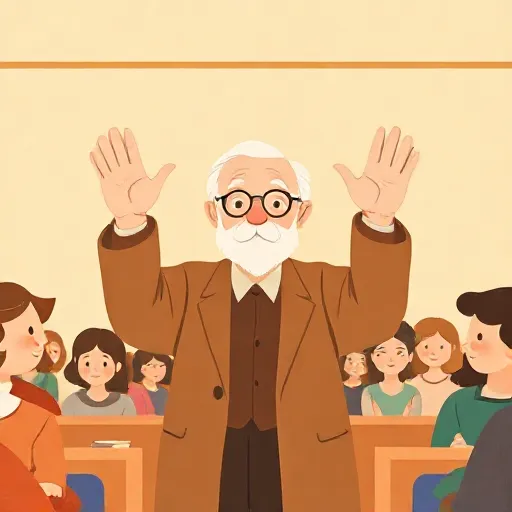
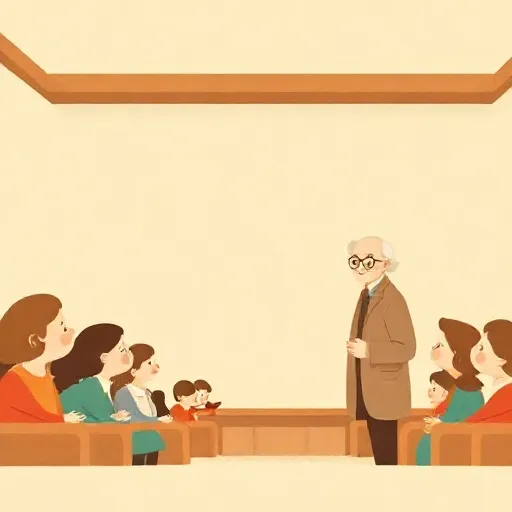
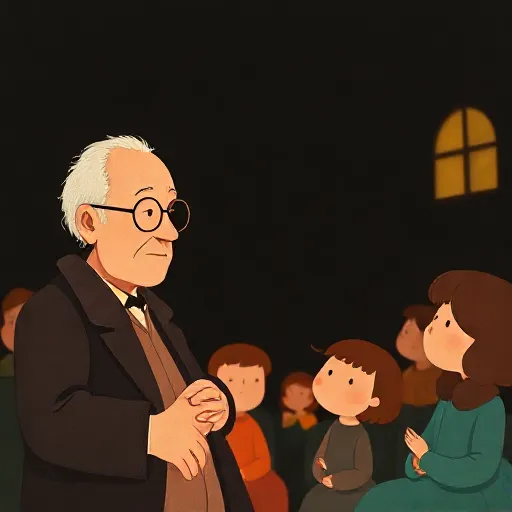
In November 1939, at the British Academy in London, a philosopher named G.E. Moore (1873–1958) walked to the lectern to give a talk. He was retiring after years as a Cambridge professor, and this was one of his last big lectures. What he did next became one of philosophy’s most famous moments. He held up his right hand and said, “Here is one hand.” Then he held up his left hand and said, “and here is another.”
With that gesture, Moore claimed he had just proved that an external world exists—a world of objects that don’t depend on anyone’s mind to be real. The room buzzed. Some philosophers were delighted. Others were outraged. How could waving your hands prove anything? This question took Moore decades to sharpen, and it grew out of a much older worry: what if the world you think you see isn’t really there at all?
Why Would Anyone Doubt the World Exists?
To see why Moore’s hand trick mattered, you have to step back into the 1800s. Many British philosophers at that time were idealists. Idealists like F.H. Bradley (1846–1924) and J.M.E. McTaggart (1866–1925) argued that reality might be entirely mental. An ordinary object—a chair, a tree, a hand—is really just a bundle of ideas or experiences in someone’s mind. The physical world, they said, might not exist independently at all.
The worry goes back further. In 1641, René Descartes imagined a powerful evil demon who could make him hallucinate everything—the sky, his own body, even the feeling of being awake. If you can’t rule out that possibility, how do you know a real world is out there? Later, Bishop George Berkeley (1685–1753) suggested that objects only exist when someone perceives them. To many people, that sounds crazy. But idealists took it very seriously.
Moore himself was briefly drawn to this kind of thinking as a young student at Cambridge. He admired McTaggart and read the idealists closely. But then, around 1898, he began to rebel. He started to think that the idealists had made a huge mistake about something basic: the difference between what’s in your mind and what’s really there.
Moore’s Common-Sense Rebellion
Moore’s rebellion wasn’t polite. He accused idealist philosophers of muddying the distinction between thought and reality. When you see a patch of bright blue, he argued, you are directly aware of real blueness—not a mental picture, not a feeling inside your head. In a 1903 paper, “The Refutation of Idealism,” he insisted that blue is “as much an object, and as little a mere content, of my experience… as the most exalted and independent real thing.” In other words, the color you see is part of the world, not a private movie playing in your mind.
This idea grew into a much broader stance. In 1925, Moore published “A Defence of Common Sense,” where he listed a long string of truisms—statements so obvious that any ordinary person would agree. He gave examples of such truisms, like that the earth had existed for many years before his body was born, among many others. Moore declared that he knew these things for certain, and that everyone else did too—even the philosophers who pretended to doubt them. He wasn’t trying to prove those truisms from some deeper foundation. He treated them as the starting point. If a philosophical theory said you don’t really know you have hands, Moore thought the theory was more likely to be wrong than your knowledge.
That didn’t mean he thought common sense was the last word. Moore was happy to let philosophers dig into what those truisms mean—what hands are made of, whether a hand is just a bundle of atoms, or even whether it’s a sense-datum (the directly experienced shape and color before you interpret it as a “hand”). As long as the analysis didn’t deny the truth of the truism, he was open. But he refused to let theory wipe away the things we all seem to know.
The Famous Proof: Hands as Evidence
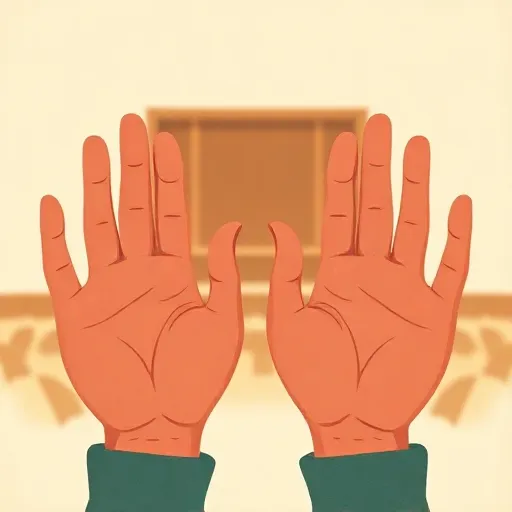
That 1939 lecture, “Proof of an External World,” brought Moore’s attitude to a dramatic head. He first spent a long time carefully defining what counts as an external object. His answer: a thing whose existence doesn’t depend on any mind perceiving it. If he could prove that even one such thing exists, he’d have proved an external world.
Then came the gesture. He held up his right hand and made a certain motion. He held up his left. He spoke the words. Moore claimed the argument was “perfectly rigorous.” Here’s the simplified structure:
- Here is one hand (he saw it, he knew it).
- Here is another hand.
- Hands are material things that don’t vanish when you stop looking.
- Therefore, at least two external objects exist.
- Therefore, an external world exists.
He wasn’t joking. His point was that the premises are things any sane person already knows to be true, and that the conclusion follows logically. You don’t need a microscope or a fancy equation. You just need to notice what’s right in front of you.
Crucially, Moore later clarified something that often gets misunderstood. He did not claim he was refuting skepticism—the view that we can’t know anything for certain. He said he was only proving that an external world exists, not proving that he knows it with absolute certainty. The difference matters. A skeptic might say, “You don’t really know you have hands; maybe you’re a brain in a vat.” Moore wasn’t answering that in this lecture. He was simply demonstrating that if we’re allowed to trust what we plainly see, the existence of a world outside our heads is the most obvious fact of all.
The Skeptic Strikes Back

Critics were quick to pounce. They said Moore’s proof was circular: you can’t use your hands as evidence that hands are real, because you’re already assuming that what you see is a real hand. Moore would reply that not all knowledge starts from zero. Some things are so basic—like seeing your own hand—that they don’t need further proof. You are already entitled to believe them.
But the dream argument was harder for him. In his later writings, especially a paper called “Certainty,” Moore admitted the force of this challenge. If you can’t prove you’re not dreaming right now, then you can’t prove you really know you’re standing up or holding up a hand. He struggled with that. He even acknowledged that, strictly speaking, he couldn’t know for certain that he wasn’t dreaming. That concession left his proof in an odd spot. It showed the existence of an external world if you accept the evidence of your senses. But the skeptic could always ask whether you should trust your senses at all.
Moore never found a final, knockout reply to that. But his wrestling with the problem made something clear: even if you can’t silence the radical skeptic with a single argument, you might still be perfectly reasonable to go on believing in the world you live in.
Why Moore’s Challenge Still Matters

Moore died in 1958, but the argument he started is far from settled. Think about a moment when you were absolutely sure of something—your name, the fact that you have two feet, that you ate breakfast this morning. If someone said, “Prove it!” how would you begin? Any evidence you offered—photos, memories, words—would rely on the very kind of trust you’re being asked to defend. Moore’s point was that at some level, we all have to start with trust. We accept a huge number of ordinary beliefs, not because we’ve proved them from scratch, but because they form the background that makes proving anything else possible.
Philosophers today still argue about whether Moore was a genius of common sense or just refusing to play the skeptical game. His insistence that it’s sometimes okay to say “I know it, and that’s enough” has influenced thinkers from Ludwig Wittgenstein to present-day defenders of common-sense realism. The next time you’re sure of something completely ordinary and someone demands a reason, you might find yourself in Moore’s shoes—holding up a hand and wondering why that isn’t enough.
Think about it
- If a friend says, “Prove to me you’re not a brain in a vat, dreaming everything,” what would you do or say? Would Moore’s hand gesture convince them—or you?
- Moore listed things like “the earth existed before I was born” as truisms. Can you think of something that seems obviously true today but might turn out to be wrong, given what science discovers in the future?
- Is there ever a situation where it’s reasonable to believe something even if you can’t give a proof for it? If so, what makes that different from just guessing?