Does Learning One New Fact Change the Meaning of Every Word?
A Ripple Through Your Language
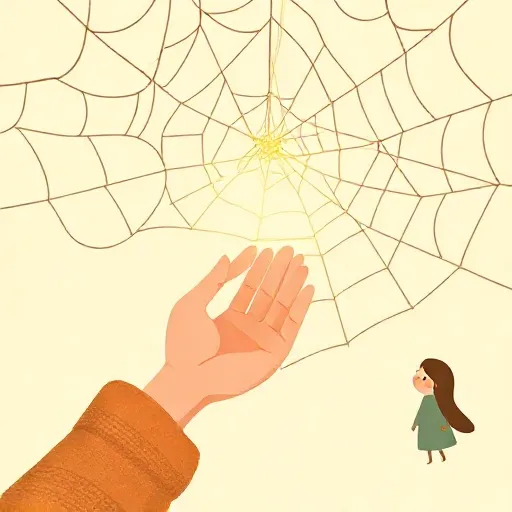
You and a friend are arguing about whether Pluto is a planet. She says it’s too small. You pull up an article from an astronomer that gives a new, precise definition — and suddenly you’re not sure what you ever meant by “planet.” Did the word just change meaning for you? Most of us assume that learning a fact changes only our beliefs, not the words themselves. But a group of philosophers called meaning holists challenge that assumption. They think the meanings of all the words in a language are tied together so tightly that a shift anywhere sends a tremor everywhere. If they are right, then every new thing you learn — even about dogs, chocolate, or Pluto — could slightly reshape the entire language inside your head.
The Great Web of Meaning
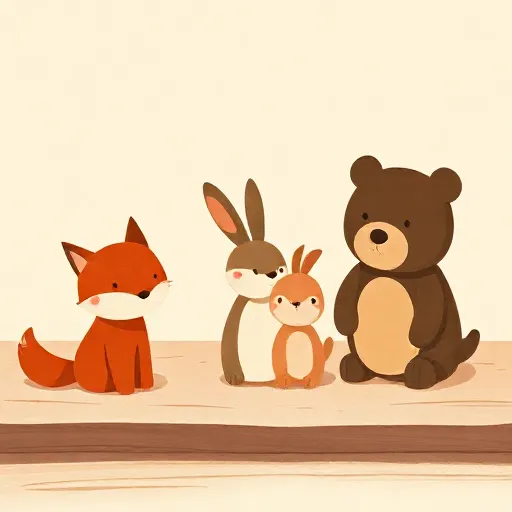
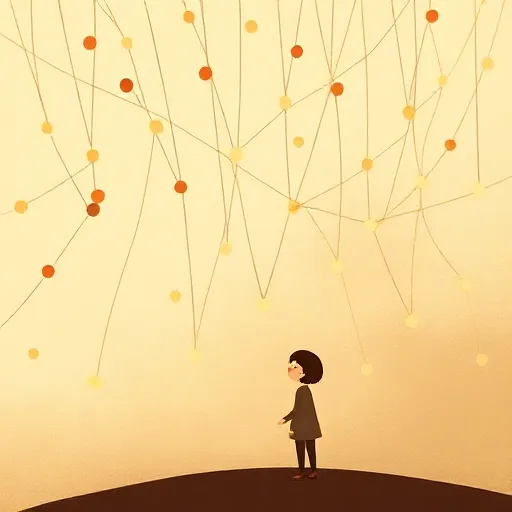
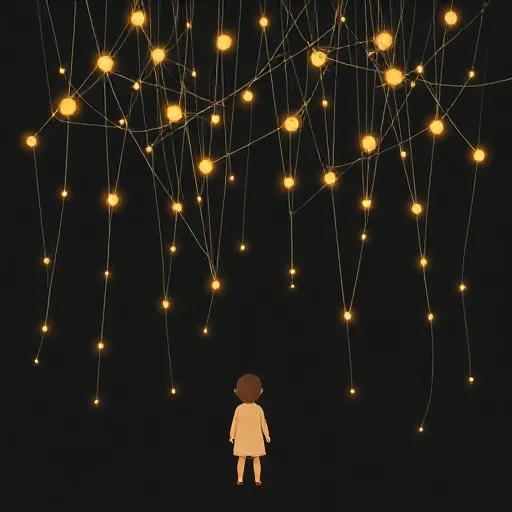
To see why someone might believe this, it helps to draw a contrast. Atomism about meaning is the view that each word’s meaning is independent, like a pile of separate building blocks. The word “cat” gets its meaning from its own direct link to cats, irrespective of what you think about “animal,” “pet,” or “fur.” Molecularism about meaning allows small clusters: the meaning of “kill” might depend on “cause” and “die,” but not on every other word in the language. Meaning holism goes much further. It says that the meaning of any single term is entangled with the meanings of every other term. Change what you mean by “squirrel,” and you’ve also changed — if only a little — what you mean by “animal,” “tree,” “fast,” and eventually even “building” or “Omaha.”
This is not just a claim about connections. It is a claim about how meaning is determined. The holist argues that the inferential role of a word — the set of inferences you are allowed to make with it — is what gives the word its meaning. From “That is a squirrel” you can infer “That is an animal,” “That is not a building,” and a huge number of other things. Those inferences spread outward. A change to any one of them can, in principle, travel through the web and touch everything else.
Why Think Meanings Are Holistic?
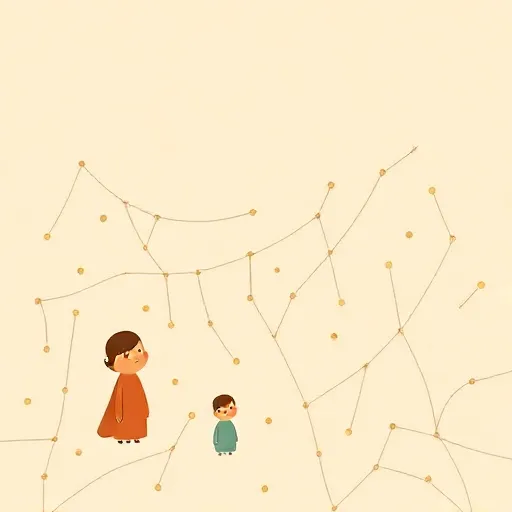
One major push toward holism came from the philosopher W.V.O. Quine (1908–2000). In 1951, Quine argued that you can’t test a single sentence by itself against the world. Our beliefs face experience as a whole group. If you look out the window and see rain, that doesn’t just confirm “It is raining.” It also relies on a vast background of assumptions about windows, vision, weather, and language. Quine’s picture of knowledge was a web: tug one thread and the whole web adjusts. Because meaning and belief are so entwined, many philosophers concluded that meaning itself must be holistic.
A second route starts from the idea that meaning is tied to use. Some theories say that what a person means by a word is determined by all the beliefs they would express with it. Others focus on inferential role — the complete set of inferences the word licenses. Since beliefs and inferences are connected across the whole language, meaning holism seems to follow naturally. If you learn that a koala is not a bear, that new fact might alter the inferential chains between “koala,” “bear,” “marsupial,” and “Australia.” The web quickly spreads to every corner of your vocabulary.
A third argument is indirect. Holists often point out that attempts to stop the spreading — to say only some inferences are meaning-constitutive — require drawing a sharp line between “meaning” and “mere belief.” That line is the analytic/synthetic distinction, which Quine famously attacked. Most philosophers now think there is no clean way to separate the two. So if you accept that at least some inferences are part of meaning, it becomes hard to avoid the conclusion that all of them are. And that is meaning holism.
The Danger of Instability: Can We Still Disagree?
If meaning holism is true, a serious problem appears: meaning becomes wildly unstable. Suppose you believe dogs can eat chocolate safely, and I believe chocolate is poisonous to dogs. Even if we both say, “Dogs are good pets,” our total beliefs differ, so the inferences we tie to “dog” and “pet” differ. According to strict holism, we don’t mean exactly the same thing by those words. We might think we’re agreeing, but strictly speaking, we are talking past each other. The same issue makes genuine disagreement seem impossible: if my “planet” isn’t your “planet,” then we aren’t contradicting each other when I say Pluto is a planet and you deny it.
This problem cascades. Changing your mind about anything would change the meanings of all your terms, so there would be no single proposition you first believed and later rejected. Communication would require people to share nearly all their beliefs just to mean the same thing; the moment they diverge, they drift into different languages. And psychological explanations — like “if someone is thirsty and believes there is water nearby, they will try to drink” — would never be truly general, because no two people ever have exactly the same total web of meanings.
Saving Communication: Similarity, Context, and Two Flavors of Meaning
Meaning holists are well aware of these worries and have several strategies for responding.
One is to appeal to similarity. Even if no two people ever share exactly the same web of inferences, their webs can still be extremely similar. Your total beliefs about cats might overlap with mine in 99% of cases, so for practical purposes we mean nearly the same thing. Disagreement and communication then become a matter of degree, not an all-or-nothing affair.
A more structured response comes from two-factor theories. Philosopher Ned Block (born 1942) proposed that a word carries two kinds of meaning. Wide meaning is determined by what the word refers to in the world — the actual cats, the actual sugar — and stays fairly stable across people. Narrow meaning is holistic, tied to the individual’s full web of inferences, and it’s what does the work in psychological explanation. Communication succeeds because our wide meanings match, even when our narrow webs differ slightly. You and I can talk about Pluto because “Pluto” picks out the same icy body for both of us, despite the different personal beliefs we attach to it.
A third approach is contextualism, developed by philosopher Akeel Bilgrami (born 1950). He argues that only the beliefs and inferences relevant in a given situation determine a word’s local meaning. If you ask me, “Do you want sugar in your coffee?” only my beliefs about sugar’s sweetness, color, and texture are active — not my childhood memory of a sugar factory tour. In that context, our local meanings can be identical, allowing perfect communication. The instability remains only at the level of the aggregate meaning, which we never actually use in conversation.
Why It Still Matters: The Words We Fight Over

Meaning holism might sound like an abstract puzzle, but it touches every argument you’ve ever had. When you and a friend disagree about whether a tomato is a fruit, are you really disagreeing about the same thing, or have your webs of belief already drifted apart? When scientists redefine “planet,” does the word itself change, or do we just correct an old mistake? These questions matter because they shape how we understand learning, persuasion, and even friendship. If meaning is holistic, then every conversation is a negotiation not just about facts, but about what our words mean in the first place.
The holist’s picture is unsettling, but it also captures something true: our ideas really are connected in webs. When you learn that a whale is a mammal, it doesn’t just change “whale” — it ripples into “fish,” “warm-blooded,” “ocean,” and a hundred other words. Whether that counts as a change in meaning or merely a change in belief is a live debate. The answer affects how we think about language, knowledge, and the possibility of ever really understanding one another. And that’s worth arguing about — even if, according to holism, you and I might mean something slightly different by “arguing.”
Think about it
- Suppose you and a friend have slightly different ideas about what “freedom” means. When you argue about whether a particular rule is fair, are you really arguing about the same thing?
- A scientist discovers that a creature once called a “fish” is actually a mammal. Did the word “fish” change meaning, or were we simply mistaken about what fish are?
- If every time you learned something new, all your words shifted meaning a tiny bit, would you ever be able to truly say you changed your mind about something?