
Is It Always Good to Be Loyal, or Can Loyalty Be a Trap?
What Does It Mean to Be Loyal?

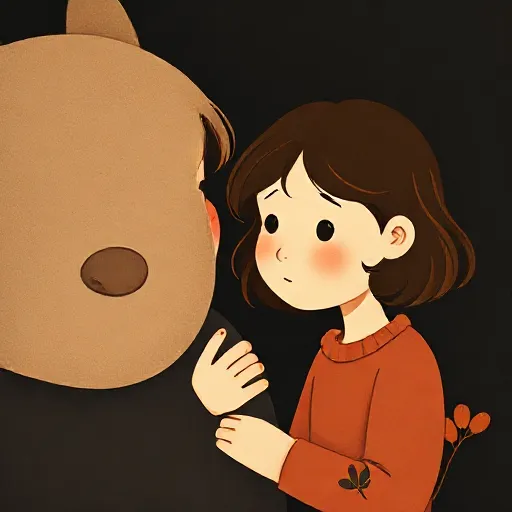
It’s two in the morning. Your best friend’s bike chain snapped miles from home, and your bed is warm. But you pull on your jacket, grab your bike, and pedal out into the cold. That is loyalty.
Philosophers describe loyalty as a practical disposition — a habit of sticking with someone or something you care about, even when it costs you. It is not just a feeling. The test of loyalty is whether you act for the person or group you are attached to when it would be easier to stay in bed.
The attachment itself has to matter to you for its own sake, not just because of what you get out of it. Philosophers call this an intrinsically valued associational attachment. You stay loyal to your friend because the friendship itself is important, not because she gives you candy. The American philosopher Josiah Royce (1855–1916) built his whole ethical theory around this idea. He called loyalty “the willing and practical and thoroughgoing devotion of a person to a cause” — and he believed it was the central human virtue.
Is Loyalty Something You Feel or Something You Do?

Some people think loyalty is mainly a sentiment — a rush of devotion, a lump in the throat. The poet and philosopher R.E. Ewin (20th-century philosopher) even called it an “instinct to sociability.” But most philosophers today argue that while feelings often come along, the heart of loyalty is stickingness — staying put or acting faithfully when it is hard.
Think of a defense lawyer. She may not feel sentimental about a difficult client. But she remains fiercely loyal to the job of defending that person because the whole legal system depends on lawyers not giving up when a case gets ugly. Her loyalty is not blind or unthinking; it is a rational choice to honor a professional commitment.
So loyalty can be warm, but it does not have to be. What matters is what you do — the 2 a.m. bike ride, the refusal to embarrass a friend behind their back, the stubborn decision to stay on a struggling team instead of quitting for an easier one.
What’s So Special About “My” Friend?

Loyalty is personal. You are loyal to your friend, your family, your town. That brings up a famous puzzle. The English philosopher William Godwin (1756–1836) once asked: “What magic is there in the pronoun ‘my,’ that should justify us in overturning the decisions of impartial truth?”
In other words, if everyone matters equally, why should your friend get special treatment? Why should you help her with homework instead of spending that time tutoring ten strangers who need it more?
Many thinkers answer that loyalty expresses particularistic obligations — special duties that grow out of relationships that shape who you are. The philosopher Andrew Oldenquist (20th-century philosopher) went so far as to say that all morality is “tribal morality”: we learn what is right inside the communities we are loyal to. Others, like Bernard Williams (1929–2003), warned that if universal fairness always came first, the deep attachments that make life meaningful would be flattened out.
Royce tried to bridge the gap with his famous idea of loyalty to loyalty. Be loyal, he said, but do it in a way that respects other people’s loyalties too. A world full of people who honor one another’s most important commitments might be more just, not less. Philosophers still argue whether that works.
Is Loyalty Always a Good Thing, or Can It Be Dangerous?
Loyalty can be powerful — but is it a virtue? R.E. Ewin argued no. He said that because loyalty can attach to terrible causes (a loyal Nazi, a loyal gang member) and because it often pressures you to set aside your own good judgment, it fails as a virtue. On his view, a genuine virtue cannot be used for evil.
Most philosophers disagree, but they take Ewin’s point seriously. They treat loyalty as an executive virtue — a trait that helps you carry out your commitments, like sincerity or courage. An executive virtue is like a sturdy tool. Whether it builds something good depends on how you use it. Loyalty to a cheating team is bad because the team is dishonorable, not because being able to stick with something is a flaw. A person incapable of loyalty at all would be missing something deeply human.
Crucially, real loyalty does not mean blind obedience. The idea of a loyal opposition shows this: you can criticize your country, your school, or your club and still be loyal. What makes the opposition loyal is that you want to improve the group without wishing to tear it down. Loyalty gives you a reason to speak up, not just to fall silent.
Why Stick Around? The Exit, Voice, and Loyalty Triangle

The economist and social thinker Albert Hirschman (1915–2012) gave us a useful image. Whenever a relationship or organization starts to falter, you have three options: exit (leave), voice (complain and try to make things better), or loyalty (stick around, and often use voice because you care).
Loyalty, in this picture, is the glue that keeps you from bolting the moment things get hard. It buys time for repair. If your school club becomes miserable, loyalty might push you to try to fix it rather than disappear.
But loyalty is not a long-term cage. Hirschman also recognized that when the object of your loyalty has become truly rotten, the exit option is legitimate. The bond runs out not because you are fickle, but because the group has forfeited your trust. A family member who repeatedly betrays you, a team that bullies its own players — loyalty is not a lifetime contract of suffering.
This ties back to identity. The groups we stay loyal to often feel like parts of ourselves. When they go wrong, it hurts enough to motivate repair. When they go irreparably wrong, leaving can feel like losing a piece of who you are.
The Whistle-Blower’s Dilemma: When Loyalty Has to Say No

One of the hardest tests of loyalty comes when you see your own organization doing something seriously harmful. An employee who reveals fraud, waste, or danger to the outside world is often called a whistle-blower — and accused of disloyalty.
But philosophers who study loyalty argue that whistle-blowing can be justified, and even obligatory, under strict conditions: it should be a last resort; the wrongdoing should be grave; the evidence must be solid; and the aim is to correct the harm, not to get revenge. Far from being a traitor, a careful whistle-blower might be loyal to the deeper mission of the organization — or to the people it is hurting.
This case clarifies something important: loyalty does not mean covering up for misbehavior. In your own life, if a friend is doing something dangerous, staying silent is not necessarily loyal. The loyal thing might be to tell a trusted adult, even if that risks the friendship. Loyalty has a backbone.
Why Loyalty Still Matters to You

The loyalties you form — to friends, teams, families, clubs, and maybe later to a profession or a cause — are more than just labels. They shape your habits, your identity, and your sense of a worthwhile life. But no loyalty comes with an instruction manual. You will have to figure out, again and again, where to draw the line.
Royce’s “loyalty to loyalty” offers a north star: try to be loyal in a way that makes the world a safer place for everyone else’s genuine loyalties. That can mean defending a friend who is being picked on, even when the crowd is against you. It can also mean, with a heavy heart, walking away from a group that has turned cruel.
Conflicts of loyalty are real. You might have to choose between a friend who counts on you and a grandparent who needs you. There is no perfect formula. But thinking clearly about what loyalty is — a practical disposition to stand by what you value — can help you make those choices with your eyes open.
Think about it
- If your best friend started doing something you thought was seriously wrong, would the most loyal thing be to support them or to try to stop them? Why?
- Royce said we should be loyal to loyalty itself. Can you think of a time when standing up for someone else’s loyalty — even to a different group — might be the right thing to do?
- Have you ever felt torn between two loyalties? Without naming names, how did you decide what to do, and would you decide the same way today?