
Why Can't a Swan Be Black? The Secret of Truly Foolproof Arguments
The White Swan Trap: When an Argument Isn’t a Guarantee
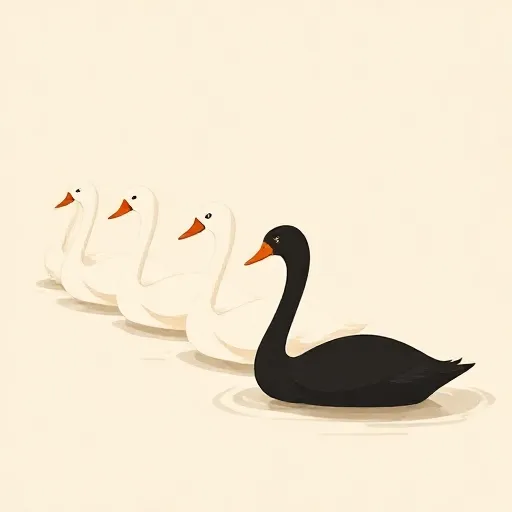
Imagine you watch a hundred swans at the park. Every single one is white. Your friend says, “All swans are white.” Would you bet your life on it? Probably not—because somewhere, maybe in Australia, a black swan could be gliding across a lake. This simple doubt hides one of philosophy’s most powerful ideas. Some arguments only make a conclusion likely. If the premises are true, the conclusion is probably true, but not guaranteed. This is called inductive validity. The swan argument—“All observed swans have been white; Smoothy is a swan; so Smoothy is white”—is inductively strong. But it’s not bulletproof. It’s not deductively valid.
Deductive validity is a whole different animal. A deductively valid argument is one where, if the premises are true, the conclusion must be true. There’s no possible way for the premises to be true and the conclusion false. It’s a iron chain, not a strong rope. You can’t even imagine a situation where the starting facts hold and the endpoint doesn’t. That’s the puzzle: what gives an argument this kind of force?
Necessity + Form = The Key to Inescapable Logic

Two things are needed for an argument to be deductively valid: it must be necessary and it must be formal. Let’s start with necessity. Suppose I argue, “This liquid is water, so it’s H₂O.” Even if water really is H₂O everywhere, is that argument deductively valid? Most philosophers say no. Why? Because it took scientific experiments to discover that fact. Logical consequence shouldn’t depend on what chemists find out. So the necessity we need isn’t just metaphysical necessity (the way the world is) but something tighter: maybe conceptual necessity (true just by the meanings of words) or a priori knowability (knowable without looking at the world).
But even that fails. Consider: “Peter is Greg’s mother’s brother’s son, therefore Peter is Greg’s cousin.” This follows from the very definition of cousin. Yet many philosophers deny it’s deductive. Why? Because it’s not formal. The argument works only because of the specific details of family words like “mother” and “brother.” It isn’t a pure pattern that works no matter what those words mean. The ancient Greek thinker Aristotle (384–322 BCE) was the first to study syllogisms, arguments where the form is everything, like “All A are B; all B are C; therefore all A are C.” That shape guarantees truth whoever or whatever A, B, and C stand for. Logic demands that kind of shape, not just meaning-based tricks.
Building Tiny Worlds: How Models Capture Logic
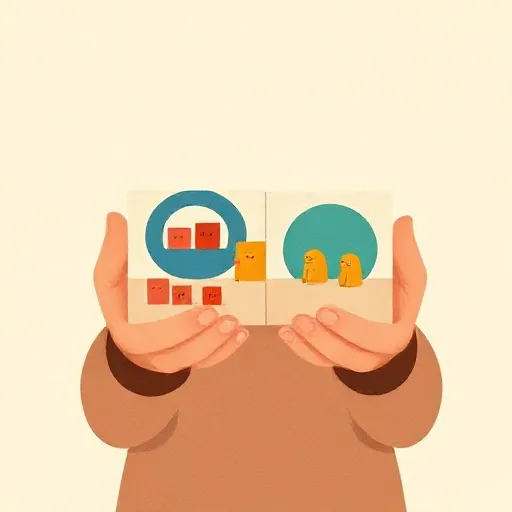
So how can we make the idea of “form” and “necessity” exact? One powerful way came from the Polish logician Alfred Tarski (1901–1983). He used models. A model is like a tiny toy world where you decide what the words mean. For example, take the argument: “All biffles are grumphs. Socrates is a biffle. So Socrates is a grumph.” Here “biffle” and “grumph” are non-logical words—you’re free to interpret them as any sets you like. The logical words—“all,” “are”—stay fixed. Then you check: in every possible model (every way of assigning meanings to biffle and grumph), if the premises come out true, must the conclusion be true? If yes, the argument is deductively valid. That’s the model-theoretic definition of logical consequence.
This idea captures form beautifully: validity doesn’t care what “biffle” means. And by considering all models, we try to capture necessity. But a challenge appeared. The philosopher John Etchemendy (born 1952) argued that models alone might confuse two things. If a model just reinterprets words in the actual world, it doesn’t capture full-blown necessity (couldn’t there be a possible world where the rules are different?). If a model represents a different possible world, it loses the connection to formality. Many logicians now believe we can combine both perspectives—each model is like a possible world under a reinterpretation of the non-logical words—to get the best of both.
Proofs: Recipes for Reasoning

There’s a completely different way to think about logical consequence: through proofs. The German mathematician Gerhard Gentzen (1909–1945) designed natural deduction systems, where you start with premises and apply tiny, undeniable steps to reach the conclusion. Each logical word—like “and,” “or,” “if…then”—gets introduction rules (how to prove a sentence containing that word) and elimination rules (how to use it). For example, from “It is raining and the picnic is cancelled,” the elimination rule for and lets you infer “It is raining.” A canonical proof is the most direct proof that ends with an introduction rule, showing exactly what the conclusion means.
This proof-centered view doesn’t just ask about truth—it asks about how we come to know a conclusion. If you accept the premises, a proof gives you an unrefusable recipe for accepting the conclusion. But rules need careful control. The philosopher Arthur Prior (1914–1969) invented a fake word, “tonk,” with rules that said: from “A tonk B” you can infer B, and from A you can infer “A tonk B.” Together, these let you prove any conclusion from any premise—total absurdity. So logicians search for rules that are genuine definitions, not tricks. For some, this turns logic into a study of the most basic, safe rules of thinking.
One Path or Many? The Logic Wars

After all this, you might wonder: is there exactly one correct notion of “follows logically from”? Many philosophers say yes. This view is logical monism. But a growing number defend logical pluralism, the idea that more than one relation of logical consequence is equally legitimate. For instance, in classical logic, the statement “Either it is raining or it is not raining” is always true—this is the law of excluded middle. Yet in intuitionistic logic, you can’t assert that unless you have a proof of rain or a proof of not-rain. Neither system is “wrong”; they capture different ways we might understand what counts as a valid move. Pluralists like Jc Beall and Greg Restall argue that logic itself can be made precise in different, equally correct ways, just as the original idea of a “good argument” split long ago into deductive and inductive types.
Even the shape of consequence is up for debate. Must an argument have exactly one conclusion? Can premises be reused unlimited times, or does that matter? Some logics actually forbid the rule of contraction (using a premise twice as if it were one), inspired by certain paradoxes. Far from being a settled textbook, logic is a live, branching conversation.
The Toolbox for Your Mind: Why It Matters
Every day you hear arguments. A friend declares, “If you don’t come to the party, you’re not cool.” That sounds like an argument, but is it deductively valid, or even inductively strong? A commercial claims, “9 out of 10 dentists recommend this toothpaste, therefore it’s the best.” Inductive reasoning—maybe the dentists were paid, or the tenth dentist knows something crucial. Understanding the difference between a watertight deductive chain and a merely plausible guess helps you think clearly. It’s a superpower for spotting when someone’s conclusion doesn’t actually follow, whether you’re in math class, watching a debate online, or negotiating rules for a family game.
And the fact that philosophers still argue about what logic is—whether it’s one thing or many, about models or about proofs—means you’re not just learning a tool. You’re stepping into a conversation that began with Aristotle and continues right now. The next time someone says, “Obviously, that means…,” you can ask yourself: Is this forced by the very shape of the argument, or is it just a very good guess?
Think about it
- If a friend argues “Every person in our class loves pizza; you’re in our class; so you love pizza,” is that argument deductively valid? If you secretly hate pizza, does that show the argument is flawed, or does it only show that one premise is false?
- Can you think of a real-life situation where you relied on a strong inductive pattern and then were completely surprised by a counterexample—like a black swan emerging?
- If you use classical logic to talk to a math teacher but a looser, everyday logic with friends about whether a joke was funny, are you being inconsistent, or is that fine? Why?