
How Does a Green Apple Confirm That All Ravens Are Black?
A Rule-Confirming Apple

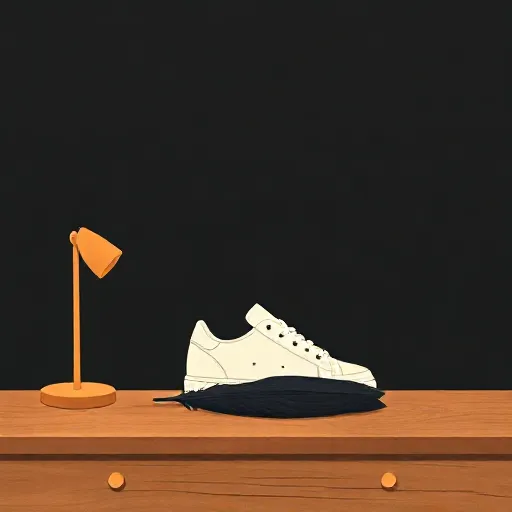
You’re in the backyard with a notebook. You spot a black raven, then another, then a third. Eagerly you write: “All ravens are black.” Then you glance down at a green apple lying under a tree. Does that apple help confirm your rule? Your gut says no — apples aren’t ravens. Yet, in the 1940s, philosopher Carl Gustav Hempel (1905–1997) showed that, according to a simple and powerful idea about evidence, a green apple really does confirm that all ravens are black. How could that be?
The story begins with French thinker Jean Nicod (1893–1924). Nicod suggested that a general law like “all swans are white” is supported whenever you find a white swan. That seems obvious: each white swan makes the rule more believable. Hempel built on Nicod’s insight to create a careful logical system of confirmation — the relationship between a piece of evidence and a hypothesis.
Hempel’s key tool was the development of a hypothesis. Imagine the hypothesis “All ravens are black.” The development for a particular object, say the raven you just spotted, is: “If this object is a raven, then this object is black.” If your observation matches that statement exactly — you saw a raven that is black — then, Hempel said, you have directly Hempel-confirmed the hypothesis.
Now try a green apple. It is not black, and it is not a raven. What does the hypothesis say about such an object? It says: “If this object is not black, then this object is not a raven.” And that is true of the apple — it is not black, and indeed it is not a raven. Hempel’s logic therefore declares that the green apple also directly Hempel-confirms “All ravens are black.” The apple and the black raven stand on the exact same footing. This is the famous ravens paradox, and it does not go away if you switch to white swans or green shoes — any non-black non-raven gives the same result.
When Words Turn Weird: Blite

Nelson Goodman (1906–1998) pushed the trouble further. He invented a strange word: an object is blite if it is black when examined before some future moment T (say the year 2061) and white if examined only after T. Now consider two hypotheses:
- (h) All ravens are black.
- (h*) All ravens are blite.
You examine a raven before T and find it black. Does this observation confirm both hypotheses equally? Hempel’s theory says yes. The development of each hypothesis for that raven is exactly the same: if it is a raven examined before T, then it is black. So the evidence Hempel-confirms both — even though h* also predicts that ravens will turn white after T, which seems crazy.
Can we just say that words like “blite” are unnatural and throw them out? Many philosophers tried, but it proved very difficult. After all, water is solid below 0°C and liquid above — a perfectly natural property that changes with a physical threshold. Why should a time threshold be any worse? Goodman’s blite paradox shows that Hempel’s confirmation lets in rules nobody would ever trust. Something deeper about evidence was missing.
Escape with Hypothetico-Deductivism
A rival view, called hypothetico-deductivism (or HD for short), offers a different intuition. Evidence confirms a hypothesis, the HD view says, when the hypothesis — together with background assumptions — logically forces the evidence to be true. Hempel’s version only required that the evidence force the development of the hypothesis; HD reverses the direction and asks that the hypothesis (plus auxiliaries) entail the evidence.
HD sidesteps the ravens paradox right away. A green apple does not entail that all ravens are black. So, under HD, the apple gives no confirmation at all unless you bring in extra assumptions (like “the object was sampled from non-black things”). That feels more reasonable. Yet HD brings troubles of its own.
Suppose you accept that a black raven confirms “all ravens are black.” HD then forces a strange result: the same black raven also confirms “all ravens are black and the Moon is made of cheese.” Why? Because if a hypothesis entails the evidence, adding any random extra claim to the hypothesis still entails the evidence. This is the irrelevant conjunction paradox.
A deeper problem lurks. Duhem (1861–1916) pointed out that in real science, isolated hypotheses rarely entail observations. You always need auxiliary assumptions — about instruments, background theories, or how things behave. So, given any hypothesis and any evidence, you can always cook up some set of auxiliaries that makes the hypothesis entail the evidence. If HD were the whole story, absolutely any evidence could confirm absolutely any hypothesis. This is the underdetermination problem. A famous example: Einstein’s general relativity beautifully predicted the weird orbit of Mercury, but a stubborn Newtonian could add extra planets or forces to force a match. HD alone cannot explain why Einstein’s success is more impressive.
Betting on Beliefs: Bayesian Rescue
Many philosophers turned to probability. On the Bayesian view, rational thinkers assign degrees of belief to hypotheses, following the same rules as bets at a fair casino. Then confirmation becomes a matter of updating those beliefs when new evidence arrives.
Bayesians split into two camps. Firmness says evidence confirms a hypothesis if, after seeing the evidence, the hypothesis is more probable than not (its probability climbs above ½). Relevance says evidence confirms whenever it makes the hypothesis more probable than it was before — even if the overall chance stays low. Most contemporary philosophers favor the relevance idea: a positive test for a very rare disease can raise the probability from 0.001 to 0.01; that certainly confirms the diagnosis, yet the disease remains unlikely.
Relevance confirmation handles the ravens paradox far more gracefully. A black raven, observed while sampling ravens, dramatically raises the probability that all ravens are black — because a single white raven would have refuted the rule. A green apple, on the other hand, raises the probability only by a microscopic amount: non-black things are everywhere, and almost all of them are not ravens regardless. So we can say both confirm, but the apple’s support is negligible, matching our intuition that a green apple is hardly worth noting.
The Bayesian approach also explains why varied evidence is stronger. Suppose you discover that tigers carry a certain gene, and then that elephants carry it too. That confirms “all mammals carry the gene” more powerfully than finding the gene in tigers and lions, because it is much less likely to stumble across two very different species by chance if the rule is not universal.
Yet Bayesians face one stubborn puzzle: old evidence. If you already know Mercury’s orbit, its probability is 1 — it cannot become “more probable” for you. So how could it ever confirm Einstein’s theory? Some Bayesians reply that we should imagine what we would have believed if we hadn’t known the evidence, or we should focus on the fact that the theory captured the data without being specially rigged to do so. The debate is far from settled.
Why It Still Matters

These puzzles are not just academic games. Every time a doctor says “the treatment worked,” every time a detective says “this fingerprint links the suspect to the crime,” someone is using a hidden idea of confirmation. The raven and blite paradoxes warn us that some patterns of “support” are too easy — they let in rules we would never trust. The HD and Bayesian debates show that we must ask: Was the evidence predicted ahead of time, or did we build the theory around data we already had? How surprising would the evidence be if the hypothesis were false? The centuries-old struggle to understand confirmation sits right in the middle of how we decide what to believe — from science fairs to courtrooms to climate science.
Think about it
- If you saw ten white swans in a row, would you be absolutely certain all swans are white? What if you later saw a black swan — would that single bird destroy the rule completely?
- A detective says, “The suspect’s alibi confirms his innocence.” Could the very same alibi, under different thinking, also confirm his guilt? Why or why not?
- Should a scientist be allowed to change her theory after seeing the data, or must she predict the result beforehand? Which kind of support would you trust more — and can you imagine a case where a post‑hoc explanation is still good evidence?