Does Logic Force You to Believe in Numbers?
The Math Problem That Won’t Stay on the Page

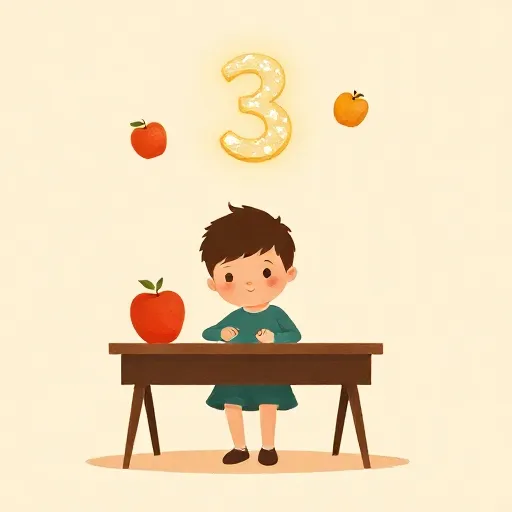
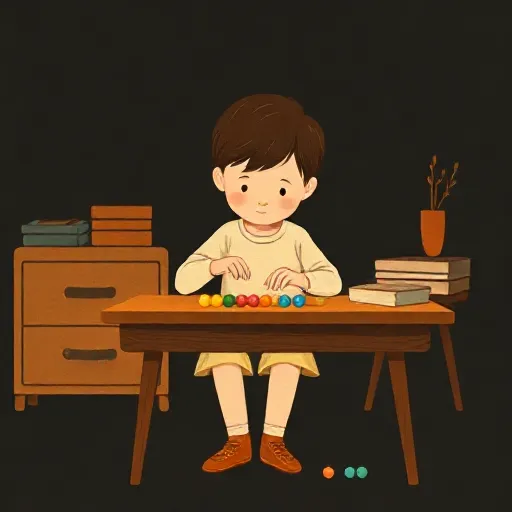
Picture a math class. The teacher asks, “Is there a number between 1 and 3?” You instantly think of 2. That seems harmless. But stop and ask: does that tiny answer mean the number 2 exists in the same way as your desk or your left shoe? Some philosophers think it does — and they say logic, the study of correct reasoning, already forces you to accept that numbers are real.
At first, logic and ontology (the study of what exists) might seem like completely separate topics. Logic is about how ideas connect; ontology is about what stuff reality contains. Yet when you say “there is a number between 1 and 3,” you are using a logical word — “there is” — and you seem to be talking about a thing: a number. Philosophers have argued for centuries over whether such sentences really commit you to believing in shadowy objects like numbers, properties, or sets. We’ll follow that argument through four vivid twists, and by the end you may never look at a simple equation the same way again.
To Be Is to Be the Value of a Variable

Willard Van Orman Quine (1908–2000) offered a famous recipe for finding out what you are ontologically committed to — that is, what your beliefs force you to say exists. Suppose you write down all your beliefs in a specially cleaned‑up language. Quine called this language a canonical notation. It removes ambiguity and makes one thing totally clear: which sentences contain quantifiers — words like “there is” or “some.”
In that tidy language, a quantified sentence such as “There is an x such that x is a prime number between 10 and 20” contains a variable (the “x”). The sentence is true only if you can plug in a value for x that makes the claim correct. Quine’s slogan was: “To be is to be the value of a variable.” If your own beliefs include a true claim like that one, then you are committed to saying that numbers exist. They are the values that make your variables work.
That sounds tidy. But many philosophers pushed back. Maybe the quantifier “there is” doesn’t always point to a real object. Some argued that a quantified sentence can be true simply because you can substitute a name into it — a substitutional reading — without needing any actual object to serve as a value. Think of it like a board game: saying “There is a knight on the board” doesn’t force you to believe knights exist outside the game. So even a clear formal language doesn’t settle whether you really believe in numbers. The magnifying glass might show only the rules of a language, not the furniture of the universe.
Carnap’s Magic Trick: Making the Question Disappear
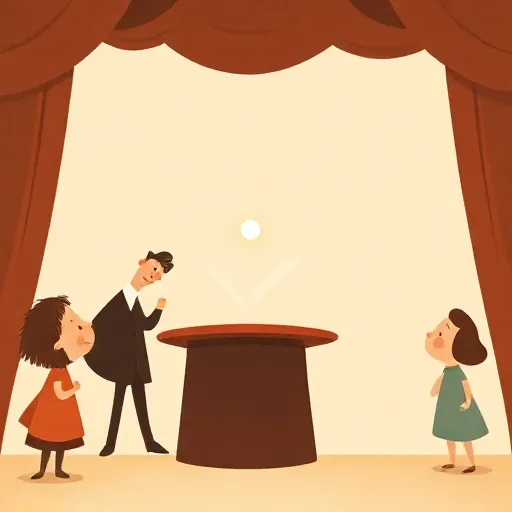
Rudolf Carnap (1891–1970) went further and said the whole debate was built on confusion. He drew a sharp line between two ways of asking a question. An internal question is one you ask inside a particular linguistic framework — a game-like system of words and rules. Inside the number framework, the question “Are there numbers?” has an obvious, trivial answer: yes. The framework itself guarantees it. An external question tries to stand outside all frameworks and ask whether numbers really exist, independent of any human setup. Carnap thought external questions were meaningless. They sound deep, but there is no method for answering them; the words have lost their grip.
So ontology as a deep, armchair investigation into the ultimate building blocks of reality was, for Carnap, a mistake. We choose frameworks because they are useful, not because they match a hidden “real” world. W. V. O. Quine disagreed: he thought the internal/external split was blurry, and that we should still look at the best overall scientific theory of the world to see what it quantifies over. But Carnap’s challenge didn’t go away. Every time you hear someone ask whether numbers exist “out there,” you can hear Carnap whisper, “Which framework are you using?” If the question vanishes when you stop playing the language game, maybe it was never really a question at all.
Frege’s Dream: Proving Numbers Exist with Pure Logic

Gottlob Frege (1848–1925) had a much bolder vision than Carnap’s deflation. He believed that logic itself proves that numbers exist. Frege’s project, called logicism, aimed to show that arithmetic is nothing but logic plus careful definitions. If he succeeded, then accepting the basic truths of reasoning would force you to accept that numbers are real logical objects — things whose existence is guaranteed by logic alone.
Frege’s original system hit a famous snag: Bertrand Russell discovered a contradiction in it. But later versions, sometimes called neo‑Fregean, tried to repair the project. The very idea, however, upsets many philosophers who hold that logic should be topic‑neutral — it should not smuggle in any particular objects. After all, shouldn’t a logical truth stay true even in a completely empty universe? A believer in logical objects might reply that an empty universe is impossible precisely because logic demands the existence of numbers. So the debate returns to the same point: does your math notebook describe a world, or simply follow rules?
Why Does Our Thinking Fit the World So Well?
Immanuel Kant (1724–1804) thought logic was the study of the form of our judgments, not of what exists. Look at a simple thought: “The cat is on the mat.” It has a subject (“the cat”) and a predicate (“is on the mat”). The world, in turn, seems to contain objects (cats) that have properties (being on a mat). The structure of thought mirrors the structure of reality. Is that a deep coincidence?
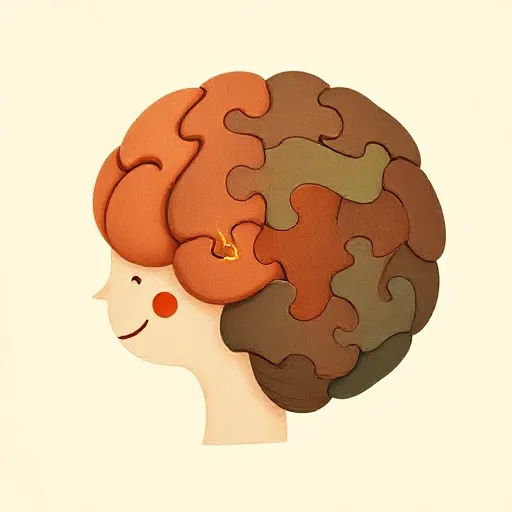
If the world really is carved into objects and properties, then our mind‑fit is a happy match — maybe evolution shaped our thinking to reflect the environment. But what if, as Kant suggested, the world itself doesn’t come pre‑sliced into objects and properties? What if our own minds impose that structure on a buzzing, blooming reality? Then logic, the map of how we must think, would reveal not the world as it is in itself, but the limits of our own cognitive toolkit. This possibility keeps philosophers up at night: the very form of a sentence like “cats exist” might tell you more about human thought than about the ultimate furniture of the universe.
So What When You Solve for x?
Every time you finish a math problem, something curious happens. You might feel you have found a fact about a thing — the number 7, or a perfect circle. But the debate you’ve just walked through suggests the status of that “thing” is far from settled. Quine would say your math beliefs commit you to numbers. Carnap would shrug and say you are just playing the number‑game, and the question of “real” existence never genuinely arises. Frege would cheer that logic itself guarantees numbers are out there. Kant might remind you that all you really know is how your own mind carves up experience.
So when you write “x = 4,” you are standing at the intersection of logic and ontology. You don’t have to pick a single answer today. But noticing the puzzle changes how you hear everyday words like “there is.” It turns a math worksheet into a doorway to one of philosophy’s oldest and liveliest arguments.
Think about it
- If you prove that “there exists a prime number between 10 and 20,” have you discovered a real object, or just learned a rule of a game? Could the answer ever matter outside a classroom?
- Imagine a language where all sentences are like “It’s raining” — no subjects, just happenings. Would speakers of that language ever notice objects? And if not, would objects still exist?