Can You Keep a Promise with Your Fingers Crossed?
A Promise with Your Fingers Crossed
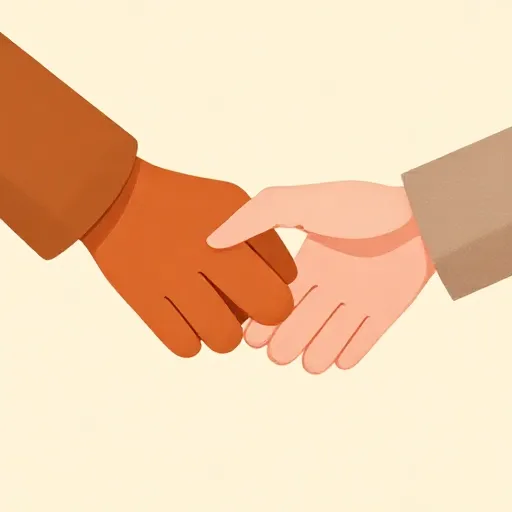
You promise to pay back your friend tomorrow. But behind your back, your fingers are crossed. Does that make it okay? Immanuel Kant (1724–1804) would say no. He didn’t care about crossed fingers or even about whether your friend ever finds out. What mattered to him was the rule inside your head when you decided to act.
Kant believed that every person carries a deep-down sense of what is right. He set out to find the single, hidden principle that makes good actions good, no matter where or when you live. He called this the foundation of a metaphysics of morals — a system of moral truths that do not depend on anyone’s culture, feelings, or lucky guesses. And he argued that this foundation is something you already use, even if you’ve never put it into words.
What Is a Good Will, and Why Does Duty Matter?

Kant began with a surprising claim: the only thing that is good without any “ifs” is a good will. Not cleverness, not courage, not even happiness. Why? Because all those things can be used for bad ends if the will behind them is rotten. A good will, he thought, is a firm, never-wavering commitment to do what morality demands just because morality demands it.
This commitment powers what Kant called acting from duty. You are moved by the thought that you ought to do something, even if every other desire pulls you in the opposite direction. For instance, imagine you help a stranded neighbor. If you do it out of genuine sympathy, that’s lovely — but Kant said the action has no moral worth unless you do it because you recognize it’s your duty. Why? Because feelings are unreliable; they might not show up next time. Only a will that respects the moral law itself can be counted on no matter what.
Kant was not saying feelings are bad. He thought a perfectly good person would still have emotions. But the motive that gives an action its moral value, the one that makes it shine like a jewel even if it gets nothing else done, is the motive of duty.
The Categorical Imperative: A Rule for Everyone

So what is this moral law that a good will follows? Kant argued it is a categorical imperative. An imperative is simply a command — like “Leave the gun. Take the cannoli.” Most commands are hypothetical: they tell you what to do if you want a certain result. “If you want pastrami, try the corner deli.” A categorical imperative, by contrast, orders you to act in a certain way unconditionally. It doesn’t depend on your wishes.
Kant’s first statement of it goes like this: Act only according to that maxim (your personal policy for acting) that you could at the same time will to become a universal law for everyone.
Now for the tricky part: how do you test your maxim? You take your plan — for example, “I will make a false promise to get money I need” — and imagine a world where everyone is required by nature to follow that same policy. Could you even imagine such a world without contradiction? In a world where everyone lies to get what they want, the very practice of promising would collapse. No one would believe a promise, so you couldn’t use one to get money. The idea cancels itself out. Kant said this reveals a perfect duty: you must never act on that maxim.
Other maxims pass the imagining test but fail the willing test. Suppose you decide never to help anyone in need. You can imagine a world where everyone refuses to help. But Kant pointed out that as a rational being, you necessarily will your own happiness, and you know you need other people’s talents and kindness to achieve it. You cannot rationally will a world in which no one ever helps, because that would undermine your own pursuits. So you have an imperfect duty to sometimes help others.
Persons as Ends, Not Just Means

Kant offered a second way to understand the same moral law, one that often feels more vivid: Act so that you treat humanity, whether in your own person or in another, always as an end in itself, never merely as a means.
This doesn’t forbid using people. You use the taxi driver as a means of transportation. The difference is that you must simultaneously treat the driver’s humanity as an end. What is humanity? For Kant, it is your collection of rational powers — the ability to set your own goals, to deliberate, and to guide yourself. When you pay the agreed fare and let the driver freely choose his route, you respect those powers. You would never treat him like a horse, something you just steer.
Treating humanity as an end also means you have duties to yourself. You must cultivate your own talents, because letting them rot neglects the rational capacities that make you morally special. And because others are ends too, you have a duty to support their freely chosen projects — at least some of the time.
This Humanity Formula gets to the heart of why a false promise is wrong. When you lie to get money, you use the other person without allowing their rational capacities to operate. They can’t consent, because they don’t know your true plan. You treat their humanity as a mere tool.
Are We Really Free? Kant’s Big Puzzle

Here’s a deep problem. If every event has a cause, then your choices are determined by previous events — your genes, your upbringing, the wiring of your brain. This determinism seems to threaten the very freedom morality requires. How can you be responsible for an action that was always going to happen?
Kant took this tension seriously. He knew we can’t prove we are free; we might just be cogs in a giant machine. His solution was to separate two points of view. The world as we experience it — the world of science and cause and effect — he called the phenomenal world. But the world as it really is, apart from how our senses and minds shape it, he called the noumenal world. We can think about the noumenal world but never know anything about it. Kant argued that freedom may be true of us as noumenal beings, even while our observable actions follow causal laws.
What does this mean for you? When you deliberate and make a choice, you necessarily act “under the Idea of freedom.” You cannot decide what to do without thinking of yourself as a first cause, someone who can step back and steer. This feeling of autonomy — the power to give the moral law to yourself — is, for Kant, what makes morality not an illusion. You must see yourself as a free legislator of universal rules, not just a follower of them.
Why Kant Still Matters: AI and Moral Responsibility
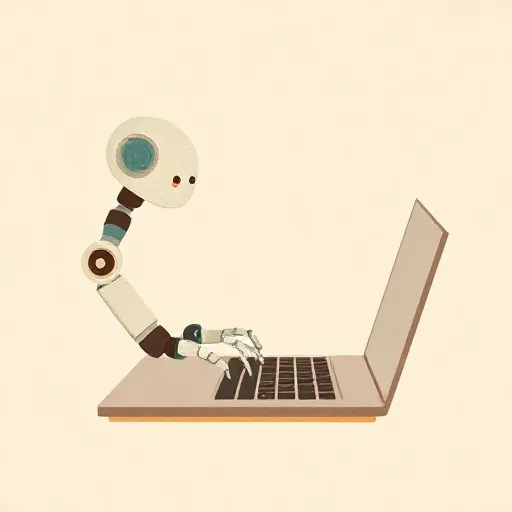
Kant never saw a computer, but his ideas are everywhere in today’s debates about artificial intelligence. Self-driving cars, chatbots, and facial-recognition systems can imitate decisions. Could they ever be moral agents with duties and rights? From a Kantian standpoint, no. Moral personhood requires a rational will — the ability to understand unconditional moral laws, to choose your own ends, and to see yourself as the free author of your actions. No AI system we build does that; it follows instructions, even if the results look clever.
This means we cannot offload our moral responsibility onto machines. When an algorithm mispronounces certain names or a surveillance camera is pointed more often at one neighborhood, it’s not the technology that is disrespectful. It’s the people who designed, funded, deployed, or failed to question it who are either respecting or disrespecting the humanity of others.
Kant’s framework helps us ask the right questions. When we create AI, we must consider: are we treating people as ends? Are we letting users give genuine consent? What message does a system send by its very design? An app that manipulates your attention treats you merely as a means. A hiring algorithm that unfairly screens out disabled applicants ignores their equal dignity.
Kant would also remind us to look at the big picture. Building a world where humans can develop their talents, form friendships, and govern themselves justly is itself a moral project. We can use AI to support that project — for example, assistive technologies that help people flourish — but only if we keep our own wills firmly in charge. You can’t cross your fingers and hide behind a machine. The responsibility to act on principles you could will everyone to follow always stays with you.
Think about it
- If a friend asks you to keep a secret that you know might hurt someone, is it better to refuse or to promise with the hope that it won’t? What would it mean to treat both friends as ends?
- Imagine a social media app that perfectly predicts what you will enjoy and shows you nothing else. Is the app respecting your humanity, or is it treating you as a means? Could you will that everyone be guided that way?
- Suppose you could design a rule for self-driving cars about who to protect in a crash. What rule would a group of free and equal rational people agree on, and why?