Can What We Do Today Harm People Who Haven’t Been Born Yet?
Imagine you’re holding a time leash
It’s the year 2025. You live in a city that runs on a cheap, dirty fuel. Switching to clean energy would cost more, and some people today would have to tighten their belts. But if you keep burning that fuel, children born in 200 years will breathe poisoned air, drink polluted water, and live on a bare, exhausted planet. Do you owe them anything? They don’t exist yet—and, in a strange way, the very children who will suffer might never have been born at all if you’d chosen differently. Philosophers call this tangle of questions intergenerational justice, and it’s one of the hardest problems in all of ethics.
Do people who don’t exist yet have rights?

At first glance, it seems impossible. The philosopher Richard De George argued in the 1980s that future people can’t have rights now because they simply don’t exist. You can’t be the bearer of a right if you aren’t there to hold it. What’s more, the relation between us and far-future people is permanently asymmetric: we can affect everything about their climate, their resources, even their very existence, but they can never affect us back, not even a little. Among living people, power tends to flow both ways; with future generations, it’s a one-way street.
However, many thinkers reply that this is looking at rights the wrong way. If you plant a bomb set to explode in 500 years, you violate the rights of the people it will kill—even though they don’t exist today, and even though you’ll never know their names. Their rights will exist when they do, and your present action will set back their future interests. In the same way, leaving behind a drastically scorched Earth could violate future people’s welfare rights—rights to the basic goods that allow a decent life. So even without the two-way street or face-to-face cooperation, future people might hold genuine claims against us.
The great puzzle: the non-identity problem
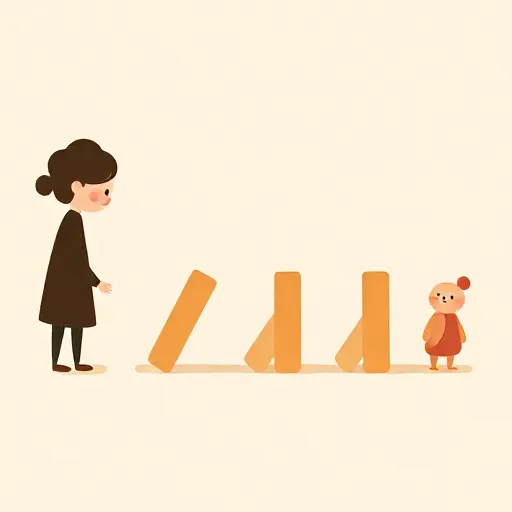
Derek Parfit (1942–2017) raised an even trickier snag. Imagine your government has to choose between two energy policies: “Burn it all” and “Save it.” If you pick Burn it all, your grandchildren’s grandchildren will live in a depleted world; call one of them Mia. If you had picked Save it, people would have traveled differently, met different partners, and had children at different moments. The same sperm and egg combinations would not have occurred, so Mia would never have been born. Instead a different person, Kai, would live in a greener, richer world. So can Mia claim you harmed her? Under the common notion of harm, a person is harmed only if you make them worse off than they would have been had you acted differently. But if you’d acted differently, Mia wouldn’t exist at all—she would never have been better off. So, by that standard, she wasn’t harmed. This is the non-identity problem, and it seems to let us off the hook for many long-term harms.
Some philosophers bite the bullet and say that, indeed, such future people cannot have been harmed and thus have no justice claims against us about those policies. Others think we can still wrong them in a different way, even without making them worse off compared to nonexistence. But the most influential reply redraws the very idea of harm.
A new yardstick: falling below a threshold
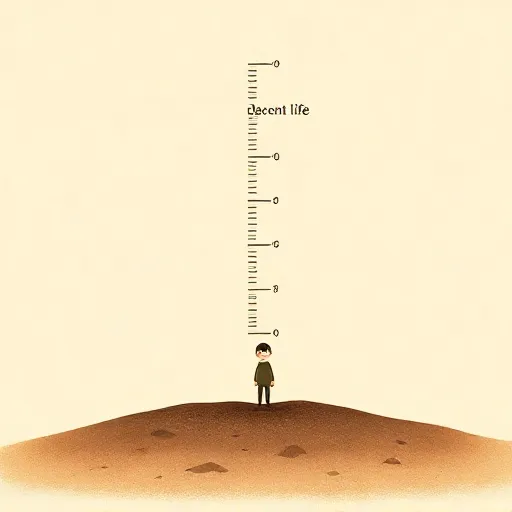
Instead of comparing a person’s state to a world where they never existed, the threshold conception of harm says: you harm someone if your action causes them to fall below a normatively defined standard of a good-enough life. That standard might be set by basic needs—enough food, clean water, shelter, health, and freedom to pursue one’s own plans. If your policy forces future people to live below that line, you harm them, full stop. It doesn’t matter whether those specific individuals would have existed otherwise; it matters that they are now in a state no person should be in.
This solves the non-identity problem. Mia is harmed, not because she would have been better off as Kai, but because her life falls below the threshold—a life of constant hunger, poisoned water, and no real chances. So we can have duties to future people even when our actions help determine who will live. The same idea explains why, if you know a child you could conceive would have a severely deprived life, you should refrain from having that child—you’d be harming them by dragging them into a sub-threshold existence. But you have no duty to conceive a child merely to add a happy person to the world, because merely possible people have no rights.
Rawls’s recipe: saving enough for the future

The philosopher John Rawls (1921–2002) gave this threshold idea a political shape. He proposed a just savings principle: every generation should set aside enough resources and knowledge so that the next generation can build and maintain a just society—one where basic rights are protected and everyone has a fair shot. Once that goal is reached, justice doesn’t demand endless saving; it asks only that you pass on as much as you inherited.
Rawls used a thought experiment: imagine a group of people behind a veil of ignorance, not knowing which generation they belong to. What savings rate would they agree on? He thought they’d pick a rate that ensures every generation can achieve the threshold, but wouldn’t bankrupt the early generations in the process. This balance is still hotly debated, but it gives a concrete shape to what we owe the unborn.
What about people long dead? Do we owe them anything?
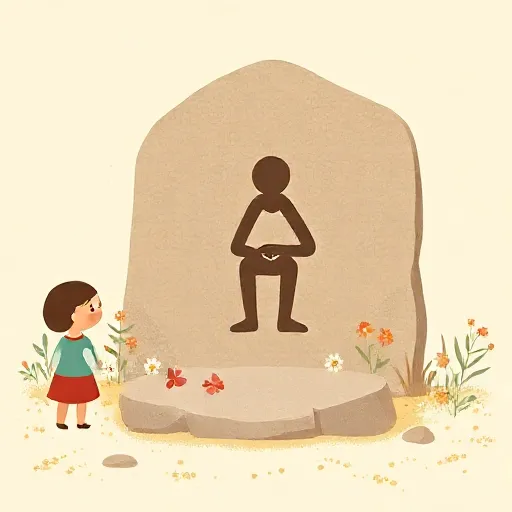
Intergenerational justice doesn’t only look forward. Many believe we have duties to dead people, too. If you promise your grandmother to keep her letters private, that obligation doesn’t vanish the moment she dies. The idea of surviving duties says: some rights are forward-looking, and the duties they ground remain binding after the right-holder is gone. That means we can owe dead people acknowledgment, reputation, and sometimes symbolic compensation for terrible wrongs done to them.
When a nation builds a memorial to enslaved people or apologizes for past atrocities, it can be seen as fulfilling a surviving duty to those dead victims—not because they will feel anything now, but because the duty was owed all along. At the same time, living descendants may also have claims to compensation based on their lowered well-being today, measured by that threshold standard. So the past isn’t just gone; it can pull on our actions in more than one way.
Why it’s your problem, right now

Every time your government decides whether to invest in green energy or postpone climate action, it’s making an intergenerational justice call. When people debate reparations for slavery, they’re weighing forward-looking harm and surviving duties. When someone you know thinks hard about whether to bring a child into an unstable world, they’re stepping into the non-identity problem. These aren’t dusty puzzles for professors in armchairs; they are the invisible scaffolding under the biggest choices of our century. And even at twelve, you start voting with your voice, your attention, and eventually your ballot. The tools philosophers have built—thresholds, savings principles, the very idea that people who don’t exist yet can still be wronged—help you argue clearly about what we owe each other across time.
Think about it
-
If you could push a button that made everyone alive today twice as happy, but guaranteed that people born in 200 years would have no clean water or farmland, would it be wrong to push it? Why or why not?
-
Suppose someone says, “We don’t have to worry about far‑off future people because they don’t exist yet and can’t sue us.” Is that a good reason to ignore them? What would you answer?
-
Do we have a duty to keep promises to people after they die? Does it matter whether anyone else will ever know if we broke the promise?