
Why Being a Widow Isn’t a Real Change
The Widow Who Didn’t Change
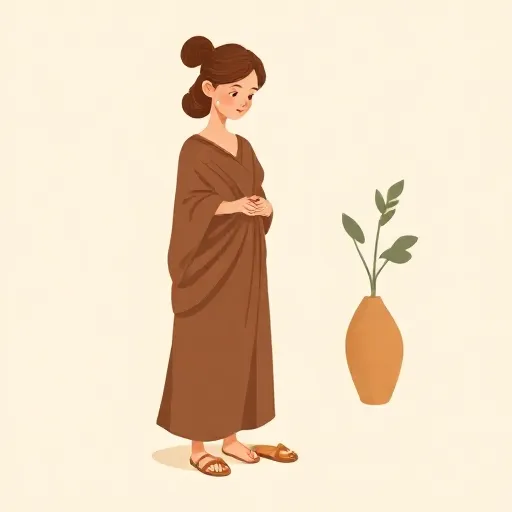
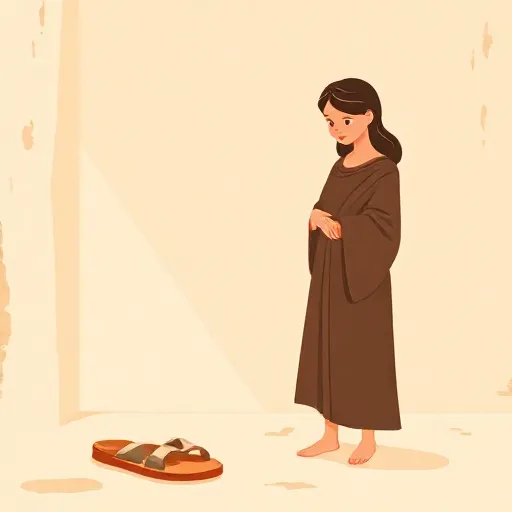
In 399 BCE the philosopher Socrates was put to death. The moment he died, his wife Xanthippe became a widow. Before, she wasn’t a widow; after, she was. But did Xanthippe herself change? Not really. The change happened to Socrates. Xanthippe just gained a new label.
Philosopher Peter Geach (1916–2013) called this a mere Cambridge change — a change only in which words apply, not in what a thing is truly like. A real change, by contrast, would alter something about Xanthippe herself. This points to a deep difference between two kinds of properties.
An intrinsic property belongs to a thing just in virtue of what that thing is. Its shape, its mass, its internal structure — these are intrinsic. An extrinsic property depends on how the thing relates to the rest of the world. Being a widow, being six meters from a rhododendron, being popular — these are extrinsic.
David Lewis (1941–2001) gave three helpful ways to spot the difference:
- A sentence describing an intrinsic property is entirely about that thing; an extrinsic one is about the thing plus its surroundings.
- A thing has its intrinsic properties because of the way it, and nothing else, is.
- If you made a perfect duplicate of a thing — atom for atom — the duplicate would share all its intrinsic properties, but could differ in its extrinsic ones. Two identical toy blocks have the same shape, but if one is alone on a shelf and the other jammed in a box, only the second has the property being surrounded.
Philosophers still debate which properties are intrinsic. Most agree shape and charge are intrinsic. But some argue that shape might depend on the curvature of the space around an object, which would make it less clearly intrinsic. For simplicity, we’ll assume shape, mass, and being made of tin are all intrinsic here.
Why It Matters: Good in Itself and Worlds Without Contradiction
Why should anyone care about this distinction? At least two big reasons.
First, ethics. G. E. Moore (1873–1958) pointed out that some things are good in themselves — they possess intrinsic value. Other things are only good as a means to something else. Money is good only because you can buy things with it; but maybe happiness is good all by itself. Environmental ethicists today often ask whether forests, animals, or whole species have intrinsic value, or only value for humans. Answering that question depends on having a clear idea of what “intrinsic” means.
Second, imagining possible worlds. Philosophers often ask what sorts of worlds could exist. A simple rule might say: for any two properties, there’s a possible world containing two separate things, one with each property. But this fails. Take being made of gold and being such that nothing is made of gold. No world can have both a gold thing and a thing with the property that nothing is made of gold. The fix is to restrict the rule to intrinsic properties. Because being such that nothing is made of gold is clearly extrinsic (it’s about the whole world, not just the thing), the repaired rule works. If we only combine intrinsic properties, like being gold and being silver, we can construct sensible possibilities without contradiction.
If You Were All Alone in the Universe
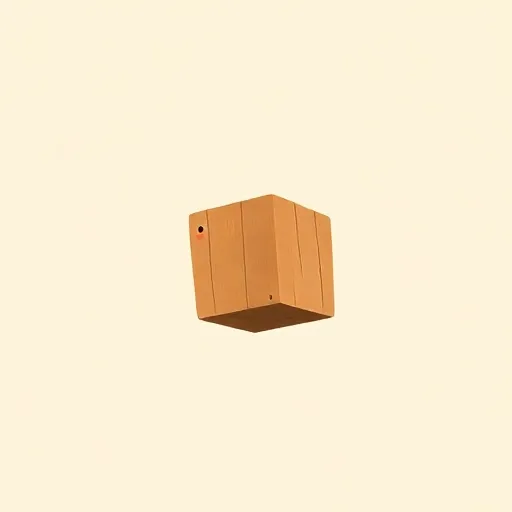
Could we define intrinsic simply as “the property a thing could have if it were completely alone”? Jaegwon Kim (1934–2019) explored this idea. A lonely object — one that doesn’t coexist with anything else — can still be a cube or have mass. But a lonely object can’t be six meters from a rhododendron, because there is no rhododendron. So loneliness seems to test for intrinsicness.
David Lewis spotted a problem. A lonely object can have the property being lonely. But being lonely is not intrinsic — it depends on there being nothing else in the world. So the loneliness test gives a wrong answer.
Rae Langton and Lewis (1998) tried a more careful version. They said a property is intrinsic if it’s independent of accompaniment: it’s possible for a lonely thing to have it, for a lonely thing to lack it, for an accompanied thing to have it, and for an accompanied thing to lack it. But cleverly built extrinsic properties still sneak through. Take being either a lonely cube or an accompanied non-cube. A cube alone has it (by the first half). A non-cube in company also has it (by the second half). A cube in company lacks it, and a non-cube alone lacks it. So this mess of a property passes the independence test with flying colours, yet it’s clearly extrinsic. The definition still fails.
When Logic Can’t Tell Them Apart

You might hope to define intrinsic using only logical words like “and,” “or,” “not,” “possible,” and “part.” But philosophers Dan Marshall and Josh Parsons (2001) proved that no such definition can work — given what most philosophers believe about properties and possibility.
Here’s the idea in a simplified form. Imagine a tiny universe with just three possible worlds and two basic types of particle, Electrons and Positrons:
- World 1: an Electron and a Positron exist together.
- World 2: only an Electron exists (lonely Electron).
- World 3: only a Positron exists (lonely Positron).
Now consider two properties:
- P: being an Electron (intrinsic, many think).
- Q: being either an accompanied Electron or a lonely Positron (extrinsic).
Look at which individuals have these properties across the worlds. P belongs to the Electron in World 1 and the Electron in World 2. Q belongs to the Electron in World 1 (accompanied) and the Positron in World 3 (lonely). The two patterns are just two different selections of two individuals. If you only had logical and set-theoretic vocabulary, you couldn’t describe a formula that picks out P but not Q — because you could swap the labels “Electron” and “Positron” and turn P into Q and vice versa, without changing any of the structural facts. Since P is intrinsic and Q is not, no purely logical definition can capture the difference.
This doesn’t mean we can’t understand intrinsicality at all. It just means we can’t reduce it to simpler, purely logical pieces without adding extra assumptions about which properties are fundamental or natural.
What’s Really About You?
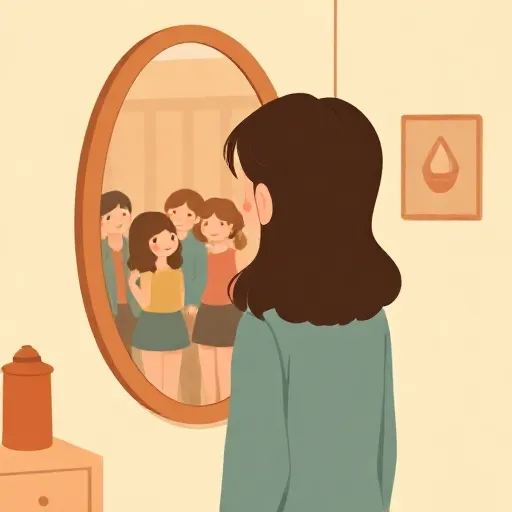
Philosophers keep wrestling with intrinsicality because so many big questions depend on it. When scientists say the mind is just the brain, they often mean that your thoughts supervene on your intrinsic properties — that what you think depends only on how you are inside your head, not on the outside world. But some famous thought experiments suggest that the meanings of your words and even your beliefs can change depending on your environment. If that’s right, then thought isn’t purely intrinsic.
In environmental ethics, if a forest has intrinsic value, then it matters for its own sake, not just because humans enjoy it. In the theory of personal identity, we might ask: if a perfect duplicate of you was created, would it be you? Properties like being you seem to be extrinsic, not duplication-preserving — a duplicate would be someone else, not you.
And in daily life, you often appeal to the distinction without realizing it. You might say, “I’m kind” — implying it’s part of who you are, no matter who’s around. Or you might think, “I’m only funny when I’m with my best friend” — a property that depends on others. Learning to ask whether a property is intrinsic or extrinsic sharpens your thinking about yourself.
The argument over how to define intrinsicality is far from over. But by seeing the difference between a real change and a mere label, you’ve already stepped into one of metaphysics’ most fascinating puzzles.
Think about it
- Is being a “good friend” an intrinsic property of a person, or does it depend entirely on the other person in the friendship?
- If a scientist built an atom-for-atom duplicate of you but the duplicate grew up in a different family, would that duplicate still be you? Why or why not?
- Think of a property about yourself that seems deeply you — like being curious or being shy. Could that property change if you woke up tomorrow in a completely different society?