If You Had a Different Life, Would You Still Be You?
Clover the Cow and the What-If Possibilities
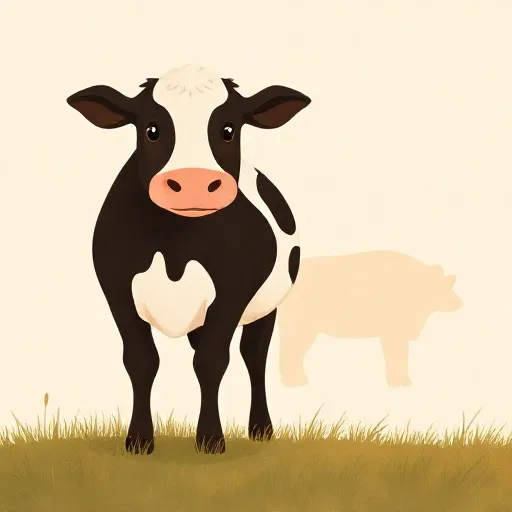
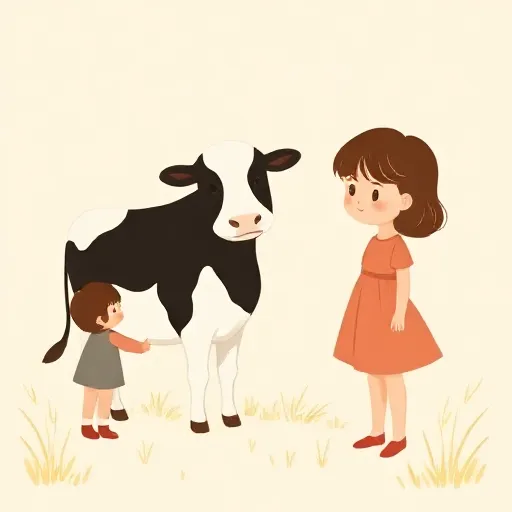
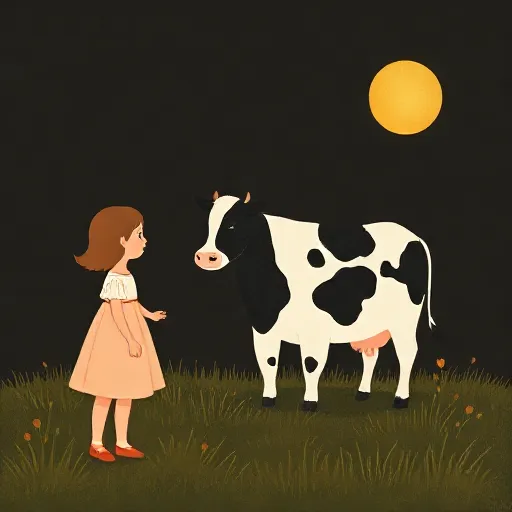
Picture Clover, a black-and-white cow munching clover in a field. She has four sturdy legs. You look at her and think: she could have had only three. That thought seems simple, but it hides a deep puzzle. If things had been different — if there is some way the world might have been where Clover was born with three legs — what makes that three‑legged cow the same Clover?
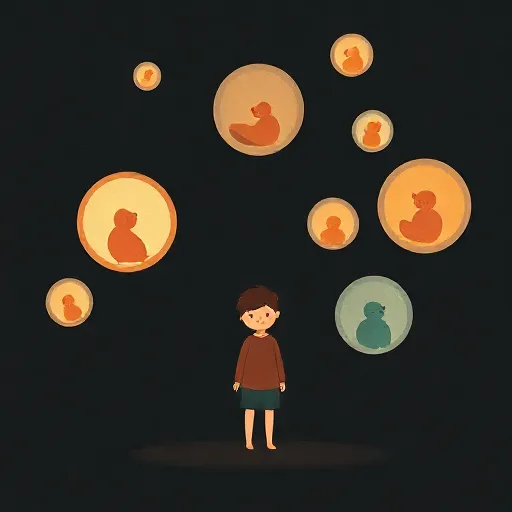
Philosophers call these “what‑if” worlds possible worlds. A possible world is a complete story about how everything could have been. To say “Clover could have had three legs” is to say there is a possible world where Clover exists with three legs. That commitment — that the very same cow appears in more than one possible world — is what philosophers call transworld identity.
It sounds harmless at first. But once you take it seriously, all sorts of tricky questions spring up. Does Clover somehow live in two worlds at once? If so, does she have four legs or three? And if she could have been completely different, in what sense is she still Clover?
David Lewis: The Man with a Million Real Universes
In the 1970s, the philosopher David Lewis (1941–2001) made a startling claim: those other possible worlds are not just imaginary. They are real, concrete universes, as solid as ours, but disconnected in space and time. He called this “modal realism.” Our world is just one among countless others, all equally real. “Actual” only means “this one, the one we happen to be in.”
But if Clover exists in two real, concrete worlds, trouble arrives. In our world she has four legs. In another world she has three. So how many legs does Clover have: four, or three, or even seven? Worse, she seems to have contradictory properties — being four‑legged and not four‑legged at the same time.
Lewis’s solution was to deny transworld identity altogether. He said Clover does not literally exist in other worlds. Instead, those worlds contain counterparts — individuals who are very similar to Clover, but not identical with her. When we say “Clover could have had three legs,” we mean she has a counterpart in another world with three legs. The puzzle about contradictory properties vanishes: the counterpart has the properties, not Clover herself. Many philosophers, however, find this odd. We feel we are talking about the very same Clover, not some look‑alike.
A Less Spooky Way: Stories That Never Happened
Other philosophers, like Alvin Plantinga (1932–), thought Lewis’s concrete universes were too wild. They treated possible worlds as abstract things — like complete stories, or “ways the world might have been.” To say Clover exists in another world is just to say that the story “Clover has three legs” could have been true. There is no spooky universe where a flesh‑and‑blood Clover walks around. Transworld identity becomes less dramatic: it’s just the claim that Clover could have had somewhat different properties, something few people would deny.
But this calm view doesn’t end the puzzle. If there is no concrete double, we still need to say what makes the Clover in the story the very same individual as our Clover. Suppose we imagine her with different fur, a different personality (if cows have personalities), or even born from a different mother. Is that still Clover? To answer, we might need something that remains the same across all the possible stories — an essence.
The Puzzle of Adam and Noah Swapping Lives
The philosopher Roderick Chisholm (1916–1999) imagined a thought experiment. Take Adam and Noah, two actual people. Suppose Adam could have been a tiny bit more like Noah, and Noah a tiny bit more like Adam. If there is no essential property that Adam has and Noah cannot have, then we could keep making small adjustments. Step by step, Adam becomes more like Noah, and Noah more like Adam, until we reach a possible world where Adam has all of Noah’s actual qualities, and Noah has all of Adam’s. That world is exactly like ours, but with the two men swapped.
Many philosophers find this result intolerable. To block the swap, we would need to say that each person has an individual essence — a set of properties that are necessary and sufficient for being that person. If Adam has an essence that Noah lacks, then Noah can never fully play the Adam role. But what could such an essence be? It’s hard to find one for people, cats, or trees. Some philosophers accept that identities across worlds might be “bare” — not grounded in any qualities. But bare identities feel like cheating: you’d have two possible worlds that are identical in every quality, yet differ only in who is who.
Another philosopher, Graeme Forbes (1951–), turned the puzzle toward trees. Suppose an oak tree has no individual essence based on its internal properties. There could be three possible worlds: one where the tree grows slightly differently, another where it grows differently in a different way, and a third world containing duplicates of both. Without an essence, we could have two trees that are perfect copies yet one is the original and the other is not, with no quality to tell them apart. Forbes argued that to avoid this, we must find essences in features like the tree’s origin from a particular acorn.
The Bicycle That Kept Changing Parts
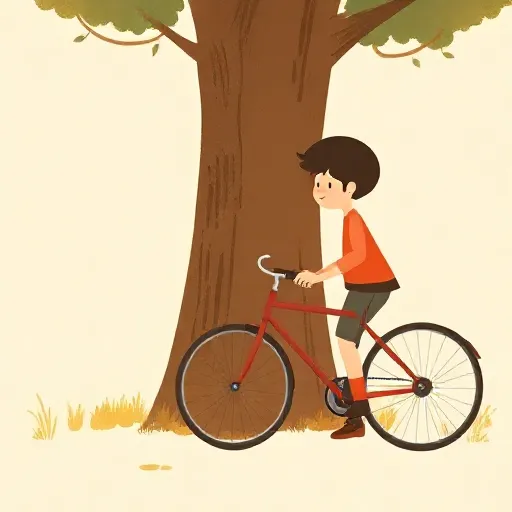
Transworld identity faces another puzzle, this time from ordinary objects. Imagine your bicycle is made of three main parts. You could have built it with one different part — a different wheel, say. That would still be your bike. You could then imagine changing another part, and another, step by step, until nothing of the original parts remains. If identity is transitive — if A equals B and B equals C, then A equals C — then the bike after all the changes is still your original bike. But that seems wrong.
The puzzle was sharpened by the philosopher Chandler in the 1970s. He showed that if we accept that a bicycle could have a slightly different original composition, and we also hold that it must keep at least some of its original parts, the transitivity of identity forces us into a contradiction. Lewis’s counterpart theory offers a neat way out. Because counterparts are based on similarity, the counterpart relation need not be transitive. Your original bike may have a counterpart with one changed part. That counterpart may have another counterpart with a second change. But the original bike might not be similar enough to the third bicycle to count as its counterpart. So you can say the bike could have been somewhat different without saying it could have been entirely different, and no contradiction arises. Some philosophers respond differently, by saying the bike’s original parts are all essential, or that some possibilities are only “possibly possible” from the starting world. There is no agreement on the right answer.
What Does This Mean for You?
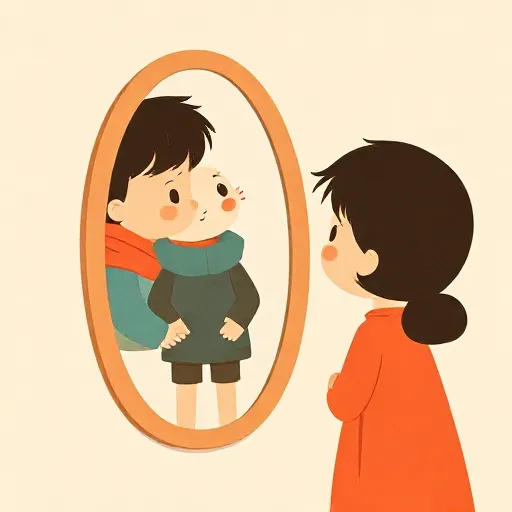
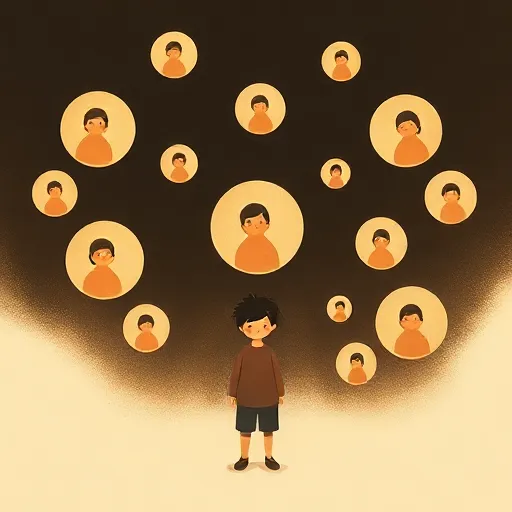
All these puzzles about cows, prophets, and bicycles are really about you. If you could have been born to different parents, grown up in a different century, or had an entirely different personality and memories — would that be you? If your body, your thoughts, and your history could all have been completely rearranged, what makes you the same person across all the what‑ifs?
This debate is not just science fiction. It touches how we think about personal identity, responsibility, and change. If there is no fixed “you” that persists across every possible twist of fate, maybe you are always becoming someone new. Or maybe there is a core essence — a unique origin, an unbreakable pattern of your mind, or something else — that stays the same no matter what. Philosophers continue to argue, and there is no single answer. But by asking “Could I have been someone else?” you start to explore one of the deepest questions there is.
Think about it
- Suppose you have a favorite stuffed animal. If you replaced all its stuffing and fabric gradually, would it still be the same toy? Does your answer change if it’s your own body replacing all its cells over time?
- If it were possible to live many different lives, each with a different personality and memories, which life would feel “most you,” and why?
- Imagine a machine that can create an exact duplicate of you, down to every thought. Are both copies you? Could you be in two places at once?