Why Did This Jewish Poet Think Even Angels Have Matter?
A Grumpy Poet and a Mysterious Fig Tree
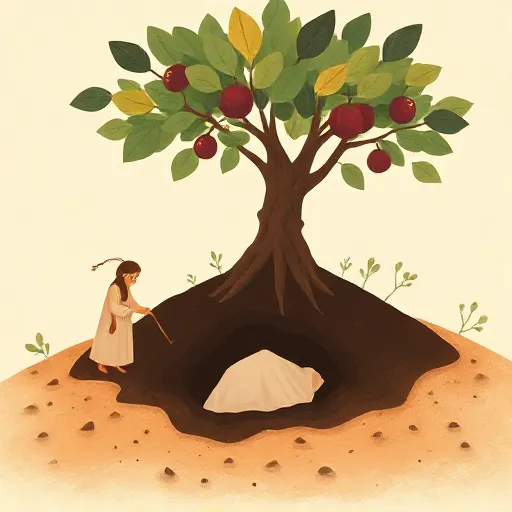
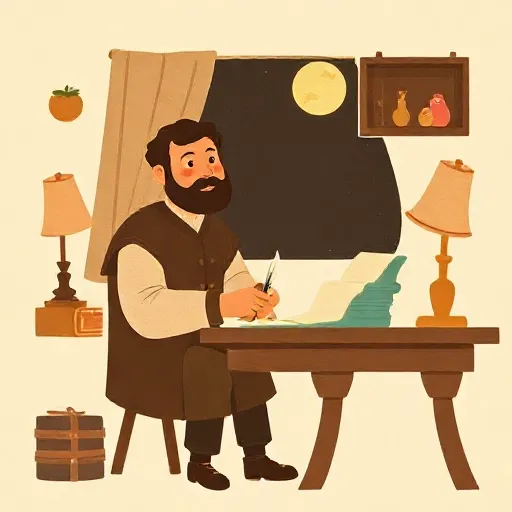
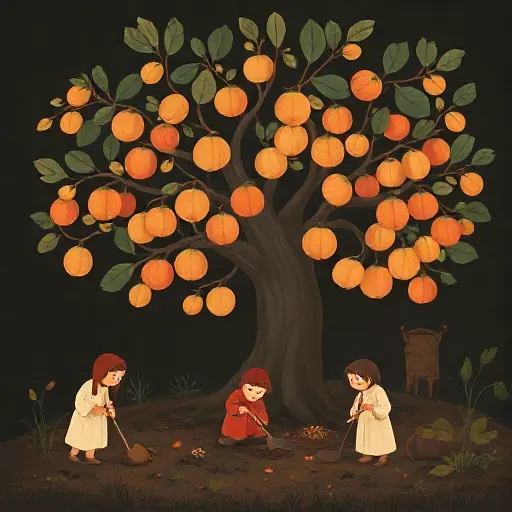
In the 11th century, a difficult, brilliant man died. Solomon Ibn Gabirol (1021–1057) was a Jewish poet and philosopher in Muslim Spain. By all accounts he had a sharp tongue and a hard life—orphaned young, possibly suffering a disfiguring skin disease, and rarely at ease with his community. Yet his Hebrew poems were so beautiful that one of them, Kingdom’s Crown, is still recited in Jewish prayer on Yom Kippur. A legend grew after his death: a jealous rival murdered him and buried his body under a fig tree. When townspeople noticed the tree’s fruit and flowers were impossibly sweet and bright, they dug at its roots and found his remains. The story captured something true: Ibn Gabirol’s ideas, like that legendary fragrance, would later burst into the medieval world when nobody expected it.
His most daring work was not a poem but a philosophical dialogue called The Fountain of Life (in Arabic, Yanbūʿ al-Ḥayāh). Written as a conversation between a teacher and a student, it asked a simple question: why are humans here? The book’s answer would turn old assumptions upside down, especially one belief about what the universe is made of.
The Question That Drives Everything
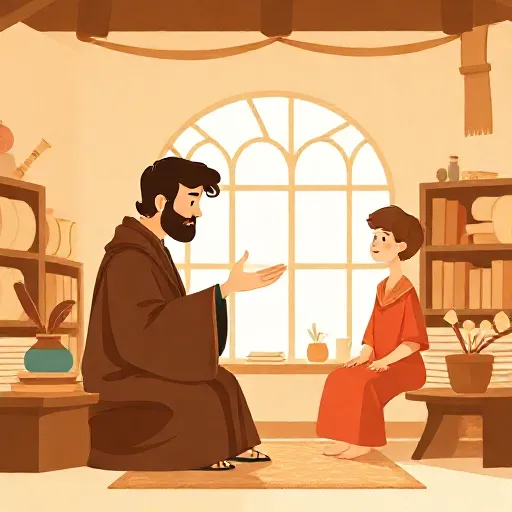
Ibn Gabirol belonged to a tradition called Neoplatonism—a school of thought that saw the whole cosmos as a great chain of being, flowing outward from a single divine source. Neoplatonists were less interested in dry facts than in one urgent question: how should a human live? For Ibn Gabirol, the answer lay in a return to our origin. In The Fountain of Life the teacher tells the student:
“Student: What is the purpose of man?
Teacher: The inclination of his soul to the higher world in order that everyone might return to his like.”
What did “return” mean? It meant purifying the soul through two activities: seeking knowledge and doing good deeds. Ibn Gabirol wrote that “knowledge and deeds liberate the soul from the captivity of nature and purge it of its darkness and obscurity, and in this way the soul returns to its higher world.” By grasping truth and acting wisely, a human being could reconnect with the divine source—and even taste a kind of immortality while still alive.
But why would a soul need liberating? To answer that, Ibn Gabirol painted a picture of the universe that stunned his readers.
Matter and Form: The Universe’s Building Blocks

Most medieval thinkers inherited a view from Aristotle (384–322 BCE): earthly things are a combination of matter (stuff) and form (shape, pattern, what makes a thing what it is). A bronze statue, for example, is matter (bronze) and form (the design of a warrior). But Aristotle believed that purely spiritual beings—souls, angels, the highest cosmic intellect—are form alone, with no matter at all. Matter, in his picture, was the lowly, changeable stuff of bodies.
Ibn Gabirol disagreed. In The Fountain of Life he argued that everything except God is made of both matter and form. Souls? Matter and form. Angels? Matter and form. The Universal Intellect that thinks all thoughts? Matter and form. This view is called Universal Hylomorphism, from the Greek words hylē (matter) and morphē (form). Later scholars called it “universal” because it applied hylomorphism to the whole chain of being.
He spelled it out as a cascade:
- Intellect (spiritual matter + spiritual form)
- Soul (matter + form)
- Celestial Body (matter + form)
- Terrestrial Body (matter + form)
At the very top, immediately “below” God, sits a pure spiritual matter that receives a pure universal form. Think of it like an invisible, receptive darkness waiting for light. This highest matter is not dusty or heavy—it has no size, no color, none of the categories that ordinary bodies have. Ibn Gabirol used the Arabic term al-ʿunṣur al-awwal (“first element”), which his translator called “prime matter.” But this was no ordinary stuff. It was a sublime foundation that sustained all the forms of the universe, a holy hiddenness.
Why would anyone insist on this? Ibn Gabirol saw that if only bodies have matter, then spiritual beings seem disconnected from the deepest root of existence. By giving even Intellect a material aspect, everything shared a common ground—and everything could be traced back to one source. Unity mattered to him more than tidy categories.
The Hidden Glue: Divine Will and the River of Being
If matter and form are the building blocks, what keeps them together? Ibn Gabirol’s answer was the Divine Will. He described it as God’s power infused through everything, a cosmic intermediary that “mediates between the extremes.” Will is what brings matter and form into contact, sustains their union, and moves the whole universe.
Sometimes he called Will “Wisdom” or “Word,” and he imagined creation as God’s utterance. Just as a spoken word unites voice (the material substrate), distinct sounds (forms), and meaning (the form that contains all), so the cosmos is a single “word” spoken by God—a blending of universal matter, many forms, and a hidden wisdom. In his poem Kingdom’s Crown, Ibn Gabirol wrote that God’s wisdom “gave rise to an endless desire in the world” and that God “called to Nothing—which split; to existence—pitched like a tent.” The image is of a yearning void that, touched by divine will, becomes a reality of forms.
This means desire is not just a human feeling for Ibn Gabirol. At the very bottom of everything lies matter, and matter’s nature is to desire form—to be shaped, fulfilled, made actual. So every rock, star, thought, and angel is held together by a kind of longing. The whole universe is a river of will and desire, flowing from God’s hiddenness outward through layers of matter‑form composites.
Why Christians Fought Over a Jewish Book
After Ibn Gabirol’s death, his original Arabic text vanished. But in the 12th century, translators in Spain turned The Fountain of Life into Latin. The name on the cover was not “Solomon Ibn Gabirol” but “Avicebron,” a Latinized form that hid the author’s identity. For centuries, Christian scholars assumed Avicebron was either a Muslim or a Christian.
Something surprising happened: the Franciscan order, deeply influenced by the ideas of St. Augustine (354–430), fell in love with the book. Augustine had stressed the role of divine will and the importance of spiritual matter, and here was a text that seemed to back up that view perfectly. Franciscans pointed to Avicebron to support their claim that angels are made of matter and form—and that God’s will, not pure intellect, runs the cosmos.
The Dominican order, however, followed Thomas Aquinas (1225–1274), who built his thought on Aristotle. Aquinas insisted that angels are pure form, and he rejected Universal Hylomorphism as a philosophical mistake. The two orders debated fiercely through the 13th and 14th centuries, and Ibn Gabirol’s book became a battlefield. All the while, nobody realized the author was the celebrated Jewish poet Solomon Ibn Gabirol.
That secret lasted until the middle of the 19th century. In 1846, the scholar Solomon Munk discovered a medieval Hebrew summary of The Fountain of Life—and inside it, the text was openly credited to Ibn Gabirol. Only then did the Latin “Avicebron” get his real name back.
What it Means for Us: The Hidden Stuff of Life
Ibn Gabirol’s core intuition is that everything shares a hidden, receptive depth—a mysterious “matter” that receives meaning, shape, and life. That sounds abstract until you apply it to yourself. When you learn something new, when you act kindly out of nowhere, when a melody gives you chills—maybe that’s your own inner “matter” reaching for a form it doesn’t yet have. The thing doing the reaching is real, even if you can’t point to it like a rock or a heart.
He also left us with a vivid picture of the human journey. We aren’t trapped in a body; we are microcosms that mirror the entire cosmos. Knowledge and good deeds, he thought, don’t just make you smarter or nicer—they actually loosen the chains of confusion and draw you closer to the source of life. That’s the “return” he spoke of: not to a place, but to a truer version of yourself, one already connected to something immense.
Whether or not you accept Universal Hylomorphism, Ibn Gabirol’s questions remain yours. Does everything have a hidden foundation? Is your deepest self more like a dark, waiting canvas than a finished painting? And could your daily choices—what you learn, how you treat others—really reconnect you to the whole universe? A grumpy poet from a thousand years ago thought so. The conversation he started is still wide open.
Think about it
- If everything, even a thought, had a kind of “hidden matter,” would that make thinking less special or more connected to the world?
- What would it feel like to be immortal while still alive, as Ibn Gabirol imagined—would you sense a difference in your ordinary day?
- Can a desire or a longing be a real thing at the center of who you are, not just a passing wish? How would you test that idea?