

Should You Trust a Brain That Warns You Not To Trust It?
Aisha’s Dilemma: When the Sky Warns You About Your Own Brain
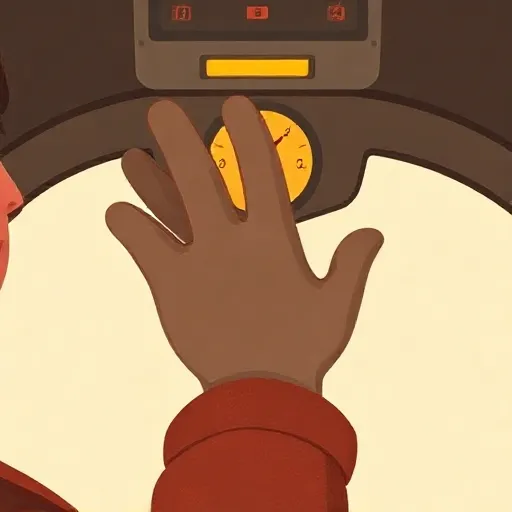
Aisha is flying a small plane over the Pacific Ocean. She checks the fuel gauge, studies the charts, and carefully calculates: there is enough fuel to reach Hawaii. She feels confident. Then a cockpit message alerts her that the air pressure at this altitude can cause hypoxia — a dangerous condition that messes up people’s thinking without them noticing. The warning says that at this altitude even careful, smart pilots make mistakes. Aisha now has a new kind of information: not about fuel or weather, but about her own mind. She has higher-order evidence.
Higher-order evidence is evidence about your own thinking — about whether you are being rational, careful, or likely to get things right. It can come from knowing you are tired, from realising you have a bias, or from finding out that an equally smart person disagrees with you. In Aisha’s case, it is the warning that hypoxia might be scrambling her reasoning.
Right away, this case looks different from ordinary mistakes. If you see what looks like a red wall but then learn that a red light is shining on it, you can say, “Oh, the wall might not be red — my experience was misleading.” But you still think your eyes worked fine; you just had bad lighting. In hypoxia, if Aisha takes the warning seriously, she won’t simply think the fuel evidence was tricky. She will doubt whether she understood the evidence at all and whether she was thinking straight. So higher-order defeat is not just an everyday correction; it makes you question your own thinking from the inside.
The Puzzle: Must You Ignore Your Own Reasoning?
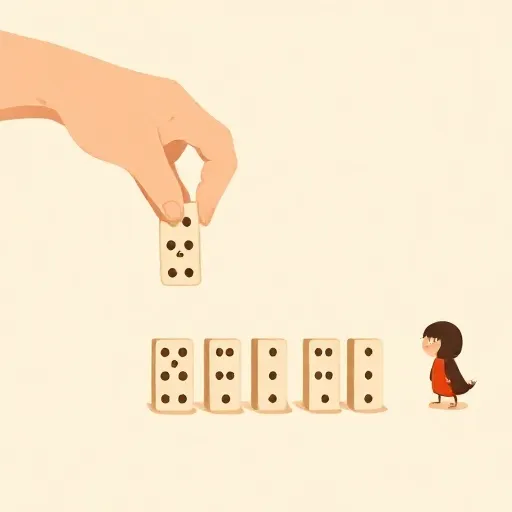
Aisha’s situation creates a deep puzzle. Her first-order evidence — the fuel gauge, the charts — still points strongly to having enough fuel. That evidence has not vanished. Yet if she simply says, “Well, the fuel math works out, so I must be immune to hypoxia,” many philosophers think she would be dogmatic — stubbornly ignoring information that she herself has reason to trust. To avoid this, it seems she needs to set aside the very evidence and reasoning that makes her believe she will make it to Hawaii. Philosophers call this idea Independence: when you get higher-order evidence, you cannot just appeal to the very reasoning that is in question; you must put it aside and judge your reliability from a detached standpoint.
This feels odd. It is as if you tell someone, “I might be bad at addition today, so I won’t use my own sums to decide my total.” But if you cannot use your own sums, how do you decide anything? Independence makes rationality look self-defeating — it asks you to treat your own thinking as if it were untrustworthy, while still somehow using it to reach a conclusion. Moreover, higher-order evidence is agent-relative: the hypoxia warning gives Aisha a reason to doubt her own calculation, but if you were watching from the ground with the same charts, you would not doubt the math. Two people looking at the exact same numbers could end up with different confidence, just because one of them learned something about their own brain. That makes the puzzle even sharper.
Refusing to Change Your Mind: Two Hard-Line Answers

Some philosophers think the whole puzzle shows that higher-order evidence simply should not affect your first-order beliefs — the beliefs directly about the world (like “I have enough fuel”). They offer two main ways to say this.
The steadfast view says Aisha should dismiss the hypoxia warning altogether. She should keep her high confidence that she has enough fuel, and also believe that her evidence supports it. Philosopher Thomas Kelly (b. 20th century) has suggested that dogmatism is not always irrational. Declan Smithies (b. late 20th century) goes further: a fully ideally rational agent would never face misleading higher-order evidence in the first place — she would always know exactly what her evidence supports. On this picture, any doubt about your own rationality is itself a mistake. The obvious problem is that ignoring a cockpit warning to fly hundreds of passengers over the ocean seems shockingly irresponsible. Most people feel that something has gone wrong with Aisha’s belief if she acts this way.
A second option is level-splitting. On this view, defended by Maria Lasonen-Aarnio, Allen Coates, and others, Aisha’s first-order belief should follow her first-order evidence — she should still be highly confident she has enough fuel. But her higher-order belief (her belief about whether she is being rational) should follow her higher-order evidence — she should believe that her reasoning is probably confused. In other words, she ends up believing G, while also believing that believing G probably is not rational for her. This state is called epistemic akrasia (roughly, knowingly doing what you think you shouldn’t believe).
Level-splitting avoids dogmatism, but it has an uncomfortable result: if epistemic akrasia is allowed, Aisha could reason that she has been in similar situations before and was right each time — and then gradually dismiss the possibility that she was ever impaired. This kind of bootstrapping looks absurd. So many philosophers find level-splitting hard to accept.
Making Room for Higher-Order Evidence: Bracketing and Bridging

Suppose instead we think Aisha should lower her confidence in G. Then we need a rule explaining how to do it. Two families of principles have been proposed.
First, Independence principles say that when higher-order evidence arrives, you must bracket (set aside) the specific reasoning and evidence under suspicion. If Aisha could use her fuel calculation to argue she’s immune to hypoxia, her higher-order evidence would have no effect. So Independence insists she step back and evaluate her reliability without re-using the very reasoning at issue. The tough question is how much to set aside — what if everything you believe is called into question? Most philosophers think some things survive, but drawing the line is tricky.
Second, level-bridging principles tell you how to match your first-order belief to what you have learned from the higher-order evidence. One early candidate was Rational Reflection: your confidence in a claim should equal your estimate of how confident it is rational to be. If you think there is a 50% chance that high confidence is rational and a 50% chance that low confidence is rational, you should end up with middling confidence.
But a famous case called the Unmarked Clock creates trouble. Suppose Chloe looks at a clock with no numbers and a hand that jumps between positions. She can judge roughly where the hand is — say, around 20 minutes past the hour, but she could be off by a minute. She knows that if the hand is truly at 20, her confidence in P20 is exactly right; but if the hand is at 19 or 21, her confidence in P20 is too high. So she can figure out that her estimate is probably too confident in one direction, even though she doesn’t know which direction! Rational Reflection would forbid this unbalanced state, yet it seems inescapable. So philosophers such as Adam Elga and David Christensen have proposed revised principles: we should defer to what an ideally rational version of ourselves would believe, not directly to our own current estimate of rationality, or we should focus on our estimated reliability (how likely we are to get things right) rather than rationality itself.
These adjustments show that even those who think higher-order evidence matters are not in perfect agreement about how it works.
Stuck Between Norms: Dilemmas and Two-Track Rationality

Some philosophers conclude that the puzzle cannot be dissolved by picking one clean answer. David Christensen (b. mid-20th century) argues that Aisha faces a genuine epistemic dilemma: she is rationally required to believe G (because her evidence entails it) and also required to suspend judgment (because of the hypoxia warning). She cannot do both; the best she can do is reduce confidence, but even that leaves at least one requirement unmet.
Others try to split the norms themselves. Miriam Schoenfield has suggested that we can evaluate plans in two ways: the best plan to make (given your known weaknesses) and the best plan to follow (if you were perfect). Higher-order evidence matters for the plan you should make — like setting an early alarm because you know you hit snooze. Joshua DiPaolo argues that ideal and non-ideal rationality give different instructions: a perfect thinker would ignore higher-order evidence, but a limited thinker like Aisha should respect it. These approaches explain why the case feels so tangled: there are multiple, clashing ways to evaluate what a person should believe.
Why It Matters When You’re Not Flying a Plane
You probably aren’t a pilot, but you face higher-order evidence all the time. A friend equally good at logic disagrees with you about a puzzle. You learn that your upbringing might have made you biased about a historical question. You realise you always make more mistakes when you’re hungry, and you’re hungry right now. In each case, you get information not about the world directly, but about how likely you are to be thinking well.
The puzzle pushes you to ask: should you ignore that kind of information and stick to your original reasoning? Should you admit you might be wrong but keep your belief anyway? Or should you step back, bracket your own thinking, and try to estimate from the outside how trustworthy you are? Learning to think clearly about these questions helps you decide whether to double-check your homework, listen to a second opinion, or trust your gut — not because there is one easy answer, but because knowing the shape of the puzzle is the first step to handling it wisely.
Think about it
- A friend who is just as good as you at video game strategy disagrees with you about the best weapon to choose. Should you change your pick? What if you later learn you were tired, but your friend had just drunk three cups of coffee?
- If a scientist could prove that everyone tends to overestimate their own fairness when they’re angry, and you are angry about a rule your parents just made, should you trust your judgment that the rule is unfair? How would you decide?
- Imagine you have a special mirror that shows whether you are being rational right now. If the mirror suddenly says “distorted,” should you believe the mirror or your own thoughts? Could you ever check the mirror’s accuracy without using your own thinking?