

Why Would a Loving God Let Anyone Go to Hell?
A Puzzle with Three Pieces: Who Is Saved?

Imagine three friends arguing over a video game that seems unfair. One says the game’s designer made it so only a few can win. Another says each player’s own choices decide the ending. The third insists that in the end, everyone gets to play again and reach the good ending. That argument is a lot like a puzzle that Christian thinkers have wrestled with for centuries. At its heart are three statements about God and people:
- God truly loves every human being equally and wants to bring each one into perfect happiness with him.
- God’s love and saving purpose cannot be defeated forever; it will finally succeed for everyone God loves.
- Some people will never be reconciled to God and will remain cut off from him forever.
These three can’t all be true at the same time — they are inconsistent. Yet almost all major Christian theologians have accepted two of them. So they had to reject one. Which one they reject marks the three main views about heaven and hell: the Augustinian view, the Arminian view, and Christian universalism. Each view gives a different picture of God’s love and justice.
Augustine’s Answer: God Chooses a Few
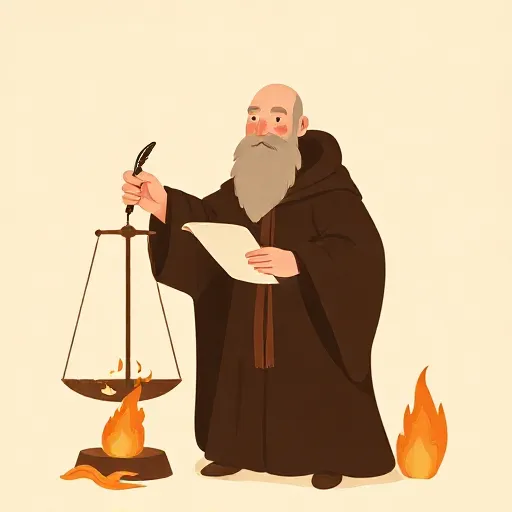
Augustine of Hippo (354–430) believed that God’s saving grace cannot fail (statement 2) and that some will be lost forever (statement 3). So he rejected the idea that God loves all people equally. Instead, he taught limited election: God chooses only a small number — the “elect” — to receive the grace that guarantees salvation; the rest are passed over. Augustine reasoned that if God wills something, it must happen, and since not everyone is saved, God must not will everyone’s salvation in the same way. He argued that when the Bible says God “wills all people to be saved,” it means God wills to save some from every type of person, not every individual.
For Augustine, hell was a place of everlasting torment — a literal lake of fire where the damned burn forever without dying. He held a retributive theory of punishment: the point of punishment is not to reform the sinner but to satisfy justice, to balance the scales. The smallest offense against an infinitely great God, he thought, is infinitely serious and deserves infinite punishment.
Augustine also believed in inherited guilt. He thought all humans are born guilty because of Adam’s first sin, even before they do anything wrong themselves. Infants who die unbaptized, he said, are still justly condemned, though he suggested their suffering might be the mildest of all.
This view troubled many people, both in his time and ours. Critics ask: if two newborn babies both have done nothing, why is it fair for God to save one and not the other? If God owes us nothing because of original sin, then showing mercy to some but not to others seems arbitrary. And if even a tiny sin deserves eternal horror, then grading small and big sins becomes pointless — the punishment would already be as bad as it could get. More deeply, many argue that a person can’t be born guilty for someone else’s act. Inherited defects might make life harder, but they don’t make you deserving of eternal torture. Even some retributivists who believe punishment must fit the crime find the idea of infinite suffering for a finite being’s mistake hard to swallow.
Arminius’s Answer: You Lock the Door from the Inside

Jacobus Arminius (1560–1609) and his followers accepted that God loves all equally (1) and that some remain lost (3). So they dropped the idea that God’s love always triumphs (2). Why? Because, they said, love requires freedom. A libertarian free will means that even an all-powerful God cannot force you to love him back or to accept his grace — genuine love must be chosen freely. So God offers salvation to everyone, but each person can genuinely say no, not just for a while but forever.
C.S. Lewis (1898–1963) put it this way: the doors of hell are locked on the inside. Hell is not so much a punishment God forces on you as a condition you lock yourself into by clinging to selfishness, pride, or bitterness. God respects your choice so deeply that he won’t drag you into heaven against your will. Some may become so hard-hearted, so fixed in bad character, that they keep rejecting God even when that rejection feels like misery.
This freedom defense raises sharp questions. If you really knew that separation from God meant total horror, would anyone freely choose it? Think of a person who, because of a serious mental illness, kills a loved one thinking they’re a monster. If that choice is too confused to count as free, then what about choosing eternal unhappiness? A free choice must have at least some rational grip on reality. So critics argue: either the damned are fully informed and their choice is insanely irrational (thus not truly free), or they are still deceived, and a loving God could keep offering light until the illusion breaks. Some Arminians reply that a person can cling to self-deception forever, and God won’t overrule that choice by force. Others suggest that even in hell people might go on sinning without ever fully seeing the horror — so they remain free but never get the clarity that would make the choice impossible to sustain. The core tension is whether a genuinely free rejection of God could last an eternity without collapsing into something that isn’t really freedom at all.
Is Forever Too Long? The Universalist Hope

The third group, Christian universalists, accept that God loves all equally (1) and that God’s saving love cannot be thwarted forever (2). So they reject the idea that anyone remains separated from God eternally (3). They believe that, in the end, God will reconcile every single person to himself. For them, hell is real but temporary — a severe but healing experience that finally breaks down every barrier to love.
Universalists often argue that love is inclusive: if a mother loves her child, any good that child receives becomes her own joy, and any harm that child suffers is her own pain. God cannot fully love that mother and yet give up on the baby she adores forever. Many find it impossible that a perfectly loving God would create someone knowing they would be lost forever, while others are saved by a gift they didn’t earn.
But what about freedom? People assume universalism means God forces you into heaven. Universalists reply that force isn’t needed. Think of the biblical story of Paul, who went from violently opposing Jesus to becoming a devoted follower after a disorienting encounter with the truth. God can shatter our false beliefs by letting us experience the consequences of our own choices, not by overriding our will. One argument points out that if a person has endless opportunities over endless time, the chance they would forever refuse to turn toward goodness is astronomically tiny. A loving God with infinite patience can keep breathing light into every dark corner until even the most stubborn heart softens.
Opponents worry that removing the possibility of eternal loss makes our choices less serious. Universalists answer: a temporary hell of self-discovery is still terrible, and the journey may take ages, but a God whose love wins in the end is more gloriously loving than one who gives up on anyone.
Could Heaven Become Boring, or Even Tragic?

Even if you settle the hell question, heaven raises its own puzzles. Two in particular have bothered thinkers for ages.
First: what about those in heaven who know that people they love are suffering in hell? When a reporter asked the mother of Ted Bundy — a serial murderer — whether she still supported him, her voice shook as she said, “He is my son. I love him.” The idea that she could enjoy perfect bliss while her son was lost forever seemed impossible. The 19th‑century theologian Friedrich Schleiermacher argued that the misery of loved ones in hell would destroy the happiness of the redeemed. Some, like the philosopher William Lane Craig, suggested that God could erase painful memories from the minds of the saints. But many recoil at the thought that blissful ignorance is real happiness. The even darker idea, preached by Jonathan Edwards, was that the saved would actually rejoice in watching the torments of the damned — a vision that, for most people today, makes God appear cruel rather than loving.
Second: would heaven eventually become unbearably dull? The philosopher Bernard Williams (1929–2003) argued that an immortal life would be intolerable because you’d eventually run out of meaningful things to do. A woman in a story becomes immortal at 42; by 342, she is desperately bored because everything that could happen had already happened to her. But others reply that a never‑ending life could be filled with endless discovery. New universes to explore, friendships that keep deepening, a forgotten symphony rediscovered after a hundred years — all of this might keep joy fresh. Some religious thinkers go further: part of preparing us for heaven is slowly teaching us to love better, so that even ordinary moments like caring for a baby or sharing a meal become endlessly rich. Boredom, they argue, comes from being self‑focused; genuine love makes the world forever interesting.
What This Means for You
These ancient debates are not just about what happens after we die. They are really about what love and fairness demand right now. If you’ve ever wondered whether you can forgive a friend who keeps hurting you, or whether it’s okay to hope that the worst people could change someday, you’re walking right into this conversation. The three views pull at our deepest intuitions: that real love has to be freely chosen (Arminius), that perfect love never gives up (universalism), and that justice can’t just look the other way (Augustine). The fact that thoughtful, kind people have landed on opposite sides for nearly two thousand years shows that the puzzle is genuinely hard. It also shows why it still matters — because the picture you paint of God’s character shapes how you treat the people around you, including the ones who have let you down.
Think about it
- If a friend hurts you deeply and never says sorry, would you ever want them to be punished forever? Why or why not?
- Can you really choose something you know will make you miserable forever? Think of a time you did something you knew was bad for you — did you fully understand the consequences?
- If you knew that in the far future, every person you have ever loved would be perfectly happy and reconciled, would that change how you treat difficult people now?