Why Does a Perfect God Let Horrible Things Happen?
A Fawn in the Flames: The Problem of Evil

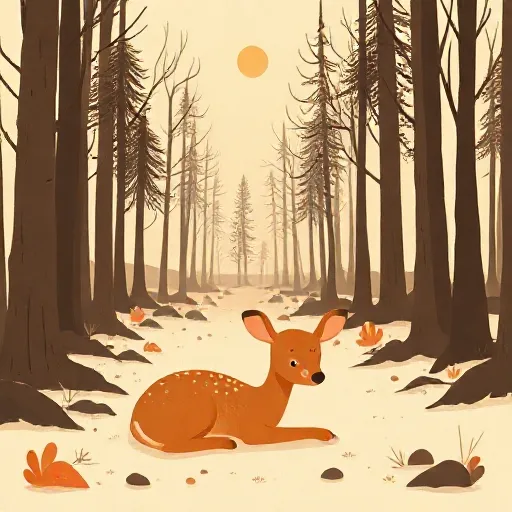
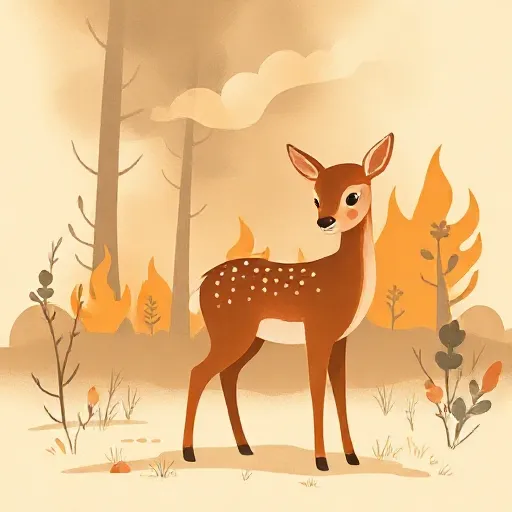
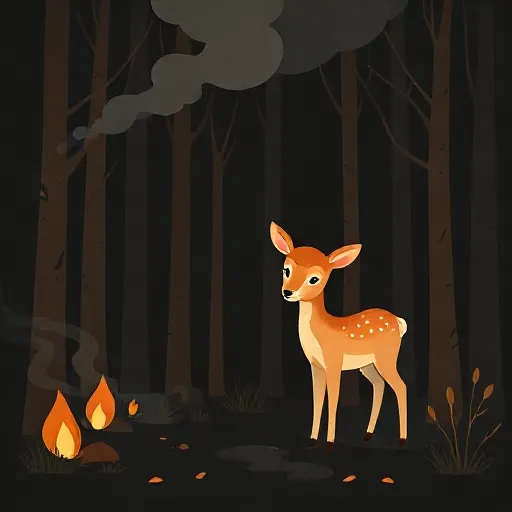
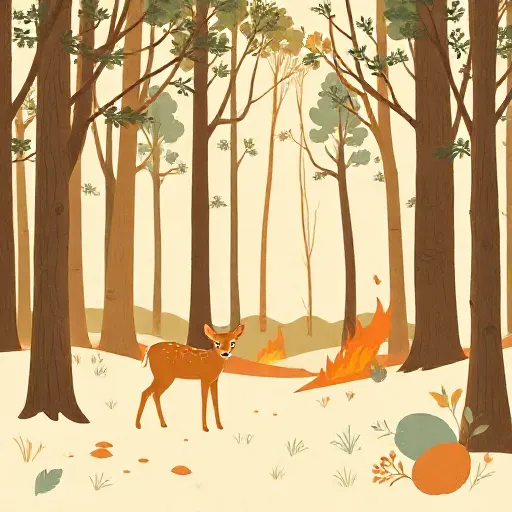
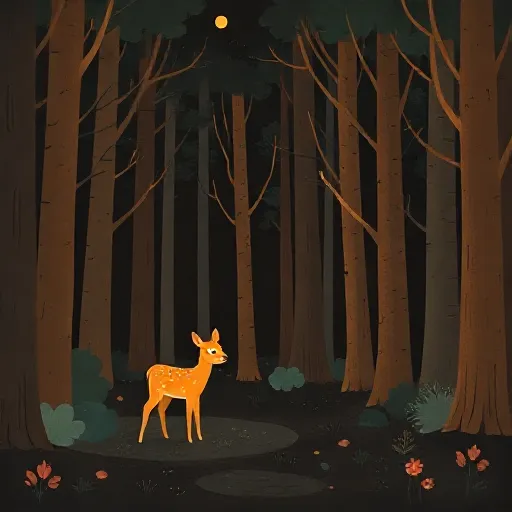
Imagine a fawn alone in a forest, caught in a wildfire nobody notices. It struggles for days, terrified and in pain, until it dies. No human ever sees it; no lesson is learned. For philosopher William Rowe (a 20th‑century thinker), cases like this are at the heart of the problem of evil. If God is all‑knowing, all‑powerful, and all‑good, why does this happen?
The oldest form of the challenge is the logical problem of evil. It goes like this: if God knows everything (omniscient), he knows the fawn suffers. If God is perfectly loving (omnibenevolent), he wants to stop it. If God can do anything (omnipotent), he can stop it. Yet the suffering goes on. So it seems impossible for all three traits to exist at the same time as any evil at all. Some argue that this alone proves the God of Abraham, Jesus, and Muhammad cannot exist.
But many theists (believers in such a God) reply that the three traits are consistent with evil if God has a good reason to permit it. The real fight, then, moves to the evidential problem of evil. Even if God could allow evil for a good reason, the sheer amount of pointless, horrifying evil we see — like the fawn — looks like strong evidence that no such good reason exists. The task for the theist is to offer a theodicy: a plausible story about why a perfect God would make a world with so much pain.
The Free Will Defense: It’s Our Fault
The most famous reply starts by splitting evil into two kinds. Moral evil comes from the wrong choices of rational beings — murder, cruelty, selfishness. Natural evil comes from nature itself — earthquakes, disease, the wildfire. The free will defense, pushed by Alvin Plantinga (born 1932) and others, focuses on moral evil and says it is entirely our fault, not God’s.
The key idea is libertarian freedom. Your decision is free in this sense only if nothing outside your own will — no chain of causes, no law of nature — makes you choose as you do. You could have done otherwise. The good of having creatures with such freedom, the argument goes, is immense. They can love and choose God sincerely, not as programmed robots. But if God gives genuine free will, he cannot also force us never to misuse it. The risk is built in; moral evil is the price of a world where real love and real choices exist.
On this view, even much of what looks like natural evil is actually moral evil’s shadow. Poverty, famine, and lack of protections against disasters are often worsened by greed, laziness, or hatred. If humans used their freedom better, the world would be far less cruel. So God isn’t to blame — we are.
Does Free Will Rob God of Knowledge and Control?
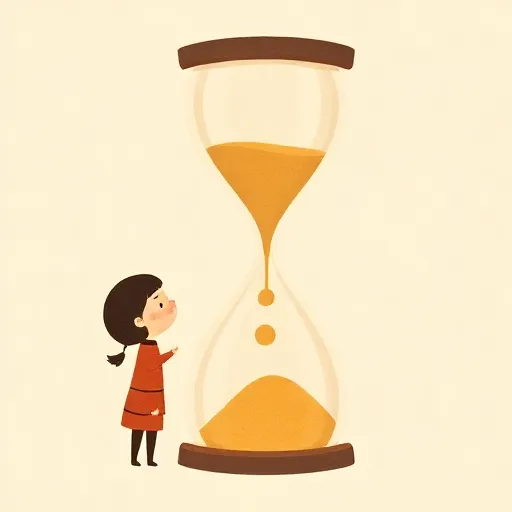
Critics like J. L. Mackie (1917–1981) push back. First: even if freedom is a great good, couldn’t an all‑powerful God have created free beings who always choose right? Proponents of libertarian freedom usually say no — that would be logically impossible, like a square circle. But the problems don’t end there.
If our choices are not determined by anything, including God’s will, then God seems to lose sovereignty — full control over his world. Worse, he may lose omniscience. If my future choice has no cause that guarantees it, then nothing makes it true beforehand. Some thinkers, like Boethius (c. 480–524), suggest God lives outside of time and sees all moments at once, so he doesn’t “foresee” but simply sees our choices. That might protect his knowledge, but it still leaves him a risk‑taker when he creates: he doesn’t know as creator which choices will happen until he looks from his timeless perch. A less powerful God might be too high a price.
Open theism bites the bullet. It says God genuinely does not know the future free decisions of creatures — not because he is weak, but because there is no fact there yet to know. He takes risks out of love. For many believers, this surrenders far too much of God’s majesty and makes prophecy impossible.
God’s “Middle Knowledge”: A Choose‑Your‑Own‑Adventure Story?
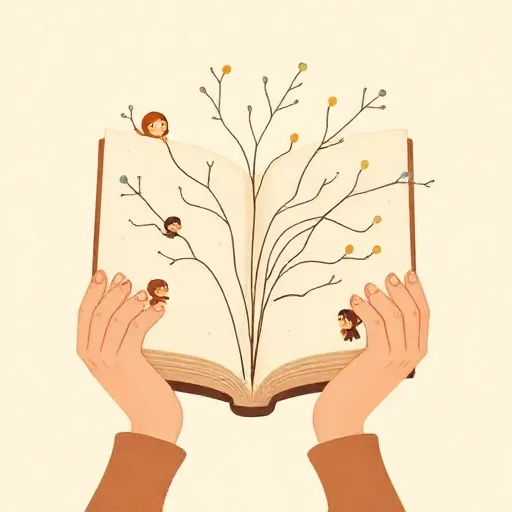
Is there a middle ground between a God who gambles and one who controls everything? The 16th‑century Jesuit Luis de Molina (1535–1600) said yes. He proposed that God has middle knowledge — knowledge of what every possible free creature would do in every possible situation, before God decides which creatures and situations to create.
Think of a massive Choose‑Your‑Own‑Adventure book. Before writing the final version, the author knows every branch: if you reach page 23, you’ll pick the mountain path; if you reach page 47, you’ll open the chest. Armed with that knowledge, God can pick exactly which world to make real — one where, even though everyone acts freely, the overall story goes in a good direction. He doesn’t control your choices, but he knows them in advance and weaves them into his plan.
Many philosophers, however, ask: how could God know these things? A fact about what you would freely do in a situation you never face seems to float without any grounding. It’s not a necessary truth (like 2+2=4), and God can’t learn it by observing you, since you don’t exist yet. Without a solid answer, middle knowledge starts to look like an illusion — a brilliant solution that may not really be possible.
The Author of the Story: God and Everything We Do
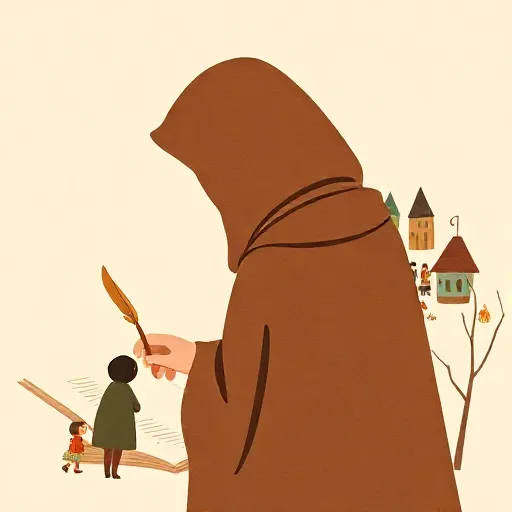
What if the solutions that try to distance God from evil can’t work without sacrificing his power? The most traditional answer goes all the way: God is the first cause of everything, including our free decisions. This is sometimes called theological determinism, but thinkers like Augustine (354–430) and Thomas Aquinas (1225–1274) insisted it does not destroy freedom. Rather, God moves us from within, in harmony with our nature, not by forcing us from outside.
A helpful analogy is a novelist and her characters. The author doesn’t enter the story to shove characters around; she creates them in their very act of choosing. They act freely within the world of the novel, even though she is the ultimate source of their actions. On this picture, God’s willing that you decide something is not a separate event that pushes you — it is the ground of your whole being and doing. So you can still have libertarian freedom, because nothing inside the created world causes your choice; God’s creative act is not a cause among others.
This view gives God complete sovereignty and knowledge; he knows your actions simply by knowing his own creative will. But it faces a sharp question: if God directly creates the act of sin, isn’t he the author of sin? Defenders reply that the act remains yours, not his. God’s will is that you decide; that it is a sinful decision comes from your own defect. They also note that a good parent might knowingly create a world where her child will choose wrongly, because a far greater good — like genuine friendship with God — requires the real possibility of rebellion. The evil is not a tool but is defeated in a larger story where it is overcome.
When Suffering Becomes Something Bigger: Soul‑Making
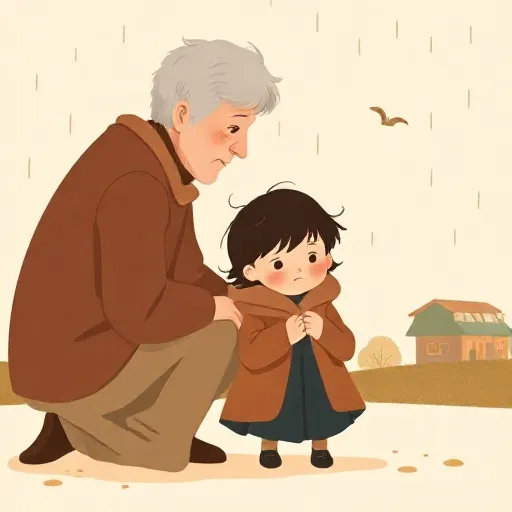
What about the fawn and all the suffering that seems to serve no one’s growth? Many theists turn to a theodicy of soul‑making, developed by John Hick (1922–2012). The idea is that a world without any pain, danger, or loss would be a shallow paradise. Real courage, patience, mercy, and deep love are not just nice feelings — they are forged in the struggle with evil. A person who never faced fear can’t be truly brave; a person who never met sorrow can’t show real compassion. God’s goal is not to maximize pleasure but to raise beings fit for friendship with him, and that requires a world where evil is present enough to be fought, and where each of us can learn what good and evil really mean.
On this view, suffering is defeated when it is faced with grace and becomes part of a story of growth. The evil is not merely outweighed by some later reward; it is addressed and transformed. Even the fawn’s unnoticed pain can quicken our determination to protect the vulnerable, to care for those nobody sees. The fact that so much evil looks pointless is itself part of the challenge: without that appearance, heroic faith and profound hope wouldn’t be possible. The theist admits we don’t always see the full picture — and here a note of mystery enters. A perfect God’s reasons might be far too vast for us to grasp, like a microscope missing the galaxies. That doesn’t satisfy everyone, but it reminds us that the problem of evil is as much a call to live courageously as it is a puzzle to solve.
Think about it
- If you found out that every choice you’ve already made was secretly caused by something outside you (your genes, your upbringing, or even God), would you feel any less responsible for your actions? Why or why not?
- Is a world where people freely cause terrible harm better than a world where everyone is kind but has no choice to be otherwise? What would make one world more valuable?
- Imagine you could erase all pain from your life. Would you do it, or would you keep some challenges because they taught you something important? What might be lost in a pain‑free world?