

The Fawn in the Fire: Why Would God Let It Suffer?
The Fawn in the Fire

A fawn, trapped in a forest fire, burns to death. A five-year-old girl is raped and then strangled. These unbearable scenes are not just tragic—they are used by philosophers to ask one of the hardest questions ever asked: If God exists and is all-powerful, all-knowing, and perfectly good, why would He allow such suffering?
The late 20th-century philosopher William Rowe (1931–2015) put the challenge like this. If God exists, then for any evil—any terrible suffering or wrongdoing—God must have a justifying reason to permit it. Usually that reason is an outweighing good: a greater good that can only happen if the evil happens, or a worse evil that the permission prevents. For example, a painful surgery might be necessary to save a life. The good outweighs the evil.
So, if some evil exists that has no outweighing good making it necessary, then God cannot exist. Rowe and others argue that there are such evils. The fawn’s death and the girl’s suffering seem to serve no greater purpose—they aren’t connected to anyone’s free choice or moral growth. Therefore, the argument goes, there is no God.
This is a deductive argument. If its premises are true, the conclusion follows with certainty. But how can we ever know that an evil really isn’t connected to any outweighing good?
Noseeum Inferences: When You Can’t See the Reason
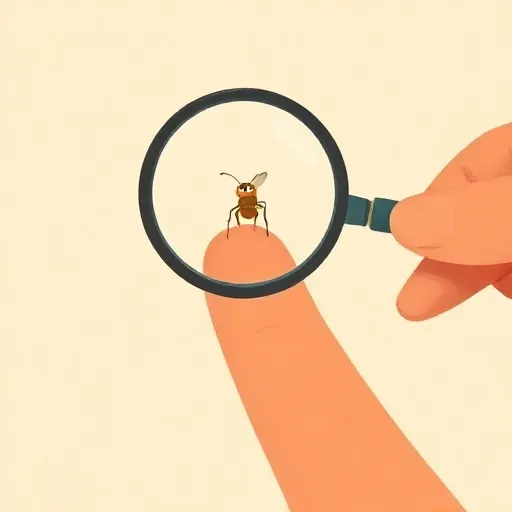
Rowe’s defenders try to support the claim by a move that the philosopher Stephen Wykstra (who wrote in the late 20th century) later called a noseeum inference. The name comes from “no-see-ums”—tiny biting insects you almost never see even when they’re right on your skin.
The pattern works like this: after careful reflection, we see no outweighing good connected to the fawn’s suffering. So it seems reasonable to believe there is no such good. You use a noseeum inference all the time: if you search every inch of your room for your keys and don’t see them, you infer they aren’t there. It feels like good reasoning.
But is it good reasoning when the topic is God’s reasons for permitting horrendous suffering? Wykstra thought not. He argued that a noseeum inference is reasonable only if you are in a position to expect to see the thing if it were there. If you can’t expect to see it, then “I don’t see it” gives you very little reason to think it isn’t there.
CORNEA: The Doctor’s Needle and God’s Hidden Plans

To show why, Wykstra offered a principle called CORNEA—short for Condition On ReasoNable Epistemic Access. A simple version says: you are reasonable in believing something on the basis of what you see (or don’t see) only if, given your abilities, you can reasonably believe that if the thing were different, your experience would probably be different too.
Consider a doctor who accidentally drops a needle, picks it up, looks at it with a magnifying glass, and declares it free of viruses and bacteria. Is that reasonable? No. Viruses are too small to see with a magnifying glass. Even if the needle were swarming with germs, the doctor’s visual experience wouldn’t change. The doctor can’t expect to see them. So the noseeum inference “I see no germs, therefore the needle is sterile” fails.
Wykstra applies the same logic to God and evil. He asks: can we reasonably expect to see an outweighing good for the fawn’s suffering if one exists? Not really. Our minds, he says, are like an infant trying to understand its parent’s long-term plans. A baby can’t grasp why a parent allows a painful medical procedure. Our cognitive abilities compared to God’s are even smaller. Even if God had a perfectly good reason for the suffering, we wouldn’t likely spot it just by reflecting. So our failure to see a reason gives us no justification for thinking there is none.
This skeptical theist response does not claim we know there is a reason. It only says the noseeum inference is too weak to do its job. And without that inference, the outweighing goods argument loses its key support.
Sampling Goods: The Pepper Garden and the Missing Goods

Some philosophers tried a different strategy. Instead of saying “I see no outweighing good at all,” they listed all the outweighing goods we do know about—free will, soul-building, the chance to develop virtues—and asked: does any of these familiar goods justify the fawn’s death and the girl’s suffering? They concluded: no good we know of does.
Then they made an inductive leap: since no known outweighing good would justify those evils, probably no outweighing good at all would. The move is like this: I plant many kinds of hot peppers, and every year I notice they all flower in late summer. I have a sample of peppers I know. From that sample, I might reasonably infer that all hot peppers flower in late summer.
But skeptical theists like William Alston (a 20th-century philosopher of religion) and Michael Bergmann (a contemporary philosopher) object. An inductive inference from a sample is only reasonable if you have good reason to think the sample is representative of the whole group. My peppers might all be from a region where late blooming is normal, but maybe other peppers bloom at different times.
Do we have reason to believe the outweighing goods we know are a representative sample of all possible outweighing goods? Bergmann spells out three skeptical claims: (1) we have no good reason to think the possible goods we know are representative of all possible goods; (2) the same goes for possible evils; (3) the same goes for how goods and the permission of evils are connected. Because the sample isn’t random—and we haven’t “charted” the whole realm of possible goods—the inductive inference fails. A novice chess player sees a grandmaster make a strange move and thinks it’s a blunder. But the novice simply can’t see how the move fits into the grandmaster’s winning plan. We might be in a similar position with God.
Moral Worries: Does Skeptical Theism Stop You from Helping?
Even if skeptical theism blocks the argument from evil, many critics say it creates a terrible moral problem. If for every seemingly pointless suffering I can’t rule out a hidden justifying reason, then should I ever intervene to stop suffering? Imagine you see a child about to drown. You can’t see any good reason for this disaster. According to the noseeum critique, your failure to see a reason is no evidence that no reason exists. So should you just stand by, thinking God might have a hidden plan?
That would be monstrous. Skeptical theists agree we must help. They respond by drawing a distinction between God’s position and ours. We are commanded by God to prevent evil when we can. Moreover, some evil is permitted by God not because the evil itself is necessary for a greater good, but because the permission of it makes possible something valuable—like the growth of our own moral character. A parent might let a child struggle with homework to build responsibility, even if the parent could easily give the answer. The struggle isn’t itself good, but letting the child face it opens a door to a greater good. So God may permit evils without every individual evil having its own special outweighing good.
Critics still worry that if we don’t know God’s plans, we might not know when to act. But the skeptical theist insists our ordinary moral knowledge—don’t let children drown—is solid enough. The debate continues.
Why This Puzzle Never Goes Away

The argument from evil isn’t just a dusty debate for theologians. It’s about something you face all the time: living with the fact that you don’t have God’s-eye view of the world. When a friend goes through something awful and you can’t find any meaning in it, you feel the same tension. Should you trust there is a hidden purpose, or accept that sometimes things are just senseless?
Skeptical theism reminds us that our knowledge is limited. That doesn’t prove God exists, and it doesn’t make suffering disappear. But it leaves room for hope that the world is not as broken as it looks. At the same time, it raises hard questions about whether we can rely on our moral instincts if the ultimate reasons are hidden. This puzzle—how to respond to evil without pretending to see everything—is as alive today as it was when Rowe wrote about the fawn in the fire.
Think about it
- If a friend is suffering and you can’t see any purpose in it, what’s the best way to help them—try to find a purpose together, or just stay close and be there?
- Imagine you had the power to stop a terrible event but couldn’t understand why it was happening. Would you stop it anyway, or would you let it unfold? What would influence your decision?
- A person who believes every sad event has a hidden good reason could also become passive and never fight injustice. Can you believe in hidden goods and still be a champion for change?