
The Philosopher Who Thought God Feels Your Pain — and Electrons Do Too
The Medic Who Carried Philosophy to the Trenches

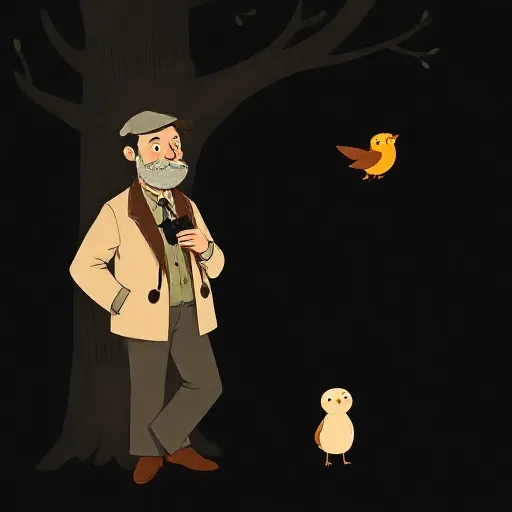
In 1917, a young American medic named Charles Hartshorne (1897–2000) arrived at the front lines of World War I carrying a box of philosophy books. He was barely twenty years old, and even among the chaos of the trenches he noticed something that stayed with him for the rest of his long life: birds continued to sing. Decades later, Hartshorne became an internationally respected expert on birdsong. He discovered that birds sing even when there is no mate to attract or territory to defend — they sing, he concluded, because they enjoy it.
That scientific insight (he called it the monotony threshold) was not just a fact about birds. It was the seed of Hartshorne’s whole philosophy. If a bird can feel joy, then maybe feeling is not something only big‑brained animals have. Maybe feeling goes all the way down — into cells, into molecules, into the smallest units of the world. And if the universe is full of feeling, maybe God is not a distant, unchanging king, but the supremely sensitive companion who feels every creature’s pain and delight. Hartshorne spent over seventy years working out these ideas, and they are still being debated today.
God Isn’t Frozen: The Dipolar Revolution
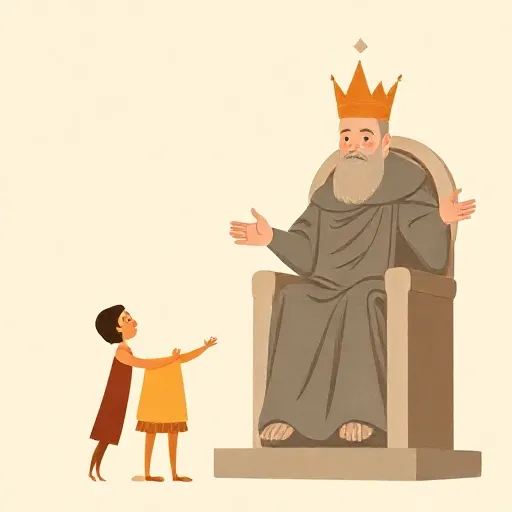
Most traditional philosophers of religion, from Anselm to Thomas Aquinas, describe God by choosing one side of every pair of opposites: perfect, so therefore unchanging; all‑powerful, so therefore never passive; eternal, so therefore outside time. Hartshorne thought this monopolar logic missed something. If God really is the greatest conceivable being, God should have the best of both sides — steadfast love and fresh responsiveness, active power and the ability to receive the feelings of others. He called this dipolar theism.
Start with existence itself. Hartshorne sharpened Anselm’s famous ontological argument. He said that a perfect being cannot just happen to exist; if it exists at all, it must exist necessarily — it cannot fail to be. So God’s existence is either impossible or necessary. And because other arguments and centuries of religious experience make God’s existence at least possible, Hartshorne concluded God necessarily exists. But that necessary existence is only one side of the dipolar coin. How God exists — God’s actual life, feelings, and knowledge — is contingent: it changes as the world changes.
This picture also helps with the problem of evil. Hartshorne looked at nature and saw astonishing order, but also monstrosities, mutations, and suffering. A God who has omnipotence (all power) would be responsible for everything, including the mess. But Hartshorne argued that if being is dynamic power — the ability to affect and be affected — then every creature has some power of its own. God has ideal power, all the power one being can have while respecting the partial freedom of others. God is the great Persuader, not a cosmic dictator. The world is not created out of absolute nothing; it is God’s body, and God is its soul — a view called panentheism (everything is in God). God feels every suffering as a “fellow sufferer who understands.”
Do Cells Feel? The Idea That Everything Experiences

If God feels the world’s experiences, then what is experience? Is it only for animals with brains, or does it go deeper? Hartshorne thought the mind‑body problem has three logically possible answers: dualism (mind and matter are two different kinds of stuff), materialism (mind is really just physical stuff), and a third option he called psychicalism — the view that the mental, broadly speaking, is basic, and what we call “physical” is the measurable, structural side of mental happenings. Psychicalism is a form of panpsychism, the idea that mind or feeling is everywhere, but Hartshorne preferred his own term because he did not claim that everything has full consciousness — only that every concrete singular (a genuine whole, like a cell) has some minimal feeling.
He offered a very personal reason for this. When you stub your toe and it hurts, the pain is not just “in” you as a whole person. It is also the pain of the damaged cells in your toe. You are, in a literal sense, feeling with those cells. Your body is a society of tiny experiencers — a metaphysical monarchy where the whole person integrates the feelings of its parts. Even an electron, according to Hartshorne, has a dim prehension: a non‑conscious “taking account” of its immediate past and a basic push toward the future. Without some form of prehension, time itself would make no sense — there would be no way for one moment to influence the next.
Hartshorne thought materialism gets it exactly backwards. It tries to explain experience by starting with wholly insentient matter, which then somehow “wakes up” in brains. He saw that as a kind of magic — a bifurcation of nature that leaves science and lived experience split in two. Psychicalism heals the split: physical science studies the causal structures of reality, but those structures are never empty of feeling.
Thinking With a Grid: Hartshorne’s Method

Hartshorne had a signature way of tackling big questions. First, he would lay out every logically possible position in a kind of matrix — sometimes dozens of boxes! — so that no option was left unexamined. Then he would comb through the history of philosophy to see which of those options had actually been defended, pulling ideas from famous thinkers like Plato and Leibniz, and from lesser‑known figures too. Finally, he would apply the Greek principle of moderation: the truth usually lies between extreme views, not by being wishy‑washy, but by taking the real insights of each side while avoiding their weaknesses.
Take personal identity as an example. The philosopher David Hume suggested that a “self” is nothing but a bundle of separate impressions, with no real connection between today’s you and yesterday’s you. Leibniz, by contrast, thought that every event in your life was already contained in the first moment of your existence — a totally determined chain. Hartshorne charted the extremes and then defined a middle path. The past, he argued, genuinely influences the present: your earlier choices provide necessary conditions for who you are now. But the future is partly open; later events are not yet decided. You are a mixture of determinism (the past shapes you) and indeterminism (you face real possibilities). That middle‑way logic reappears everywhere in his work — including his picture of a God who is perfectly steadfast yet always freshly responsive.
Debating the Unchangeable: Do Critics Have a Point?
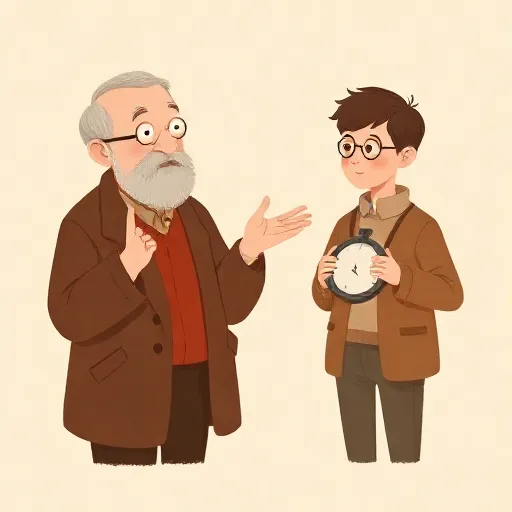
Not everyone agrees with Hartshorne’s dipolar God. One of the most thoughtful critics was the philosopher William Alston, who had once been Hartshorne’s student. Alston accepted some of the dipolar attributes — he agreed that God has internal relations to the world through knowledge, and that God therefore has contingent properties and potentialities. But when it came to time and power, Alston held back. He argued that God could still be timeless, seeing all of history in a single eternal “now,” even while knowing what happens in time. And he defended the traditional idea of divine omnipotence and creation out of nothing.
Hartshorne pushed back hard. If God genuinely knows and responds to creatures, he argued, then God must be temporal — a God who changes in relation to changing things. A timeless God who “responds” to events inside time seemed to him a contradiction in terms, like a clock with no hands still trying to tell time. He also thought that the idea of “absolutely nothing” was impossible to think clearly about: you cannot strip away every existing thing and still have a situation to talk about. The universe and God, for Hartshorne, are two sides of one everlasting reality. The debate between classical and neoclassical theism remains unsettled, and that is exactly what Hartshorne would have expected — philosophy, for him, is an ongoing conversation.
Why Feelings in Atoms Matter Today

Hartshorne’s ideas are not just museum pieces. In recent decades, panpsychism has gained serious attention among philosophers of mind. Contemporary thinkers like Thomas Nagel have explored the possibility that consciousness or proto‑consciousness might be a fundamental feature of the universe. Hartshorne was defending that very view back in the 1920s, and he built an entire vision on it.
That vision also reaches into environmental ethics. If all living things — and perhaps every dynamic process — has some intrinsic value because it has experience, then the natural world is not just a resource for humans. It is a community of beings that feel. Hartshorne’s own love for bird song came from his conviction that a bird’s song is an aesthetic act, a sharing of joy. He himself rejected the idea of personal immortality (he thought it was a kind of arrogance for an animal to expect to live forever), but he believed that every moment of happiness and goodness is permanently woven into God’s own experience — a view he called contributionism. Your life has eternal meaning, even if your individual consciousness does not last.
The medic who heard birdsong amid gunfire spent a lifetime showing that feeling is the invisible thread tying everything together. You are never just a lonely mind in a machine‑like body. Your stubbed toe is a cellular event that you share with the tiniest living parts of you. And if God is the soul of the whole, then every joy and every ache ripples outward into a living, caring cosmos.
Think about it
- If your cells have tiny feelings, does that change how you treat your body when you’re sick, tired, or eating junk food?
- Some people find comfort in a God who suffers with them; others prefer a God who is completely perfect and never changed. Which feels more worth believing in to you, and why?
- Could a machine ever have feelings? If not, what’s the difference between a robot’s wires and a brain made of feeling stuff?