He Wrote a Prince’s Guide—Then Told the King He Had No Power
The Furious King and the Monk’s Two Books
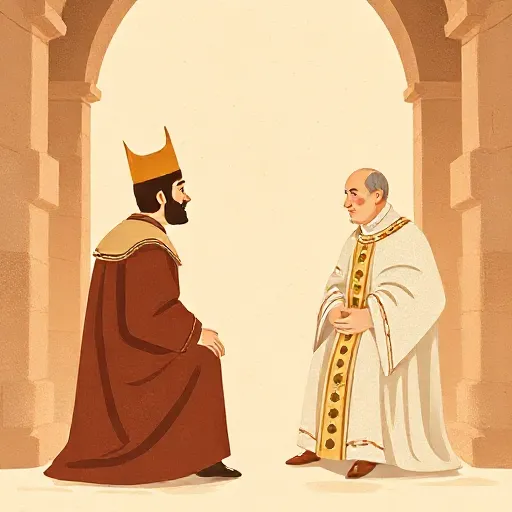
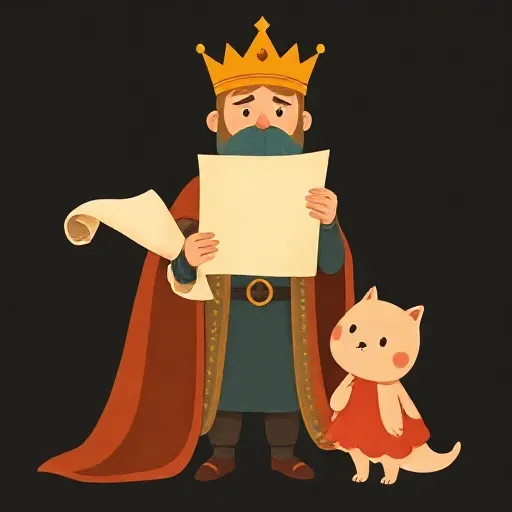
King Philip IV of France (1268–1314) unrolled the parchment and his jaw tightened. The very monk who had once written a guide on how to be a good ruler now declared that Philip’s crown was borrowed. The real power, the monk insisted, belonged only to the Pope. That monk was Giles of Rome (c.1243–1316), an Augustinian friar who had spent his life teaching, writing, and arguing about authority. Thirty years earlier, Giles had composed the De regimine principum—a manual for the young Philip that promised to teach him how to rule wisely. Now, in 1302, Giles had just finished a new, explosive work: the De ecclesiastica potestate (On Church Power). It claimed that the Pope held the full, final say over every king, every law, even every piece of land.
How could the same thinker produce two such different books? The answer lies in a bitter conflict between a French king and an Italian pope, and in a question that still matters today: where does authority come from?
The Pope’s Throne and the Borrowed Sword
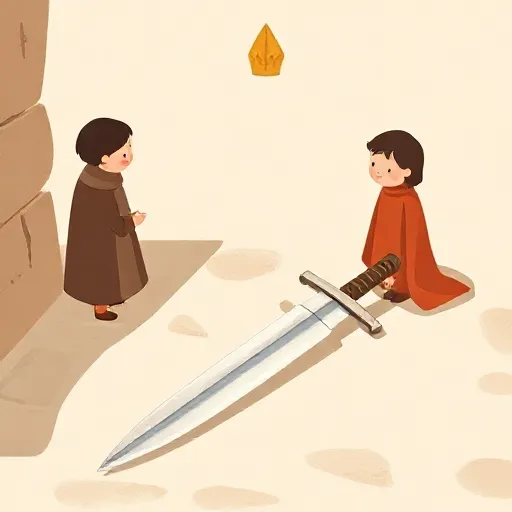
Giles did not stumble into the fight between Boniface VIII (c.1230–1303) and Philip IV. He placed himself right at its heart. When Philip tried to tax Church property in France, Boniface pushed back, insisting that only the Pope could judge kings. The dispute grew so fierce that Philip sent soldiers to arrest the elderly pope in 1303—an event that shocked Europe.
Giles’s De ecclesiastica potestate was the most extreme defense of the Pope ever written in the Middle Ages. He argued that the Pope possesses plenitude of power: a Latin phrase meaning “fullness of power.” This meant that all authority on earth—spiritual and earthly, over souls and over swords—flows from the Pope alone. Kings and princes might seem to rule, but they only exercise a power that the Pope lends them. Giles called this lending the “temporal sword,” the power to handle worldly affairs. The Pope keeps the ultimate sword himself, and any king who refuses to admit his dependence is no true king at all—just a bully with a stolen badge.
Even property rights, Giles wrote, are not natural. Humans invented private ownership through agreements after the world’s first sin. But those agreements, he said, gain their binding force only if the Church’s highest shepherd approves them. Without the Pope’s blessing, no deed is truly valid. It was a breathtaking claim: the farmer’s field, the merchant’s coin, and the king’s crown were all held by permission, not by right.
Why the Pope Could Quit (But Nobody Could Fire Him)
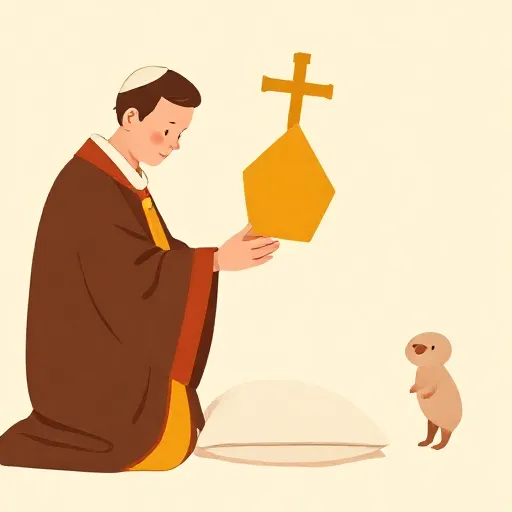
Giles faced a tricky puzzle. If the Pope’s power is divine in origin, can a pope ever resign? This was no thought experiment. A few years earlier, the gentle Pope Celestine V had done the unthinkable: he had abdicated from the papal throne. Boniface was his successor, and critics—including two powerful cardinals from the Colonna family—shouted that a pope cannot just quit, because God alone put him there.
Giles defended Boniface with the treatise De renuntiatione papae (On the Abdication of a Pope). He crafted a clever middle path. Yes, he conceded, the papal office comes from God. But the person who fills it is chosen by the cardinals’ election—a human act. Just as a pope’s rise depends on the agreement of electors and the one elected, so too can he step down through his own free consent. That did not mean anyone else could depose him, except in a case of heresy. The pope was above every earthly judge, but he could judge himself and let go of the keys. This argument shielded Boniface’s title while slamming the door on those who wanted to remove a pope by force.
A Mirror That Bends the Truth

Long before Giles became the Pope’s fiercest defender, he had been the teacher of a future king. Around 1277–1280, Giles wrote the De regimine principum, a “mirror of princes”—a common medieval genre that promised to show a ruler how to govern himself and his kingdom. The book became a bestseller, surviving in over 200 handwritten copies and translated into many languages.
On the surface, Giles seemed to be simply explaining Aristotle’s political ideas. He quoted the great Greek philosopher constantly. But if you read carefully, you notice a trick. Giles presents Aristotle as a firm supporter of monarchy, the rule of one person. To prove it, he first lists arguments against kingship that appear in Aristotle’s own Politics, then treats them as if Aristotle himself had refuted them. In fact, Aristotle’s text leans in the opposite direction, seeing merit in mixed government. Giles quietly twisted the evidence.
Even his classification of virtues in the first book owes more to the theologian Thomas Aquinas (1225–1274), whom Giles admired, than to Aristotle. He reshaped ancient ideas to fit his own mission: presenting monarchy as the absolutely best form of government. The young Philip was meant to read the book and believe that his rule was backed by the wisest thinkers—while the thinker who actually shaped the work went unnamed.
The Fall of an Extreme Idea
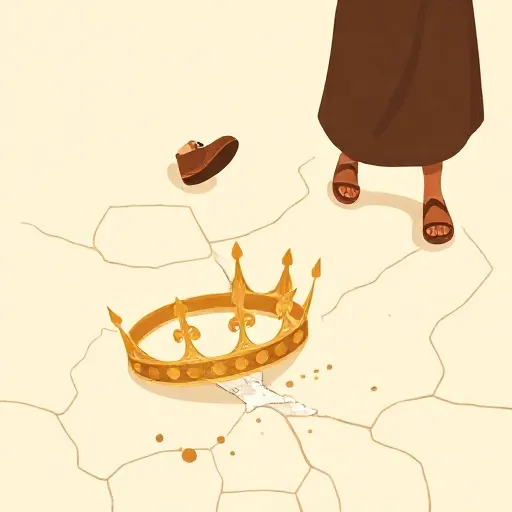
After Boniface VIII’s death in 1303, Giles lost his most powerful ally. The next pope, Clement V, had clashed with Giles before ascending to the throne, and his favor cooled. Giles still took part in debates—he helped condemn certain theological teachings, and he wrote a tract attacking the Knights Templar when King Philip demanded their suppression—but the grand system he had built did not last.
Giles had tried to answer a question that every generation has to face: can one person, or one institution, claim to hold all rightful authority? His answer was an extreme “yes,” anchored to a religious office. Later centuries would reject that vision, slowly carving out a different idea: that the state and the church should stay separate, and that authority comes from the consent of the governed, not from a single top-down decree. Yet the problem Giles tackled is still alive. Whenever a leader insists they are the only voice that matters, or whenever a government claims your home isn’t truly yours without its stamp, the ghost of the De ecclesiastica potestate whispers through the halls.
Think about it
- If a single person claimed to be the ultimate source of all right and wrong on earth, what could ever prove that person was mistaken?
- Could a society be truly fair if ownership of land and property depended entirely on the approval of one ruler—even a wise one?
- Giles believed that human agreements need a higher authority to make them binding. If there is no such authority, what makes a contract fair or unfair?