The Philosopher Who Said Truth Depends on Where You Stand
A Philosopher’s One Sentence That Changes Everything

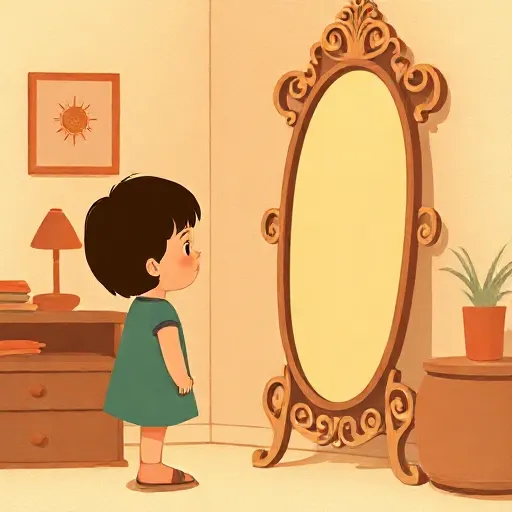
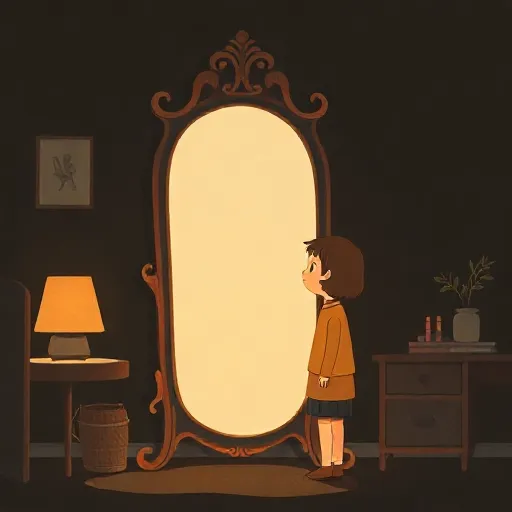
In 1914, a thirty-one-year-old philosophy professor in Madrid published a book of essays called Meditations on Quixote. The opening sentence carried a claim so packed with meaning that José Ortega y Gasset (1883–1955) would return to it his whole life: I am I and my circumstances. Not “I am a brain inside a skull,” not “I am a soul floating through space.” He meant that who you are cannot be separated from the world you’re in — the street outside your window, the family around your dinner table, the year you were born, the language you speak. The “I” and the “circumstances” are two halves of a single reality, like the front and back of a coin. If you try to peel them apart, you end up with a fiction.
Ortega grew up in a Spain that felt broken. He studied in Germany where he absorbed the most rigorous philosophy of his day — the Neo‑Kantians in Marburg, then the new movement of phenomenology, which demanded close description of experience without assumptions. Back in Madrid, he became a newspaper editor, a professor of metaphysics, and eventually one of Europe’s most influential public intellectuals. But his deepest work emerged from a single conviction: previous thinkers had gotten the starting point wrong. Reality does not begin with atoms, or with God, or with abstract logic. It begins with your life, happening here and now.
Every Perspective Is a Piece of the Truth
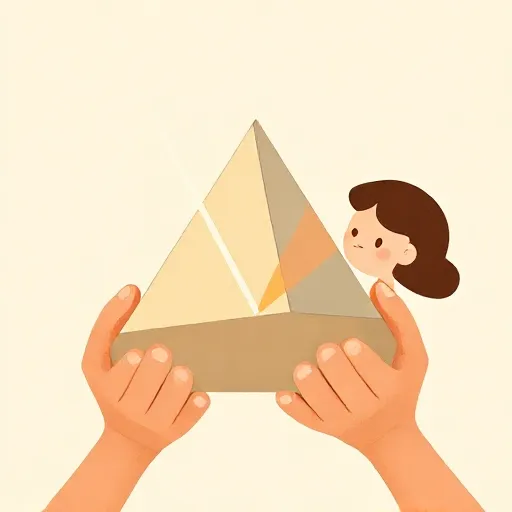
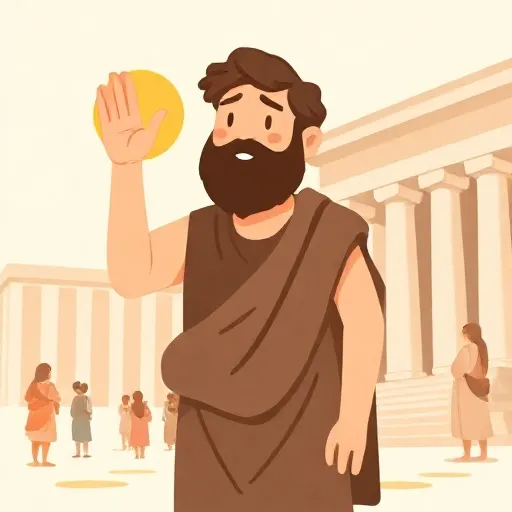
If each life is the ultimate reality, what happens to truth? Don’t we need one absolute truth, the same for everyone? Ortega’s answer was perspectivism. He noticed that the world looks different from every angle — literally and figuratively. Two people standing on opposite sides of a courtyard see different things. One sees a door; the other sees a blank wall. Both perceptions are true. Neither is the whole truth by itself.
Ortega connected this insight to Albert Einstein’s new theory of relativity, which he called “the most important intellectual fact that the present can show.” Before Einstein, people imagined a single cosmic clock ticking uniformly for everyone. Relativity showed that time and space depend on the observer’s motion. Ortega saw the same logic at work in human life: we never get a “view from nowhere.” Every insight, every judgment, every memory comes from a particular position in space and time. And that’s not a defect — it’s a feature. The different perspectives don’t cancel each other out; they complement each other. Reality, he wrote, “may split into many diverse realities when it is beheld from different points of view.” The sum of all those partial views is the only complete picture we can ever have.
Philosophers had long worried that this kind of relativism would mean “anything goes.” If every view is just one perspective, how can one be better than another? Ortega refused that worry. He argued that each perspective captures a genuine aspect of reality. You can’t say a tree doesn’t exist just because you’re standing behind it. You can say, “From where I am, I see the trunk but not the branches.” That’s knowledge, not ignorance. Truth is the collection of all sincere points of view fitted together — even if no single human can ever hold them all at once.
We Are Not Things: The Human as a Project
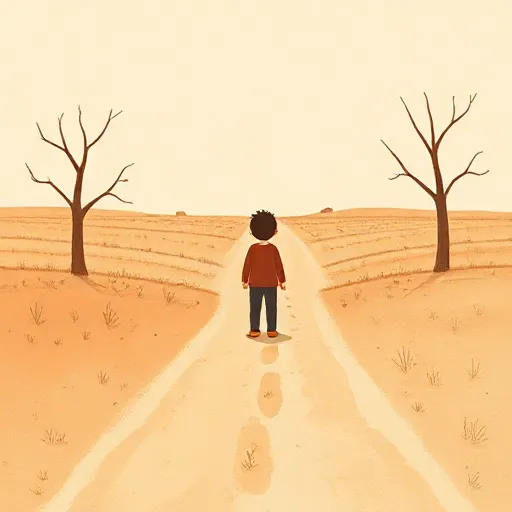
If you drop a stone, it falls. If you light a match, it burns. Those objects have fixed natures, and they follow the laws of physics without hesitation. Ortega argued that human beings are fundamentally different. “Man has no nature,” he claimed. By that he didn’t mean we are supernatural. He meant we aren’t pre‑programmed. A stone is what it is, finished and complete. A human life is a gerund — a “doing” word, a process, not a finished product. You are doing your life, moment by moment, choosing among possibilities that your circumstances present.
This is where Ortega’s existential side comes through. Life “is given to us empty,” he said, and each person must fill it. The circumstances you are born into — your family, your city, your century — are not chosen. But what you do with them is chosen, even when you try to avoid deciding. “I am free by coercion,” he wrote; freedom isn’t a luxury, it’s the inescapable condition of being alive. You wake up each morning faced with a range of possible actions, and you must pick one, even if it’s “do nothing.” That act of picking builds who you are.
This leads to the claim that made Ortega famous: “Man has no nature; what he has is… history.” If you want to understand a person — or a whole society — you don’t look for an unchanging essence. You tell the story of what they’ve done, what they’ve suffered, and what they’ve chosen. To exist is to be a living narrative.
Historical Reason: Why Stories Explain Humans Better Than Math
If humans have history instead of nature, then the way we understand humans must be different from the way we understand rocks or planets. Ortega called this approach historical reason. The natural sciences look for universal laws — “All planets orbit in ellipses,” “Water boils at 100 degrees.” Those laws are powerful, but they don’t work for explaining a teenager’s argument with a parent or the rise and fall of a civilization. For that, you need a narrative: a sequence of events that shows how one thing led to another, how motives and circumstances combined, how a particular outcome came to be.
Ortega admired the German thinker Wilhelm Dilthey (1833–1911), who taught that the human sciences require entering into someone else’s lived experience. But Ortega pushed further: history is not just one subject among others. It is the only autobiography we have. “Life only returns a small degree of transparency in the presence of historical reason,” he wrote. You can’t deduce what Spain will become from a law of nature; you can only recount the story of what Spaniards have done and suffered, and from that story glimpse the possibilities ahead.
This means the past is never really gone. Ortega insisted that the past lives on in us as a set of habits, memories, and inherited problems. When you decide what career to pursue or how to resolve a friendship feud, you are drawing on the whole history of your life up to that moment — and on the longer history carried by your family and culture. “The past is I,” he said bluntly. Not a ghost haunting you, but the very stuff you are made of, present in every choice you make.
Why It Still Matters: Your Circumstances, Your Responsibility

So why should a twelve‑year‑old today care about a Spanish professor from a century ago? Because Ortega’s two central insights are tools you can use every day. First, if every person is seeing from a unique set of circumstances, then the next time you clash with a friend, a parent, or a stranger online, ask yourself: what circumstances are they standing in? What is their point of view showing them that yours is hiding? Perspectivism doesn’t mean giving up your own convictions. It means recognizing that other people’s convictions aren’t necessarily lunacy — they’re just seeing a different slice of reality. That habit can make you less angry and more curious.
Second, the idea that you have no fixed nature — that you are a project, not a thing — is both terrifying and liberating. It means you can’t say, “That’s just the way I am,” as if your traits were stamped in metal. You are always making yourself through the choices you let into your life. The circumstances you were handed at birth are real and often unfair. But within them, you face genuine alternatives. Ortega would say that paying attention to those alternatives, and taking responsibility for which one you pick, is what it means to live authentically.
The world you’ve inherited — its technologies, its conflicts, its music — is the set of circumstances you didn’t choose. The next script, however, hasn’t been written. You’re holding the pen.
Think about it
- If every person’s truth depends on their circumstances, does that mean no one is ever completely right or wrong about anything? Where might you draw the line?
- Think of a big decision you made recently. How much of that choice was shaped by your circumstances (where you live, who you know, what year it is) and how much was purely your own doing?
- Can you understand a historical event without stepping into the shoes of the people who lived through it? Try this with a story from your own family’s past — what do you notice that an outside observer might miss?