
Is It Smart to Be Good? The Game That Traps Us All
The Mortarmen’s Dilemma: Why Can’t Everyone Just Cooperate?

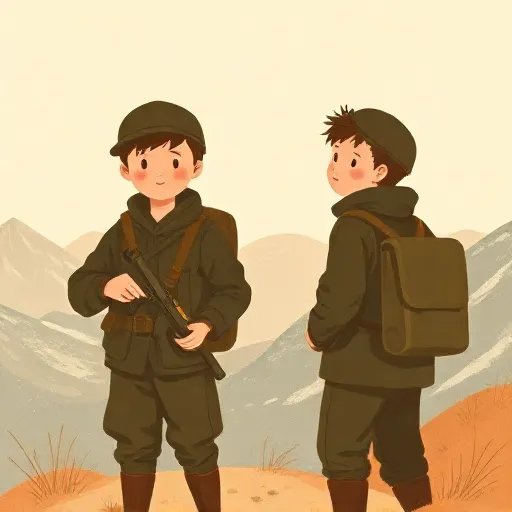
It’s December 1944. Two soldiers are alone on a frozen mountain pass, their only weapon a mortar. The enemy is advancing. If they both stay and man the mortar, they can stop the attack—but they will almost certainly be badly hurt. If both flee, the enemy will overrun them and they will be captured. But if one stays while the other runs, the brave soldier will die alone, and the runner will escape unharmed. What should each soldier do? (This dilemma was made famous by philosopher Edna Ullmann‑Margalit in 1977.)
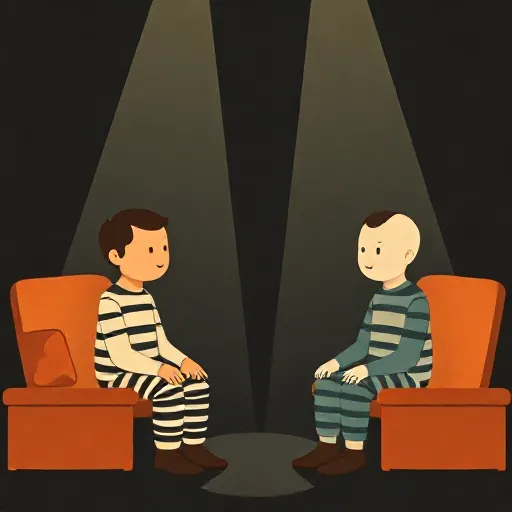
If you were Soldier 1, you would think: if my partner stays, I am better off running—I get away free. If my partner runs, I am still better off running—I will not be left to die alone. Either way, running is the smarter move. The same logic goes for Soldier 2. So both run, and both end up captured. This kind of situation is called a prisoner’s dilemma. In the 1940s, mathematicians John von Neumann (1903–1957) and Oskar Morgenstern (1902–1977) created game theory to study just such problems. They showed that in many interactions, the choices that seem individually best lead to a group disaster.
Game theorists talk about payoffs (what each person gets from an outcome), strategies (the plans you can pick, like “stay” or “flee”), and Nash equilibrium, named after John Nash (1928–2015). A Nash equilibrium occurs when each player’s strategy is the best response to the others’ strategies—so nobody wants to change what they are doing alone. In the mortar dilemma, both fleeing is the only Nash equilibrium. Even though both staying would be far better for everyone, no one wants to be the one who stays while the other runs.
This is more than a war story. The prisoner’s dilemma pops up all the time: two kids who could share a toy but each grabs; countries that could cut pollution but each holds back; friends who could help each other study but each secretly hopes the other will do more. The puzzle is: if being selfish is so often “rational,” how could doing the right thing ever be the smart move?
The Foole’s Question: Is It Ever Smart to Break a Promise?
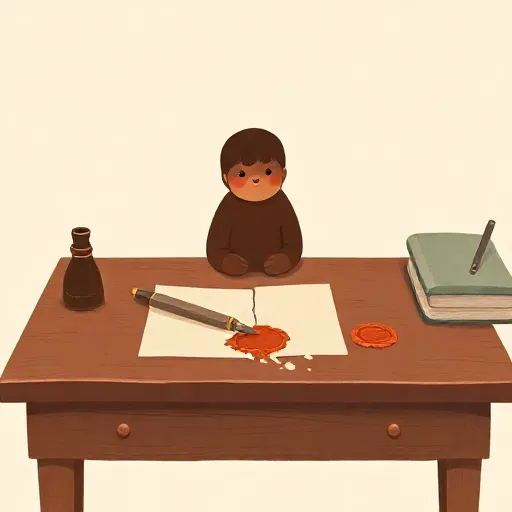
In 1651, the English philosopher Thomas Hobbes (1588–1679) imagined a character he called “the Foole.” The Foole says: sometimes it is the most reasonable thing in the world to break a promise. Imagine you and a friend make a deal: you will wash her car, and she will pay you afterward. You wash the car. Now she has the clean car and the money. If she pays you, she gains nothing new. If she does not pay, she keeps the money and the clean car. According to the Foole, she has no rational reason to keep her word—the expected benefit of paying is zero. She should stiff you.
Hobbes was worried about this reasoning. If everyone thought like the Foole, nobody would ever trust anyone enough to make a deal. You would anticipate being cheated, so you would cheat first. The entire system of promising and cooperating would collapse. Hobbes and later philosophers wanted to prove that the Foole is wrong: it really can be rational to keep your promises.
But how can that be? If you look at just this one exchange, the Foole’s math seems hard to beat. The trick, many philosophers argue, is to zoom out. One exchange is only a tiny piece of a much larger game—the game of your whole life. And in that bigger game, being a person who can be trusted is worth far more than the short‑term win of a single betrayal.
Three Ways to Make Being Good Rational

Philosophers have come up with three main strategies to show that morality and self‑interest can be aligned.
The inner penalty strategy. Plato (c. 428–348 BCE) argued that committing an injustice corrupts your soul, and a corrupt soul is the greatest misfortune. Later thinkers like Henry Sidgwick (1838–1900) suggested that guilt serves as an internal sanction: if you know you will feel terrible afterward, cheating does not actually pay. In game theory terms, your true payoffs include the pain of guilt. So, in the car‑wash example, if the friend knows she would be haunted by guilt worth more than the money she saved, paying becomes the rational choice. The weakness: not everyone feels guilt equally, and some people might simply not believe their soul is at stake.
The reputation strategy. This is Hobbes’s own answer to the Foole. If you break a promise, people will find out. They will refuse to make future deals with you. You will be shut out of the benefits of cooperation forever. Back in the mortar dilemma, imagine the two soldiers are part of a larger company that will fight many battles together. If you flee once and abandon your comrade, your reputation as a coward spreads, and no one will stand with you in the next fight. The long‑run loss from ruined trust outweighs any one‑time gain. This is a repeated game argument. In the 1980s, Robert Axelrod showed that strategies like “cooperate unless the other defects” (being nice but provocable) can become stable in a population. The trouble is, reputation only works if others can reliably know your past actions and are willing to punish cheaters. In large, anonymous groups, that gets harder.
The “choose to be a cooperator” strategy. The philosopher David Gauthier (1932–2023) proposed that rational people can adopt a constrained maximizer personality. Instead of always grabbing the biggest immediate payoff, you decide to be the sort of person who cooperates, so long as you think others will too and you will gain overall. This is like a mental version of team reasoning: you stop treating every situation as a one‑off game and see yourself as part of a group that can achieve better outcomes together. Critics ask: how do you bind yourself to this personality? Can others tell you are a constrained maximizer and not just a slick talker? Gauthier and his defenders have developed careful replies, but the debate is far from settled.
None of these strategies is a knockout punch. The inner penalty may be too weak. Reputation can fail in shadowy online worlds. And the personality‑shift may be too hard to signal. The project of reconciling morality and rationality—called the Reconciliation Project—is still a live fight.
How Fairness Can Evolve on Its Own
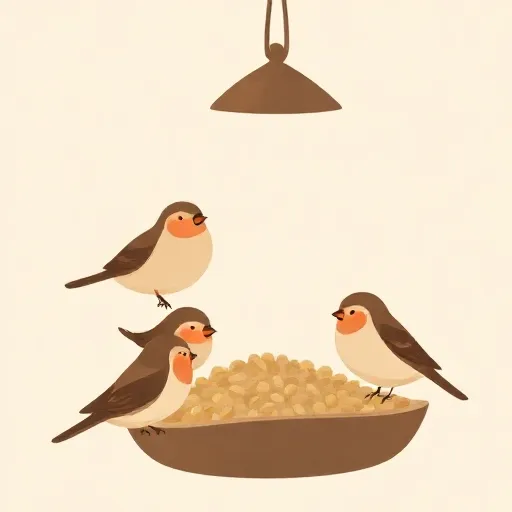
What if fairness does not need super‑rational brains? What if it can pop up simply because fair players do better over time? In the 1990s, philosopher Brian Skyrms explored this using evolutionary game theory. Instead of imagining super‑smart agents calculating everything, he imagined a population of simple rule‑followers, each with a fixed strategy, and let evolution do the work.
Consider the Nash demand game: two people find a dollar and each writes down a claim—say, 50 cents, 33 cents, or 67 cents. If their claims add up to a dollar or less, they each get their claim. If the total is more than a dollar, both get nothing. Skyrms set up a computer simulation where claimers meet at random, and the ones who do better produce more copies of their strategy. At first, the population is a mix of greedy claimers and modest ones. Over many rounds, the moderate claimer (half) takes over almost the whole population. Why? Because modest claimers can agree with each other and with the one‑third claimers, while greedy claimers often clash and get zero. The fair split is not chosen because it is “right”—it just works best.
Skyrms also showed that if people can signal “this is my spot” or develop simple property rules, cooperation becomes even more stable. This does not mean that evolution “wants” fairness, but it explains why fairness can appear without anyone trying to be moral. And it helps us see which conditions make cooperation collapse—such as when cheaters can never be identified.
From a Sheep Pasture to a Warming Planet
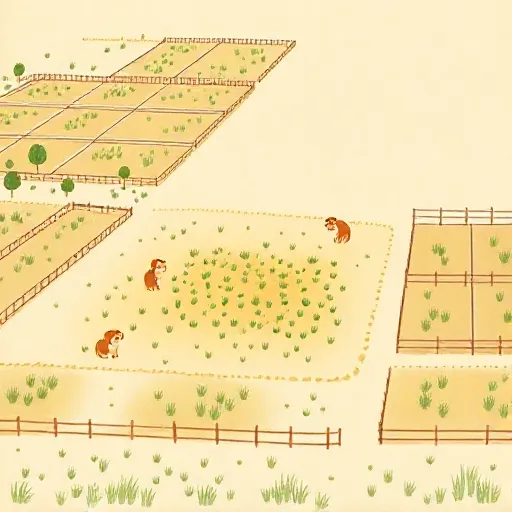
The real power of game theory shows up when we tackle enormous social problems. The most famous is the tragedy of the commons, described by ecologist Garrett Hardin (1915–2003). Picture a shared pasture where every herder can graze sheep. Each person gains the full benefit from adding an extra sheep, but the cost of overgrazing is spread across everyone. So each person keeps adding sheep—until the pasture is destroyed and nobody can graze anymore. It is a prisoner’s dilemma written into the land.
Climate change is a planet‑sized version of this. Every country benefits from cheap fossil fuels, but the warming and extreme weather harm everyone, especially future generations. Because the harm one country causes by polluting is spread across the globe, governments have little immediate incentive to cut emissions alone. Free‑riding—letting others do the costly work while you coast—is the dominant strategy. That is why international climate agreements are so hard to hold together.
Game theory does not just diagnose the problem; it points to solutions. Nobel laureate Elinor Ostrom (1933–2012) used game theory and fieldwork to show that communities can manage shared resources sustainably—if they follow principles like clear boundaries, monitoring, and graduated sanctions. In other words, what morality and good institutions do is change the game from a prisoner’s dilemma into a coordination problem where the right thing is also the best thing for each person.
Why This Still Matters When You Choose Dessert
We started with two soldiers on a mountain. You might never face a mortar, but you face prisoner’s dilemmas all the time. In a group project, everyone hopes someone else will do the heavy lifting. At a shared snack table, someone is tempted to take more than their fair share. Online, a person can insult others because it feels like there is no comeback. The logic of escaping alone is always whispering in your ear.
Game theory shows that this whisper is not crazy—it is a real feature of the situation. But it also shows that if everyone listens to it, the group collapses, and you end up worse off. Morality, trust, fairness, and thoughtful rules are not just nice feelings. They are tools that have evolved and been designed over centuries to turn lose–lose traps into win–win lives together. The debate about which tools work best—guilt, reputation, changing yourself, evolving norms—is still open. And that means every time you decide whether to be fair, you are part of the experiment.
Think about it
- Can you remember a time when doing the right thing felt like it would cost you, but you did it anyway? Which of the three strategies—inner guilt, fear of a bad reputation, or just wanting to be a cooperative person—was at work in your choice?
- Suppose a scientist invented a pill that made everyone feel terrible guilt whenever they acted selfishly. Would a world full of people on that pill be a better place? What might we lose?
- If a country knows that cutting its carbon emissions will cost billions but will barely slow global warming unless many others join in, does it have a moral duty to cut anyway? Or is it okay to wait until others move first?