Can Reason Destroy Freedom? Friedrich Jacobi’s Somersault
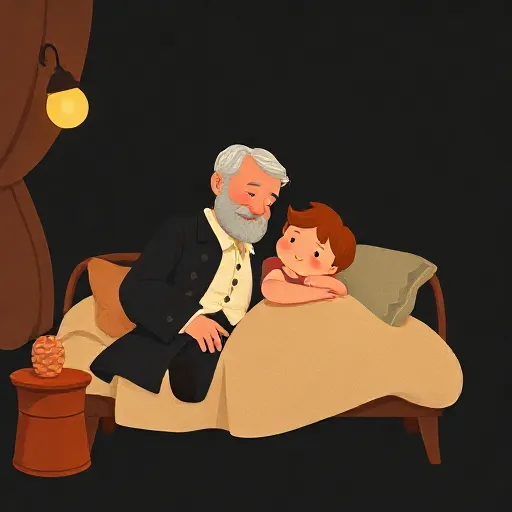
A Secret Whispered at Dusk

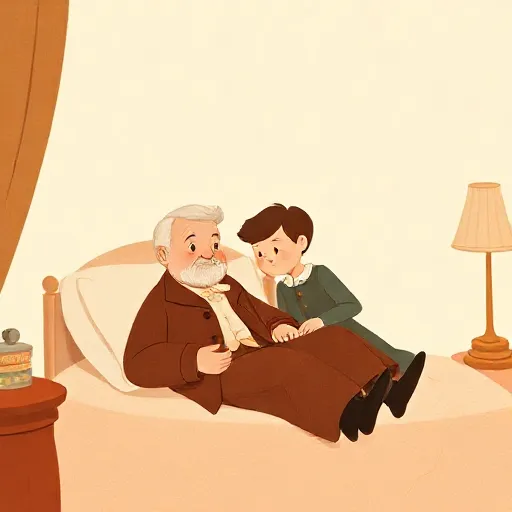
In the autumn of 1780, the German writer Friedrich Heinrich Jacobi (1743–1819) visited the famous playwright and critic Gotthold Ephraim Lessing (1729–1781) at his home. The two spent hours talking about philosophy, life, and the universe. Then Lessing, already ill and soon to die, dropped a bombshell: he confessed, quietly, that he was a Spinozist — a follower of the thinker Benedict de Spinoza (1632–1677).
To most people in 1780s Germany, “Spinozist” meant something terrifying: atheist, fatalist, someone who denied free will and a personal God. Jacobi was stunned. After Lessing’s death a few months later, Jacobi wrote to Lessing’s friend, the philosopher Moses Mendelssohn (1729–1786), to share this secret. Mendelssohn was horrified. An exchange of letters erupted, and soon those letters became Jacobi’s first philosophical book, published in 1785. It launched one of the biggest intellectual firestorms of the age — a debate that would reshape philosophy and still echoes today in arguments about free will, science, and whether you are really in charge of your own life.
Spinoza’s Domino Universe
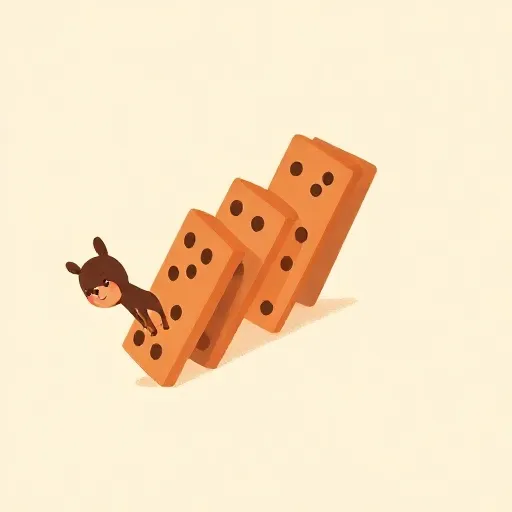
What was so shocking about Spinoza? Spinoza had argued, in his book Ethics, that everything in reality follows strict logical necessity. For any event or thing, there is a reason — a cause — that makes it exactly what it is. Nothing comes from nothing. Every thought you have, every move you make, comes from something before it, and that from something earlier, like an endless row of dominoes falling. This is a universe where determinism reigns: every state of the world is completely fixed by the one before it.
Jacobi believed Spinoza had drawn out the deep, hidden logic of all modern philosophy. If you really think consistently, he said, you end up with one giant, necessary, interconnected whole. In that whole, individual things — including individual people — lose their own reality. They are just momentary shapes in a single, all-devouring machine. There is no genuine free will. There is no personal God who makes choices; Spinoza’s God just is nature itself, a blind, eternal structure. Jacobi called this vision beautiful but terrifying — a frozen, timeless chain where nothing and nobody can be said to act freely.
Jacobi agreed that this was coherent. The problem, he thought, was that a coherent system that erases freedom, personality, and the self must be missing something crucial. He set out to find what that was — not by abandoning reason, but by digging underneath it.
Jacobi’s Escape: The Somersault

If pure logical thinking leads to a world where you don’t really exist as a free person, what can you do? Jacobi’s answer was shocking: perform a salto mortale, a “deadly somersault.” He meant a mental flip — not a rejection of reason, but a recognition that reason cannot be its own foundation. Before you can build a system of explanations, something must first be given to you immediately, without proof.
That something, Jacobi argued, is your own existence as a free agent in a world of real things outside you. He wrote: “I experience that I am, and that there is something outside me, in one and the same indivisible moment.” You do not deduce this from arguments. You do not figure it out like a math problem. You simply feel it — in the way you move your hand, in the way you resist an obstacle, in the way you encounter another person. This immediate awareness Jacobi called Glaube, or “faith.”
The word made some people think he meant religious belief. He did not — at least not in the way a creed is a belief. For Jacobi, faith was like David Hume’s concept of belief: the direct, non-rational certainty that things outside your mind are real and that you genuinely act. Without this starting point, all knowledge collapses into an empty dream. So Jacobi urged philosophers to take the somersault: stop trying to derive existence from concepts, and start with the living fact that an I meets a Thou in a real world of action and time.
Kant’s Failed Door: The Thing-in-Itself
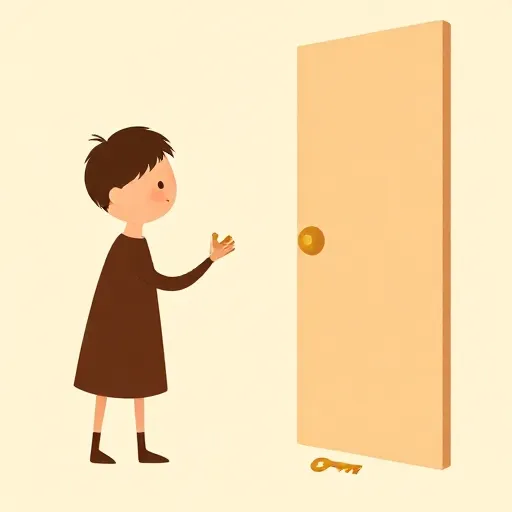
Immanuel Kant (1724–1804) had tried to rescue freedom in a different way. In his Critique of Pure Reason, Kant argued that the world we know is shaped by our own minds — space, time, cause and effect — but that behind that world there is a realm of things as they are in themselves, the Ding an sich (thing-in-itself). Kant suggested freedom might live in that hidden realm, safe from the chain of causes that rules the world of appearances.
Jacobi admired Kant’s spirit, but he thought Kant’s system tore itself apart. He famously said: “Without that presupposition [of the thing-in-itself], I could not enter into Kant’s system, but with it I could not stay within it.” In other words, if you take away the thing-in-itself, Kant’s philosophy becomes pure idealism — everything is just something the mind constructs, and there is no room for freedom of a real self. But if you keep the thing-in-itself, you cannot explain how it connects to the mind at all — it becomes a mysterious, unreachable ghost. Jacobi concluded that Kant’s compromise failed. You cannot have both a self-sufficient system of reason and a genuinely free human being. You have to choose where to plant your feet, and Jacobi planted his in the immediate experience of acting.
Fichte’s Mirror World
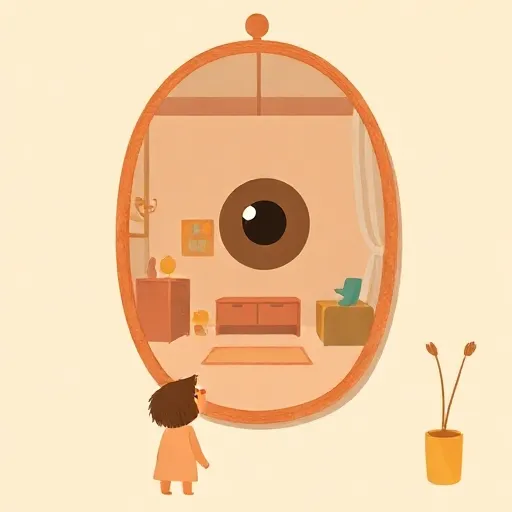
Jacobi’s critique did not stop with Kant. He soon turned his attention to Johann Gottlieb Fichte (1762–1814), the rising star of German philosophy. Fichte built his system around the activity of an “absolute I” that posits both itself and the world. For Jacobi, Fichte had merely turned Spinoza upside down: instead of one all-devouring substance, you get one all-devouring subject, an I that produces everything out of itself. Jacobi called this nihilism — a philosophy that, in trying to explain everything, annihilates the reality of distinct things and persons.
In a famous open letter to Fichte, Jacobi wrote that his own “non-philosophy” rested on “non-knowledge,” while Fichte’s system claimed to know everything through pure thought. But Jacobi argued that a system that leaves no room for a real world beyond the mind cannot escape the “nothingness” at its core. If the absolute I produces all truth itself, then there is no genuine encounter with anything other than itself. Everything becomes a mirror of the I, and nothing truly exists on its own. Jacobi insisted that this was a philosophical dead end. Reality must have an outside that reason receives rather than creates; otherwise, we are trapped in a solipsistic hall of mirrors.
A Sense for the Divine
In his later years, Jacobi deepened his answer. He came to define Vernunft (reason) not as the power to build logical chains — that was the job of understanding — but as a “sense for the supersensible.” Just as your eyes see finite things, so reason, he said, perceives the divine things: God, freedom, virtue, and the immortality of the soul. This was not a retreat into blind belief. It was a claim that we have a direct, immediate awareness of a higher order of reality.
In his book On the Divine Things and Their Revelation (1811), Jacobi argued that God is not the conclusion of a proof. Instead, the echo of the divine is already given in our own consciousness as human beings: “I am who I am … the echo in the human soul is the revelation of God in it.” Our reason lets us live in two worlds at once — the finite world of science and the unconditioned world of meaning and moral agency. True science, Jacobi thought, stays within the limits of the conditioned; it describes how dominoes fall. But that science rests on something science itself cannot provide: a living, acting self that knows it is free and belongs to a reality larger than nature. This final vision tied Jacobi’s somersault to a quiet, personal theism, without ever turning philosophy into theology.
Why Your Dessert Choice Matters
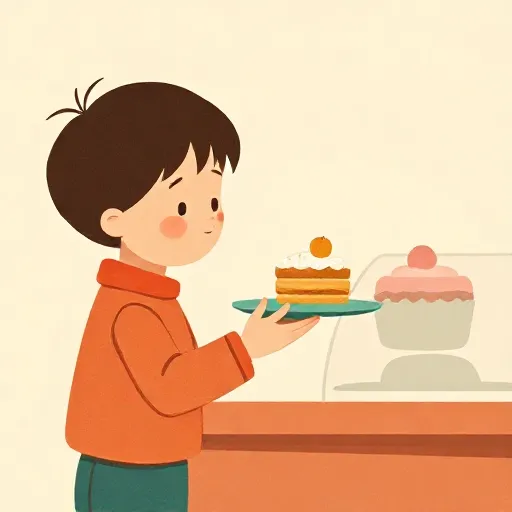
So why should a debate from the 1780s bother you today? Because the question Jacobi raised will not go away: are you really choosing, or are you just a domino playing out a pre-written chain? Modern science often works with a deterministic picture, searching for causes behind every event, including brain events. Some scientists and philosophers say that if we knew all the physical facts, your every “decision” could be predicted — and that feeling of free will is just an illusion.
Jacobi would push back. He would say that when you stand in front of the dessert counter, torn between chocolate and vanilla, your sense that you genuinely can pick either one is not a trick of ignorance. It is the foundation of your ability to think about choices at all. You do not first prove you are free and then act; you act, and in acting you discover you are an I confronting a world. That is Jacobi’s somersault brought down to everyday life: the stubborn, immediate experience of being a person, not a thing.
Whether or not you end up agreeing with Jacobi, his challenge sharpens the way we think about science, personhood, and the limits of explanation. If reason alone erases the very self that reasons, then maybe we need a different kind of start — one that begins with the undeniable, lived fact that you are here, choosing, right now.
Think about it
- If a supercomputer could predict every choice you will ever make, would it still be fair to punish people for bad actions? Why or why not?
- Can you prove you are free right now, or is your feeling of freedom simply something you cannot prove but cannot seriously doubt?
- Imagine you meet someone who argues that everything — love, creativity, curiosity — is just a chain of physical causes. What everyday experience would you point to that seems hardest to fit into that picture?