
Can Who You Are Give You a Better View of the Truth?
Two Kids, One Game, Two Different Stories

Imagine two kids, Sam and Alex, watching the same soccer match — one from the stands behind the goal, the other from the corner of the field. Sam sees the striker’s perfect footwork; Alex sees the goalkeeper’s desperate dive. Later, they describe the game. It sounds like two different matches. Both are right. Neither sees the whole field.
Philosophers call this situated knowledge — the idea that what you know, and how you know it, depends on where you stand. Your body, your feelings, your past experiences, even who your friends are, all shape what you notice and what you make of it. A thief looks at a lock and sees a frustrating obstacle; the owner sees a comforting source of safety. Same object, completely different picture.
Feminist philosophers in the late twentieth century asked: what if your place in society — your gender, your race, your economic class — also shapes knowledge? They argued that knowledge isn’t just a matter of cold facts anyone can see from nowhere. It’s tied to who you are. And sometimes, being an outsider can give you a clearer view of things the insiders miss.
Standpoint Theory: The Outsider’s Advantage

The first big move feminist epistemologists made was to claim that some positions in society are better than others for understanding certain truths. This is standpoint theory. It says that people in subordinate groups — like women, or workers — can have an epistemic (knowledge) advantage on topics that concern their subordination.
Think of a mechanic and a car owner. The mechanic spends every day under cars, seeing the same parts again and again. She’s better at diagnosing problems than the owner, who only ever sees a dashboard warning light. Her practical, hands-on position gives her a more reliable view. Standpoint theorists say something similar happens with social life today.
The philosopher Sandra Harding (born 1935) and others drew on ideas from Karl Marx (1818–1883), who argued that factory workers, because they were at the center of the production system, could see how capitalism really worked — while the factory owners saw only a surface that flattered their interests. Feminist standpoint theory applies that logic to gender. Women, because they are often the ones doing care work, managing households, and experiencing sexism directly, may notice patterns that men in dominant positions overlook or have no reason to see.
One famous example is sexual harassment. Before the term existed, many women experienced unwanted advances at work and felt humiliated, but the broader culture treated it as normal flirting or over-sensitivity. It took groups of women talking together — sharing stories, comparing notes — to see a pattern and give it a name. That is collective self-knowledge: they realized they were not just individuals with a private problem; they were members of a group being treated unjustly. Standpoint theorists would say their position as women in a sexist society gave them access to a truth the dominant view couldn’t recognize.
Still, not all women see the world the same way. Patricia Hill Collins (born 1948) argued that black women experience both racism and sexism, and that gives them an even more complex, “insider‑outsider” perspective from which to understand how power works. This is the notion of intersectionality — the idea that different kinds of oppression intersect, and you can’t understand one in isolation. But once you notice that, a big problem appears: if every group sees things from its own unique spot, is there such a thing as “the standpoint of women” at all?
The Trouble with “Woman”: Postmodernist Doubts
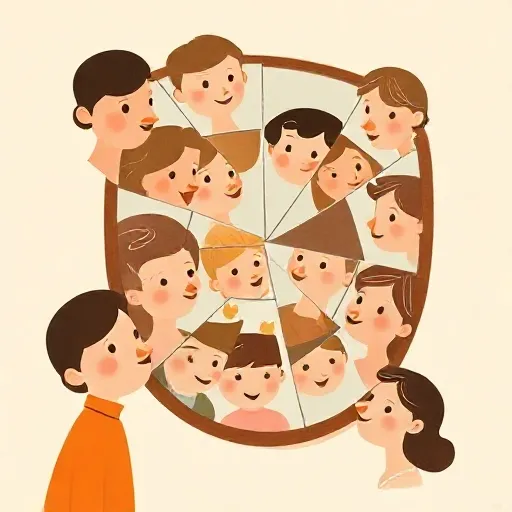
This is where feminist postmodernism comes in. Thinkers like Donna Haraway (born 1944) pushed back hard against any claim that one group — including women — could have a single, unified point of view. They warned that when someone says “women’s standpoint,” it often turns out to be the standpoint of white, middle‑class, heterosexual women, who might not notice how they are leaving out others. These critics called that an “essentialist” mistake — treating “woman” as if it had one fixed nature.
Postmodernists say that what counts as “reality” is in large part built by the words and categories we use, and those categories are always shifting and contested. If you claim your perspective is the objective truth about women’s lives, you are, from this view, using your power to silence other voices, not uncovering a deeper reality. The goal, then, isn’t to find the one perfect standpoint. It’s to travel between different perspectives — what the philosopher María Lugones (1944–2020) called “world traveling” — and learn to see how each one shows a different piece of the truth.
This sounds like it could dissolve into total chaos: if everyone sees differently, can we ever say anything is really true? Haraway didn’t think so. She argued that recognizing your own situatedness and being responsible for how you build your knowledge is far more honest than pretending to have a “view from nowhere.” The mistake isn’t having a perspective; it’s pretending you don’t have one.
Turning Bias into a Tool: Feminist Empiricism

The third big tradition, feminist empiricism, tries to show how science itself can get better when feminist values are welcomed, not banned. Empiricists believe experience and evidence are the main paths to knowledge. Feminist empiricists add that the ways we collect and interpret evidence can be seriously distorted by sexist biases. But instead of throwing out science, they want to improve it.
This raises a puzzle. Feminist scientists spend a lot of time pointing out bias — for example, when researchers only study male bodies and assume the results apply to everyone, or when they interpret animal behavior through human gender stereotypes. Bias, they argue, leads to error. But then they turn around and say science would be better if it used feminist values. Isn’t that just another bias? The philosopher Helen Longino (born 1944) answered by showing that not all bias is bad. Some biases open up new questions; they help you notice things a dominant view would overlook. Think of it like using a different lens on a camera — you don’t see everything, but you see some things much more clearly.
Longino and others proposed that objectivity doesn’t come from each scientist trying to be empty and neutral inside their own head. Instead, it comes from a scientific community where people with different backgrounds, values, and assumptions hold each other accountable. In a truly objective community, no voice is silenced; every claim gets tested by critics who see what the original researcher might have missed. That’s why including women, people of color, and others who have been left out isn’t just fair — it’s epistemically smart.
The key is that values don’t replace evidence. A feminist scientist doesn’t get to say “I believe this because it supports women’s rights and I refuse to check the facts.” She has to show that her theories fit the data, survive criticism, and produce new discoveries that others confirm. If a sexist theory says women can’t do math, a feminist research program must be willing to test that claim honestly and accept the result — even if the result is uncomfortable. The horror is not having values; it’s being dogmatic and ignoring evidence when it surprises you.
Why This Matters: Who Gets to Speak?

These debates aren’t just for philosophers in a library. They change who is believed, who counts as an expert, and what gets called a fact. The philosopher Miranda Fricker (born 1966) described this as epistemic injustice — a wrong done to someone in their capacity as a knower.
One form is testimonial injustice. Imagine a girl in your class points out a flaw in the science experiment, but the teacher automatically dismisses her because “girls aren’t good at science.” The idea is that her word is treated as less credible simply because of who she is, not because of anything she said. That’s not just unfair to her; it robs the whole class of a piece of knowledge.
Another form is hermeneutical injustice — when society lacks the concepts to make sense of some people’s experiences, and those people are shut out from helping to create them. Think back to the women who suffered unwanted advances before the term “sexual harassment” existed. They had the experience, but they couldn’t make it fully understandable to others because the words and categories weren’t available yet. And the dominant group had little interest in creating them.
Feminist standpoint theorists and empiricists agree on this much: knowledge is stronger when many different voices are heard, and when nobody’s perspective is automatically dismissed. That’s why the question of who gets to speak — in science, in courts, in your own classroom — is one of the deepest questions you can ask.
Think about it
- Think of a time you knew something adults didn’t notice — maybe about a game, a group of friends, or a feeling in a room. What let you see it? What kept them from seeing it?
- If your best friend tells you something surprising about their life, and others doubt them because they seem “too emotional,” how would you judge what to believe? What would you ask yourself before deciding?
- Can a researcher’s personal values ever lead to better science? Can you imagine a case where caring deeply about fairness uncovers a truth that a detached observer would miss?