
The Man Who Said Atoms Are Real and Your Mind Is Your Brain
A Rebel in the Vienna Circle
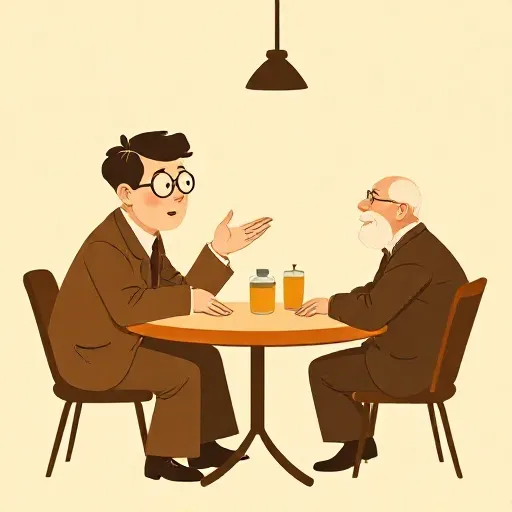
In a smoky Vienna meeting room in 1924, a 22-year-old student named Herbert Feigl (1902–1988) watched his teacher Moritz Schlick (1882–1936) explain a startling idea. Schlick said science only describes our sense experiences—colours, sounds, pointer readings. To talk about invisible things like atoms as if they were real was a mistake. Feigl disagreed. He believed atoms and forces were genuinely out there, not just handy mental shortcuts. That evening, Feigl helped found the Vienna Circle, a group of philosophers and scientists determined to rebuild human knowledge from the ground up. But from the very first meeting, Feigl was their loyal opposition.
The Circle’s goal was to clear away grand, untestable claims—what they called metaphysics—and anchor all meaningful thought in logic and direct observation. They admired the early work of Ludwig Wittgenstein, who argued that logic is just tautologies (sentences that are true by their own structure, like “All bachelors are unmarried”). Many in the Circle thought that even the objects of science should be “reduced” to patterns of sense data. Feigl, however, clung to a critical realism: the things science talks about, even unobservable ones, refer to parts of a mind-independent world. This put him at odds with his closest friends, including Rudolf Carnap (1891–1970), and set the stage for decades of argument.
From Positivism to Empiricism: The Meaning of Meaning

Early in his career, Feigl called himself a logical positivist. In a 1931 manifesto co-written with Albert Blumberg, he declared that a sentence was meaningful only if it could be verified by direct observation. Metaphysical claims that couldn’t be checked—like “the universe has a hidden purpose” or Kant’s “synthetic a priori” truths—were labelled meaningless. But Feigl soon saw cracks in this strict rule. At a Paris conference in 1935, a French philosopher burst out that the positivists were idiots! Feigl later joked that the remark prompted him to drop the label and adopt a looser one: logical empiricism.
What changed? The verification criterion demanded that every meaningful statement be directly translatable into reports of immediate experience. Yet science is full of statements about black holes, evolution, and magnetic fields—things no one can see all at once. Feigl and other empiricists replaced verification with confirmability: a statement is meaningful if we can bring evidence for or against it, even indirectly. This shift allowed him to defend a form of realism. He could now say that sentences like “the atom has a dense nucleus” are meaningful—not because we can ever see the nucleus directly, but because they can be tested through experiments and are embedded in a vast, coherent network of scientific theory. And that possibility opened the door to a bolder claim: the words in those sentences actually refer to real things.
Atoms Are Real: Feigl’s Scientific Realism
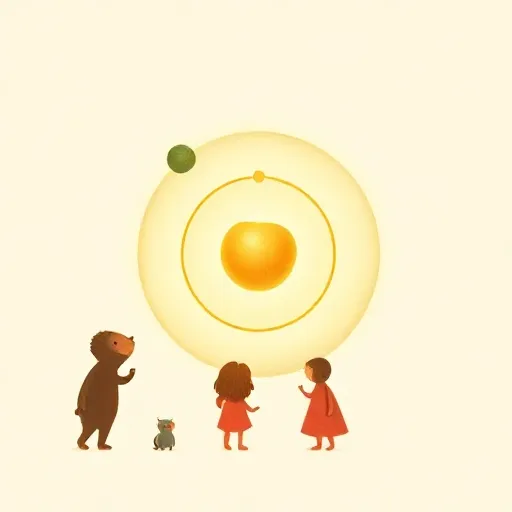
Feigl’s most original move came in a 1950 paper called “Existential Hypotheses.” There he introduced semantic realism: the idea that the technical terms of science—‘atom,’ ‘force,’ ‘electromagnetic field’—have factual reference beyond our observations. He made a sharp distinction between evidence (the sensory reports that support a claim) and reference (the actual chunk of the world the claim is about). For Feigl, the meaning of a term is not exhausted by how you verify it. There is, he said, a “surplus meaning” in theoretical language—an untranslatable content that points to things in spacetime, whether we can touch them or not.
Think of it like this. You can’t see the magnetic field that makes a compass needle turn, but you trust it exists because it systematically interacts with other observable parts of the world. Feigl argued that atoms are in the same boat. Their reality is confirmed not by a single peek, but by the whole structure of physics—it’s the place the word occupies in our best theories that grounds its reference. He also insisted that truth and verification are different. A claim can be true (the atom really is there) even before anyone can prove it. Critics—including his fellow empiricists Carl Hempel and Ernest Nagel—pushed back. They claimed Feigl’s realism was “a distinction without a difference”: once you accept that confirmation is the only game in town, talk of “factual reference” adds nothing new. Feigl replied that semantics gave us a way to speak about reality without falling back into untestable metaphysics. He wanted a critical realism, one that leaves the last word to science itself.
Your Mind Is Your Brain: The Identity Theory

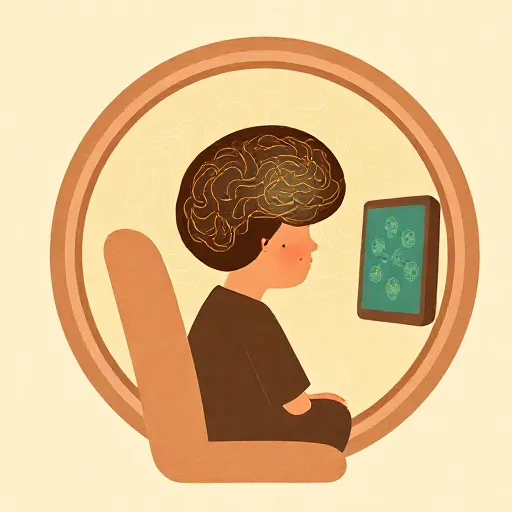
Feigl’s other major fight was about the mind. In his 1958 essay “The ‘Mental’ and the ‘Physical,’” he defended an identity theory: your feelings—what Feigl called qualia or raw feels—are identical to physical processes in your brain. This was not the idea that thoughts cause brain events, or that they run in parallel; Feigl said they are one and the same event, described in two different languages. He built on an earlier idea from his teacher Schlick: the difference between the mental and the physical is a difference in how we talk about the world, not a split in reality itself.
To explain, Feigl used an analogy from the logician Gottlob Frege. The “morning star” and the “evening star” refer to the same object—Venus—but the two phrases have different senses: one is the bright thing you see at dawn, the other the bright thing at dusk. Likewise, “a sharp pain in my toe” and “a burst of C-fibre activation in my somatosensory cortex” pick out the very same event, but the first is known by direct, private acquaintance (how it feels to you), and the second by public, scientific description (what a brain scan shows). So Feigl’s is a double-knowledge or double-language theory.
Crucially, Feigl did not try to “explain away” feelings or pretend they don’t exist. He insisted that raw feels are epistemologically basic—you know your own pain with a certainty no science can override. But he argued that science can describe that same pain in neural terms, and that the two sets of terms latch onto the same reality. The identity is an empirical discovery, not a logical trick. Feigl left it to future neuroscience to work out the details, but he believed the overall picture was a powerful monism: one world, one stuff, captured from two angles. His view differed from the tougher Australian identity theorists (like J. J. C. Smart), who were more willing to reduce the mental to the physical without giving qualia the privileged status Feigl did. Feigl’s gentle realism about the mind kept him closer to the “critical realist” he had always been.
Why Feigl’s Ideas Still Matter
Feigl’s double project—realism about science and identity about the mind—helped shape the next sixty years of philosophy. His semantic turn inspired later realists like Hilary Putnam and Richard Boyd, who refined the idea that scientific terms refer to real things even when our theories change. And his identity theory, alongside Smart’s, launched the modern mind-body debate that still fills philosophy journals. Jaegwon Kim, a leading philosopher of mind, would later say that Feigl’s work “introduced the mind-body problem as mainstream metaphysical Problematik of analytical philosophy” and “helped set basic parameters and constraints” that still guide us today.
You can feel that legacy. When a neuroscientist shows you an fMRI scan of someone feeling sad, she is mapping what Feigl would call two descriptions of the same state. When your science teacher says atoms are real, not just useful fictions, she echoes his fight against the Vienna Circle’s strict phenomenalism. Feigl himself would probably smile and remind you that the final answer is up to science. But he’d also want you to ask the philosophical questions: What makes something real? Is my pain just my brain, or more? Those questions, born in a Viennese café a century ago, are still yours to wrestle with.
Think about it
- If a brain scanner could one day predict exactly how you’ll feel when you stub your toe, would that make the pain any less real to you? Why or why not?
- You’ve never seen an electron. How do you decide whether it’s real, or just a useful story scientists tell?
- Feigl thought your feelings and your brain states are the same event described in different ways. Would knowing that change how you think about falling in love, or feeling angry? How?