What Makes a Ball Smash Into a Window an "Event"?
A Smash, a Yell, and a Puzzle
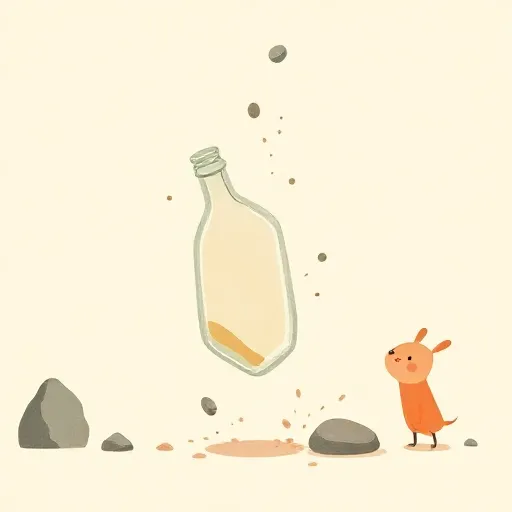
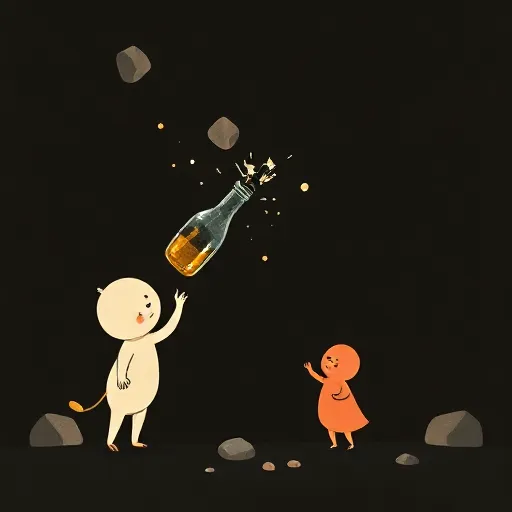
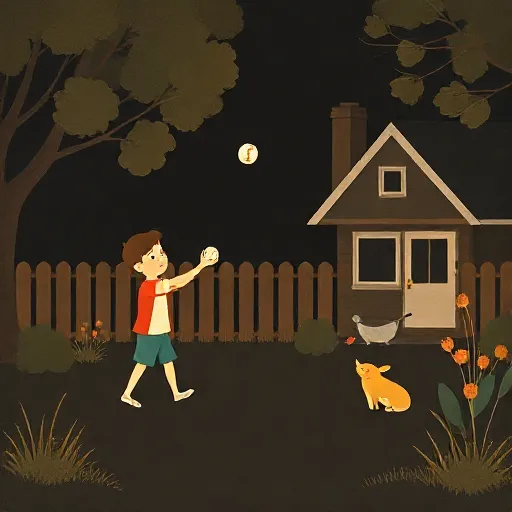
It’s a sunny afternoon. You’re in your backyard when your friend Cameron throws a baseball. It sails through the air, hits a windowpane, and glass shatters everywhere. Cameron yells, “I didn’t mean to break the window!” But what exactly happened? Was it one single event — the window breaking? Or a chain of events: the throw, the ball’s flight, the impact, the glass falling? Philosophers who study metaphysics — the branch of philosophy that asks what is real and what kinds of things exist — have argued about what counts as an event for centuries. And their answers do not just stay in classrooms. They sneak into the excuses you make, the accidents you explain, and even the blame you give.
Objects Sit, Events Happen
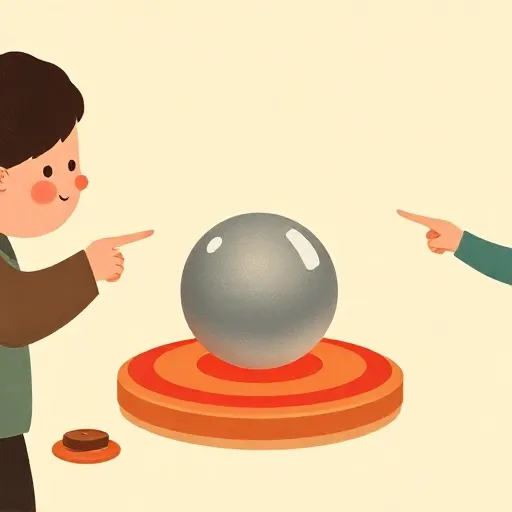
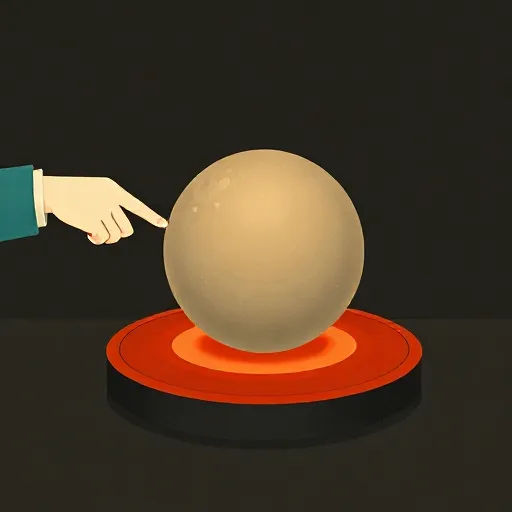
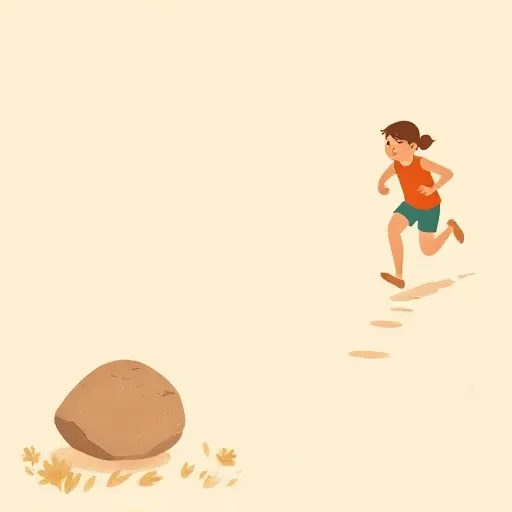
One of the oldest distinctions philosophers draw is between objects and events. A rock is an object. It exists. You can point to it, kick it, and it moves as a whole. The rock’s spatial boundaries are fairly crisp — you can trace its outline easily. But its temporal boundaries are fuzzy: there is no single sharp moment when the rock begins to exist or when it finally weathers away completely.
A relay race, on the other hand, is an event. It occurs, rather than exist. Its temporal boundaries are crisp — it starts when the whistle blows and ends when the baton crosses the line. But its spatial boundaries are vague: where exactly does the race happen? On the track, of course, but also in the runners’ lungs, the cheering crowd, the coach’s gestures. Objects can move from place to place; you can carry that rock across the yard. Events do not move — the race doesn’t pack up and travel; it unfolds wherever it occurs. And while two rocks cannot easily be in the same spot at the same time, events tolerate co-location more easily. The race and the team’s victory can occupy the same stretch of time and space without bumping into each other.
Not everyone agrees that this divide runs deep. Some philosophers, like Willard Van Orman Quine (1908–2000), have argued that objects are simply “slow” events — things that change so little that we treat them as stable. Think of a glacier: it moves and reshapes itself constantly, but we call it an object. On this view, calling something an object or an event is more a matter of degree than of kind. Others, starting with process philosophers in the 20th century, have flipped the idea: processes like a person walking down the street are not chopped into temporal parts but endure as wholes, just as objects do. So the simple split between objects and events is itself a living dispute.
Facts Are Not Events
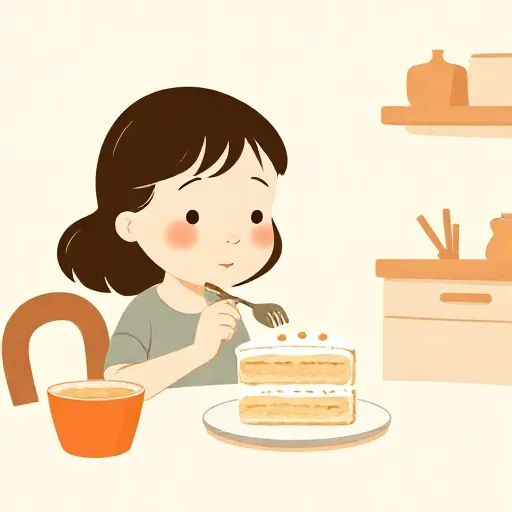
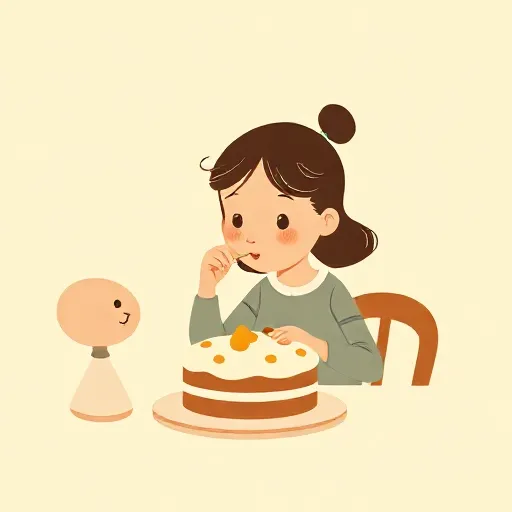
Suppose Lila eats the last slice of cake. You can point to that event — it happened at 3:15 in the kitchen. But the fact that Lila ate the cake is not something you can point to. It does not happen; it is true, now and elsewhere. The event of Caesar’s death took place in Rome in 44 BCE, but that Caesar died is a fact here as it was in Rome, today as in 44 BCE.
Ordinary language seems to mark this difference. When we say “Lila’s devouring of the cake” or “Caesar’s death,” we use a complete noun phrase that can be modified only by adjectives: “Lila’s rapid devouring.” These “perfect nominals,” as linguist Zeno Vendler called them, refer to events. By contrast, “Lila’s devouring the cake” or “that Lila devoured the cake” still have a “verb alive and kicking inside them” — they tolerate adverbs (“Lila’s devouring the cake rapidly”), tense (“Lila’s having devoured the cake”), and negation. They refer to facts or states of affairs.
However, some philosophers, like Roderick Chisholm (1916–1999) and Jaegwon Kim (1934–2019), have argued that events are actually much closer to facts. On their view, an event is a structured thing — an object’s having a property at a time. Caesar’s death is Caesar’s exemplifying the property of dying at a certain moment. His violent death is his exemplifying the property of dying violently. Because the properties differ, these are two different events, not one event described two ways. That makes events as fine-grained as facts, a position we will meet again when we ask how many events just happened.
How Many Events Happened?
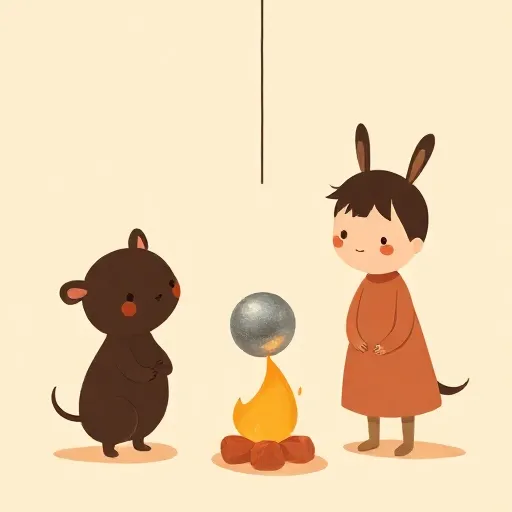
Cameron threw the ball. The window shattered. Was the throwing the same event as the breaking? Common sense might say no: one caused the other. But what about a metal ball that is simultaneously rotating and heating up over a flame? Are the rotating and the heating one and the same event? Philosophers divide into two camps.
At one end, there are “multipliers” like Kim. For them, if you describe the event with a different property, it is a different event. So the rotating is distinct from the heating, and Caesar’s death is distinct from Caesar’s violent death. At the other end, “unifiers” like Quine treat events as coarse-grained as ordinary objects. If the rotating and heating occupy the same stretch of space-time, they are one event that can be described in two ways.
In the middle, Donald Davidson (1917–2003) proposed a famous causal criterion: two descriptions pick out the same event exactly when the event has the same causes and the same effects. If everything that led to the stabbing also led to Caesar’s killing, and everything that resulted from one resulted from the other, then they are the same event. This allows us to say Brutus’s stabbing of Caesar is identical with his killing of Caesar, while still keeping the rotation and heating apart when their causal chains differ (the rotation was caused by twisting the string; the heating by the flame). Nonetheless, Davidson later abandoned his own criterion as circular, since causes and effects are themselves events. The debate remains wide open.
Do We Even Need Events?

Why think there are such things as events at all? One powerful argument comes from how we talk. You say, “Lila ate the cake quickly in the kitchen with a fork.” That sentence entails “Lila ate the cake.” If we treat “ate” as a simple two-place relation between Lila and the cake, it is puzzling why adding “quickly” should logically allow us to drop it and still make sense. But if we suppose your sentence really says: there was an event of Lila’s eating the cake, and it happened quickly, in the kitchen, and with a fork — then the original statement automatically contains the existence of a cake-eating event, which is exactly what “Lila ate the cake” asserts. This is the celebrated adverb argument, pressed by Davidson in the 1960s.
Still, not everyone is convinced. Some philosophers argue we can paraphrase away all talk of events. “Lila’s walk was pleasant” might simply mean “Lila walked pleasantly,” with no reference to a walk-event at all. Peter Geach (1916–2013) championed this kind of paraphrase. Yet even if paraphrases are possible, they don’t settle the deeper question. As one contemporary philosopher notes, the fact that we could speak without mentioning events does not prove they don’t exist. The debate over whether our everyday talk forces us to accept events into our ontology rumbles on.
The Nap She Didn’t Take
Here is one more twist. We often talk about things that do not happen as if they were real: “Cameron’s failure to catch the ball caused the window to break.” “Anita’s omitting the cutlery from the wedding list made Susan angry.” Are there really negative events — missing napes, absent waves, unfired shots? Some philosophers, like Judith Jarvis Thomson (1929–2020), take such talk at face value: our world contains omissions and refrainings. Others insist that only positive events exist. When we say “Anita omitted the cutlery,” we are actually describing a positive event — say, the writing of a wedding list that does not include cutlery. The negative sound is just a shorthand, not a mysterious negative thing.
Why does this matter? Because negative events slide directly into moral and legal responsibility. If you see someone drowning and do nothing, can your inaction be a cause of their death? Juries and ordinary people often say yes. But if omissions are not real events, then we need a different story about how not-doing can count as a cause. The metaphysics of negative events touches the very core of how we assign blame for what someone failed to do.
Why This Matters When You Say “I Didn’t Mean To”
Back to Cameron. When he says he didn’t mean to break the window, he is weaving several pieces of philosophy together. He assumes there was an event (the window breaking) that can be traced to his action (the throw), and that his mental state — his intention or lack of it — changes the nature of the event. But which event is the one that matters? The throw? The breaking? The whole sequence? And if he stood still and watched the ball fly past him, are we counting a negative event — his failure to catch it — as a cause?
How you answer those questions shapes whether you see Cameron as more or less blameworthy. In your own life, every time you explain why something happened — “I was just walking and it fell”; “I didn’t touch it”; “I forgot to say something” — you are picking sides in a philosophical argument that has lasted thousands of years. The next time an accident happens, try describing it as one event and then as many. Notice how the story changes, and who ends up responsible. The world of events is not just a dry list of occurrences. It is the hidden grammar of our excuses, our stories, and our sense of right and wrong.
Think about it
- If a camera records exactly what happens when a window breaks, could watching the video settle whether the breaking was one event or many? Why or why not?
- Suppose a friend promises to feed your cat while you’re away, forgets, and the cat goes hungry. Are you more upset about what your friend did or about what they didn’t do? What does that tell you about negative events?
- If every human suddenly vanished from the universe but the physical world kept going exactly as before, would there still be events — like a tree falling in a forest? Does anything about events depend on someone to describe them?