If You Hadn't Thrown That Rock, Would the Window Still Smash?
Two Rock Throwers, One Shattered Bottle
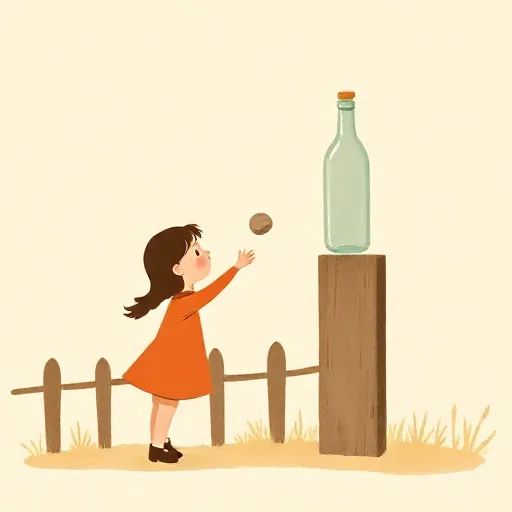
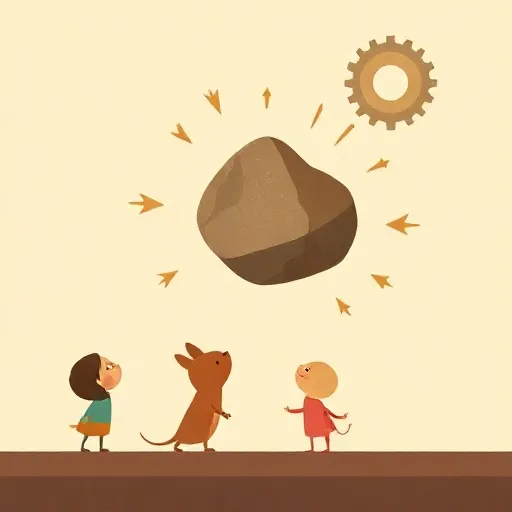
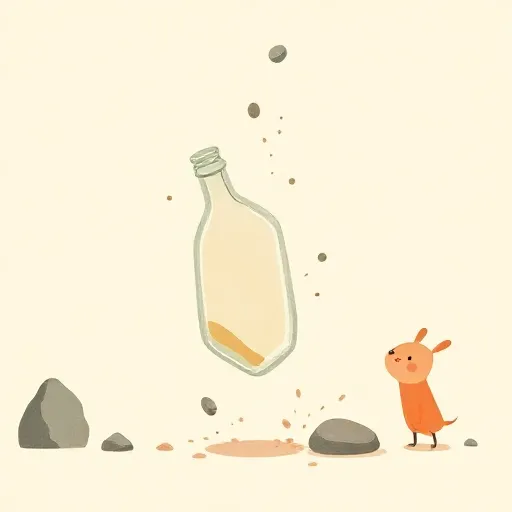
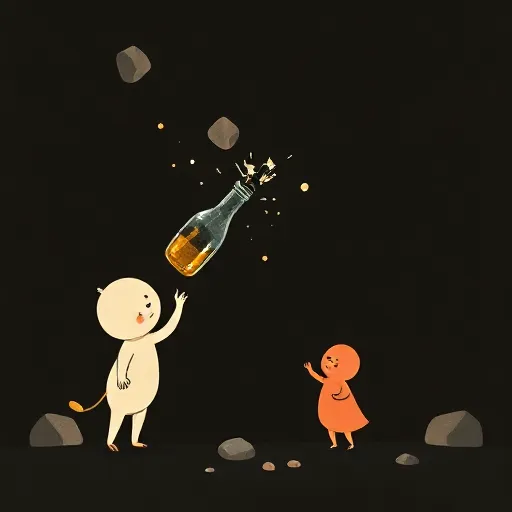
Suzy and Billy are throwing rocks at a glass bottle. Suzy throws her rock first, and it hits the bottle, shattering it into a thousand pieces. Billy’s rock sails right through the space where the bottle used to be. If Suzy hadn’t thrown, Billy’s rock would have smashed the bottle instead.
So which throw really caused the bottle to break? Your first thought might be “Suzy’s throw did it — she got there first.” But ask a philosopher and you’ll quickly tumble into a much bigger puzzle. For over fifty years, philosophers have been trying to explain what it even means for one event to cause another. The problem turns out to be surprisingly tricky, and it touches how we assign blame, do science, and argue about everything from broken windows to climate change.
The story starts with a simple idea: causes make a difference. Take away the cause, and the effect goes away too. That idea opens a door into possible worlds, miraculous interventions, and computer-like diagrams — all tools philosophers use to hunt for the real thing called causation.
The “What If” Test: Making a Difference
Suppose a mosquito bites your arm and it swells up. You’d probably say the bite caused the swelling. Why? Because you can run a counterfactual test in your head: if the mosquito hadn’t bitten you, the swelling wouldn’t have happened. A counterfactual is a “what if” statement about something that didn’t actually occur — a possible world that isn’t real but that we can imagine.
The philosopher David Lewis (1941–2001) turned this everyday thought into a careful theory of causation in 1973. He defined causal dependence between two distinct events: an effect e causally depends on a cause c just in case, if c had not occurred, e would not have occurred. In simple cases, that rule works beautifully. If nobody had thrown a rock, the bottle would have stayed whole; so someone’s throw caused the smash.
But not every causal connection is a direct one-step dependence. Sometimes a cause sets off a chain. Lewis handled that by defining a causal chain: a string of events where each later one depends counterfactually on the earlier one. If a causes b and b causes c, then a causes c — even if c would have happened without a in some other way. This allows the theory to handle a twist called early preemption.
Imagine two assassins, A and B, both planning to shoot a dictator. A fires and kills him. B sees A’s shot and never pulls the trigger. If A hadn’t fired, B would have shot, so the death doesn’t depend on A’s shot — it would have happened anyway. But we still want to say A caused the death. Lewis’s chains come to the rescue: there is an intermediate event, A’s bullet speeding through the air, that does depend on A’s act, and the death depends on that bullet. So we have a chain, and A counts as the cause. So far, so good.
When Simple Difference-Making Isn’t Enough: Late Preemption
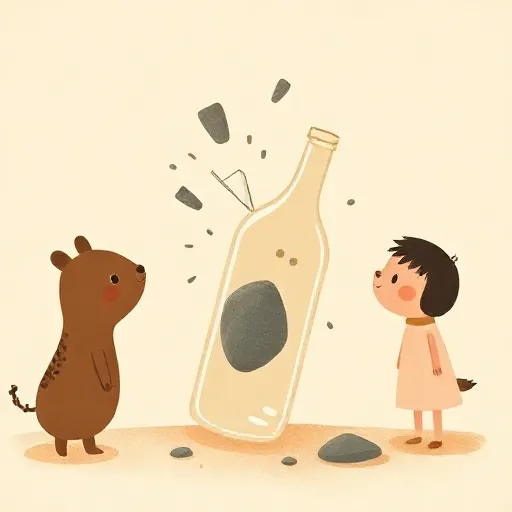
Now return to Suzy and Billy. This is a case of late preemption: Suzy’s process runs all the way to completion before Billy’s process can finish. The simple counterfactual test fails. If Suzy hadn’t thrown, Billy’s rock still would have shattered the bottle. So the shattering does not depend on Suzy’s throw. And unlike the assassin case, we can’t find an intermediate event that links Suzy’s throw to the shattering step by step. Her rock at mid-flight does depend on her throw, but the bottle’s smashing does not depend on that mid-flight rock — without it, Billy’s rock would have done the job.
Lewis’s 1973 theory couldn’t give the right answer here. Many similar examples began to pile up. So Lewis later (in 2000) proposed a new idea: influence. Instead of asking only whether the effect occurs, he asked whether tiny changes in the cause would produce tiny changes in the effect — its timing, its manner, its details. Suzy’s throw influences the shattering: if she had thrown a little softer, the bottle would have shattered a bit differently. But if you alter Billy’s throw while holding Suzy’s throw fixed, the shattering stays exactly the same. Because Suzy’s throw has this pattern of influence — a whole range of “if it had been this way, that would have happened” — it counts as the cause. Billy’s throw does not.
This idea of influence handles many tricky cases, but not everyone thinks it solves everything. Some worry it makes too many events count as causes: a rainstorm that delays a forest fire influences the fire’s timing and speed, but are we ready to call the rain a cause of the fire? That feels odd.
Building a Causal Map: The Power of “What If” Machines
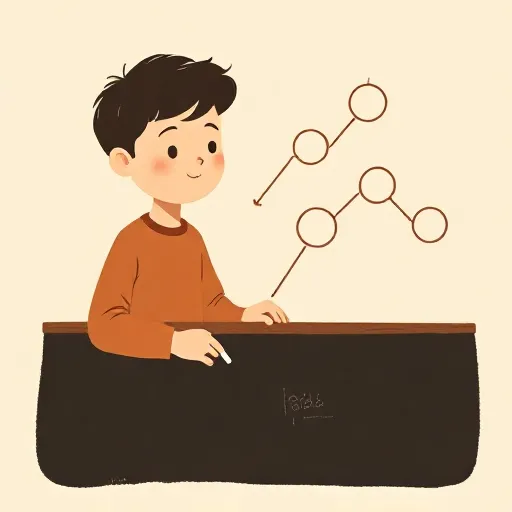
A different approach, popular with many philosophers today, borrows tools from computer science and statistics. It’s called the structural equations framework. The idea is to draw a causal map of a situation using variables — say, whether Suzy throws (yes/no), whether her rock hits (yes/no), whether the bottle shatters (yes/no) — and write equations that say how one thing depends on another.
To figure out if Suzy’s throw caused the smash, we perform a kind of mental surgery. We freeze some variables at their actual values — we hold Billy’s rock hit fixed at “no” — and then “wiggle” Suzy’s throw: if she hadn’t thrown, the bottle wouldn’t have shattered under those frozen conditions. This shows an active causal route from Suzy’s throw to the shattering. The method is like a board game where you pause certain pieces while you test a move, to see what really changed.
This framework was developed by Judea Pearl and others, and philosophers like Christopher Hitchcock and James Woodward adapted it to tackle preemption and overdetermination — cases where two processes would both have been enough. The approach has become a standard tool, partly because it gives clear answers and can be used in science and even AI to figure out causes from data.
Why We Blame the Gardener, Not the Queen

You go on holiday and come back to find your flowers dead. Neither your gardener nor the Queen of England watered them. Both failures are exactly the same from a counterfactual point of view: if either had watered them, the flowers would have lived. Yet nearly everyone says only the gardener’s omission was a cause of the plant’s death. We don’t blame the Queen.
This puzzles philosophers. If causation is just a matter of counterfactual dependence, the Queen’s neglect should count just as much as the gardener’s. One view is that it does — we simply don’t bother to mention the Queen’s failure because it isn’t unusual or relevant. In normal conversation, we focus on the cause that stands out, the one that deviated from what was expected. This is called invariantism: the truth about what causes what is fixed, and context just affects what we talk about.
Others, called contextualists, think the meaning of “x caused y” genuinely shifts depending on the situation. What counts as a cause might depend on what we hold normal, what we contrast against, or even on what’s morally important. There’s no single map of the world’s causal structure that is the uniquely right one.
These debates aren’t just academic. When a court asks whether a company’s action caused an oil spill, or when doctors argue about whether a patient’s heart condition caused their stroke, they’re wading right into the question of whether causes are purely out there in the world or partly shaped by human interests and norms.
Why It Still Matters: Blame, Fairness, and How We Understand the World
The next time you argue with a friend about whose fault it was that the popcorn burned — you set the timer, but they said two minutes was plenty — you’re replaying a miniature version of the debates Lewis and his successors started. Almost every important argument, from correcting a sibling to settling a science paper, depends on getting the cause right.
Philosophers still don’t agree on a single answer. Lewis’s influence theory, the structural equations framework, and contextualism all have fierce defenders and thoughtful critics. What makes the debate so alive is that the cases keep getting more tangled, and our everyday causal talk is both powerful and maddeningly slippery. So the next time you see a smashed window or a wilting plant, ask yourself: what really made the difference? And if you’re not sure, congratulations — you’re doing philosophy.
Think about it
- Imagine a friend says, “You caused me to drop my ice cream because you pushed me.” But what if someone else was about to bump into them anyway, exactly the same way? Would you still be the cause? Why or why not?
- If a scientist could perfectly predict every time a window will break, would we still need to ask what caused it to break, or is the word “cause” just a story we tell?
- When you burn popcorn, was the cause the wrong timer setting, the old microwave, or the fact that you forgot to add oil? How do you decide which one counts as the real cause, and does it depend on the story you’re trying to tell?