Can a Teacher Ever Give a Truly Surprise Test?
The Student Who Outsmarted the Logic
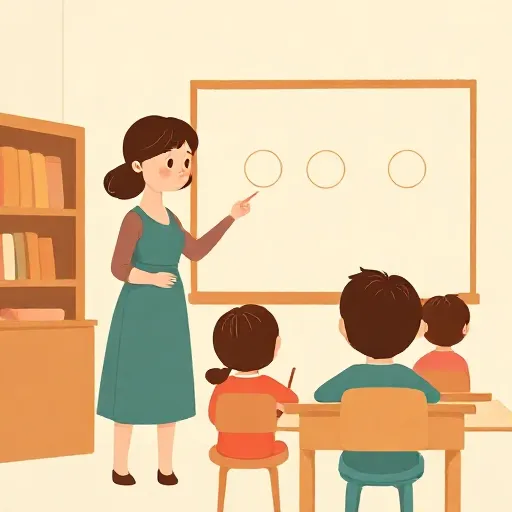
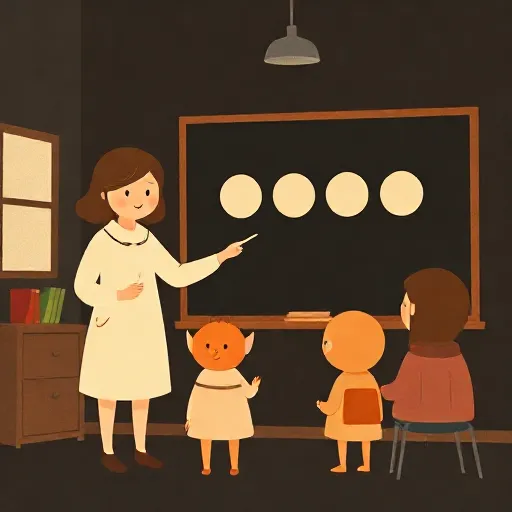
Imagine a teacher rises on Monday morning and announces: “There will be a surprise test this week — on Monday, Wednesday, or Friday. By ‘surprise,’ I mean that on the night before the test, you will not be able to know for sure that the test is the next day.”
A student named Alex sits in the front row and starts thinking. After class, Alex approaches the teacher with an argument that seems impossible to beat. “You can’t possibly give a surprise test,” Alex says. “Let me show you why.”
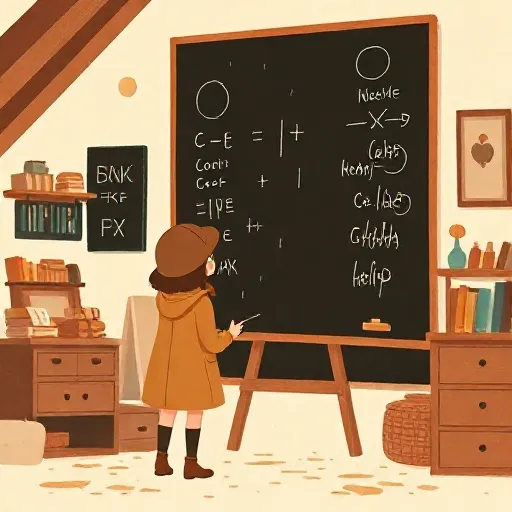
Alex’s reasoning runs like this. First, think about Friday. If the test hasn’t been given by the end of Wednesday’s class, then on Thursday evening Alex would know the only day left is Friday. That is not a surprise — Alex would know the test is coming the next day. So Friday is out.
Now what about Wednesday? Alex can eliminate Friday using the same logic, and memory confirms the test didn’t happen Monday. So by Tuesday evening, Alex would know the test must be on Wednesday. Again, no surprise. So Wednesday is out.
Finally, Monday. With Friday and Wednesday eliminated, on Sunday night Alex would know the test must be Monday. So Monday can’t be a surprise either. All three days are impossible. The announcement itself, Alex concludes, makes a surprise test impossible.
The puzzle is that common sense insists surprise tests happen all the time, yet Alex’s steps seem airtight. This kind of puzzle, where a seemingly perfect argument crashes into something we all believe, is called a paradox. And because the riddle hinges on what we can know in advance, it is an epistemic paradox — one about knowledge.
Does the Announcement Defeat Itself?

The first philosophers to write about this paradox, D. J. O’Connor (in 1948) and L. Jonathan Cohen (in 1950), thought the teacher’s words were a kind of self-defeating statement. They compared the announcement to saying “I am not speaking now.” That sentence is perfectly grammatical and even makes sense, but the act of saying it makes it false every single time. They called it a pragmatic paradox: a statement that gets falsified by the very act of uttering it.
On this view, the teacher can’t give a surprise test because announcing the plan is what ruins it. If she had just kept quiet and sprung the test on the class one day, no problem. The moral seems to be: if you want a surprise test, don’t warn anyone.
But many philosophers found this too simple. The announcement doesn’t just say “I am not revealing anything;” it tells students that there will be a test without telling them which day. It changes their ignorance from total to partial. A student who hears the announcement knows she doesn’t know the day — a useful piece of awareness that helps her prepare. So the announcement is not completely self-destructive; it gives information. The paradox isn’t solved just by calling the words self-defeating.
What if the Teacher Picks Randomly?
Another tempting fix: let the teacher pick the test day by a random method, like rolling a die behind her desk. If she doesn’t decide in advance, then Alex can’t predict the day.
The problem is that if the random process happens to select Friday, the teacher faces a dilemma. Should she stick to the plan and give a test on a day the student will have already predicted? If she does, it’s not a surprise. If she doesn’t, she’s not following the random method. To avoid a non-surprise, she would need to exclude Friday from the random draw. But then Alex, being a sharp reasoner, can work through the same elimination as before: Friday can’t be selected, then Wednesday can’t either if Monday passes, and so on. The random escape hatch turns out to be a dead end.
So the paradox is deeper than one teacher’s cleverness. Even a perfectly fair coin or die can’t shield the surprise.
Quine’s Startling Reply: You Never Really Knew
The influential American philosopher W. V. O. Quine (1908–2000) took a bold step. He agreed that Alex’s argument was a valid reductio ad absurdum — a way of showing that a starting assumption leads to a contradiction. But Quine claimed the assumption it knocks down isn’t the teacher’s announcement. It’s the idea that Alex knows the announcement is true.
If Alex doesn’t know there will be a surprise test, then each day can still be a genuine shock. Alex might have a belief, or a hope, or a suspicion, but not knowledge. And Quine thought that’s exactly right: the announcement was never enough to give Alex knowledge. So the test can be on Friday, and it’s still a surprise because Alex never truly knew it was coming.
Many philosophers found Quine’s solution too drastic. Common sense says that when a teacher declares an exam policy, students acquire knowledge — just like they do when she announces the grading scale or a field-trip date. Denying all knowledge from the announcement feels like using a cannon to kill a fly. But Quine was deeply skeptical about the whole concept of knowledge, calling it vague and messy. For him, “know” is not a precise term like a meter stick. So maybe this paradox is just one more reason to be suspicious of the word.
Blindspots: When Knowing Becomes Impossible
Is there a way to solve the puzzle without giving up on knowledge altogether? Another approach focuses on a peculiar feature of certain statements. Consider the sentence: “I went to the movies last Tuesday, but I don’t believe I did.” If you say that sentence and you believe it, then you believe you went to the movies, but the second half says you don’t believe it — a contradiction. Yet someone else could say about you, “She went to the movies but doesn’t believe it,” without any problem. Some truths are blindspots: they are genuine facts about the world, but you yourself cannot consistently believe them or know them at the same time.
The teacher’s announcement becomes a blindspot for Alex as the week goes on. On Thursday evening, if no test has happened, the announcement plus that fact implies: “The test is on Friday, and you don’t know it before Friday.” That is exactly the kind of statement Alex cannot know. It isn’t false; it’s just inaccessible to Alex’s own mind at that moment, like trying to see your own eyes without a mirror.
This means that as the week rolls forward, Alex’s new knowledge — “no test on Monday, no test on Wednesday” — can actually destroy earlier knowledge of the announcement. You can lose knowledge without forgetting anything, simply because the situation changes in a way that makes the old knowledge unsustainable. On Sunday, Alex might know the teacher’s words are true. By Thursday, that knowledge is gone. So a Friday test would indeed be a surprise, even while the announcement was honest and informative earlier. There is no contradiction, only the surprising discovery that knowledge isn’t a permanent possession.
Why a Classroom Puzzle Matters Outside the Classroom
The surprise test paradox isn’t just a game for clever debaters. It forces us to rethink what it means to know something when our own future self is involved. Can you predict today what you will believe tomorrow? If you expect that you will later lose a belief you now hold, does that make you irrational now?
These questions pop up in real life. When a friend warns you, “Whatever I say next will be something you don’t expect,” you feel a similar twist. When a scientist knows a theory is well-tested but also knows that any future experiment might overturn it, she lives in a kind of surprise-test tension: holding a belief now while knowing she might one day have to drop it.
The paradox also teaches a humbling lesson about confidence. Alex’s elimination argument felt unshakable, yet it depended on a hidden assumption — that knowing something today guarantees you’ll still know it later, come what may. Seeing that assumption fail reveals that even our best reasoning can rest on unnoticed blindspots. Philosophy doesn’t always deliver a single victorious answer; often it shows us how to live with the puzzle more thoughtfully.
Think about it
- If your own teacher made this surprise-test announcement next week, would you prepare differently than for a regular test? What would you believe on Sunday night, and how would it change each day?
- Can you remember a time when you were certain of something, and then, without forgetting anything or learning a new shocking fact, your certainty just evaporated? What does that say about how knowledge works?
- If someone says to you, “I’m about to tell you something you don’t know,” can that sentence ever work as a surprise? Try to construct a case where it might — or explain why it’s impossible.