Is Knowing How to Build a Ship the Same as Knowing Geometry?
A Workshop and a Diagram
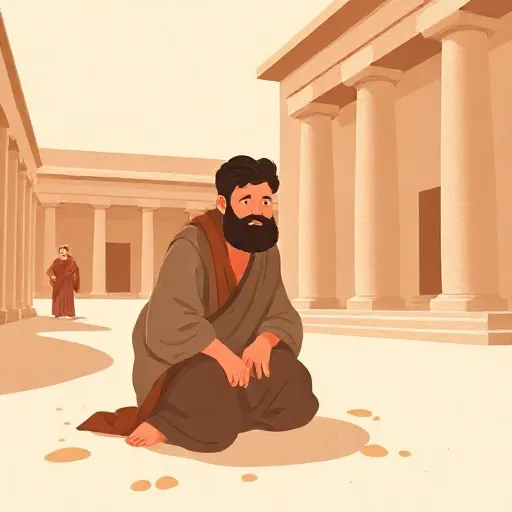
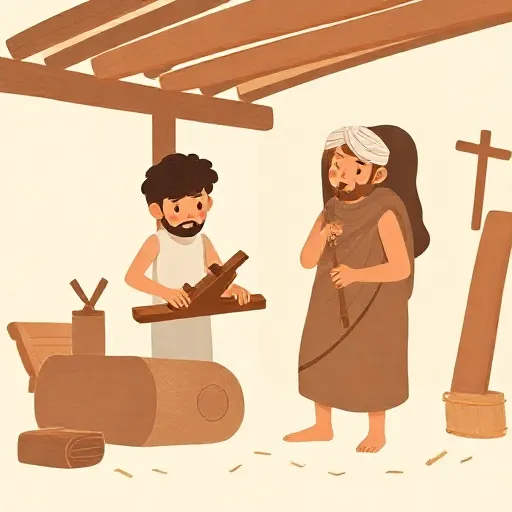
Imagine you’re watching a shipbuilder in ancient Athens. He measures a plank, swings a mallet, and fits the wood perfectly into a hull. Now imagine another Athenian, a student of mathematics, drawing triangles in the sand and proving that their angles always sum to two right angles. Both people would say they “know” something. But do they know in the same way?
This question drove a long argument among Greek philosophers. They used two special words: epistêmê, which we often translate as “knowledge” or “understanding,” and technê, meaning “craft,” “skill,” or “art.” For some thinkers, these two were almost the same thing. For others, they were totally different. And what they decided still matters for how you think about wisdom, talent, and a good life.
Xenophon’s Socrates: All Knowledge Is Know-How
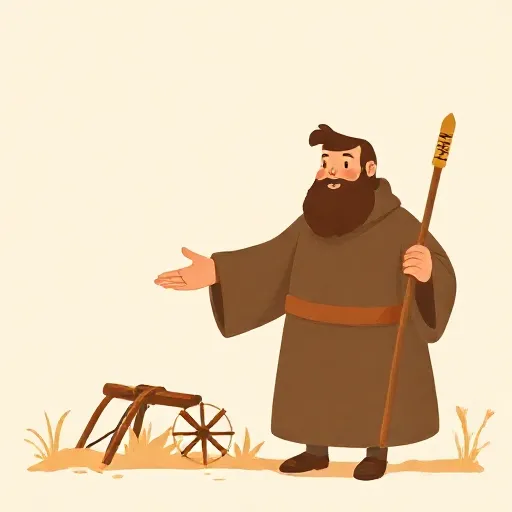
The Athenian writer Xenophon (c. 430–354 BCE) recorded conversations of Socrates (469–399 BCE) that show a surprising view. In these stories, Socrates doesn’t treat epistêmê and technê as rivals. He uses the words almost interchangeably. Ship piloting? That’s both a craft and knowledge. Carpentry, medicine, even managing a household or farm—Socrates calls them all technai (the plural of technê) and also epistêmai (the plural of epistêmê).
For Xenophon’s Socrates, knowing means knowing how to do something useful. He has no interest in studying the cosmos or deep theory for its own sake. Geometry? Learn it just enough to measure a field you want to buy—nothing more. What makes you wise isn’t a theory locked inside your head; it’s diligence and practice. A person who knows justice, Socrates says, can explain it and act justly, the same way someone who knows letters can read and write. Knowledge isn’t something you have; it’s something you do.
Plato’s Break: The Carpenter Who Looks at a Form
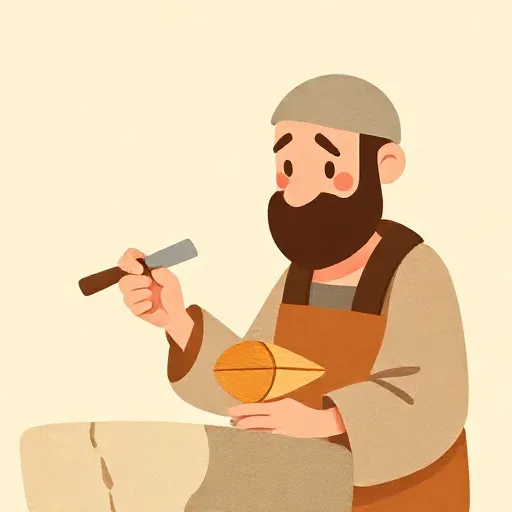
Plato (428–348 BCE), a student of Socrates, didn’t deny that craft involves real knowledge. He often used medicine, weaving, and shipbuilding as examples of knowledge. But he slowly pulled the two concepts apart. A technê, he argued, doesn’t just produce something—it also has a goal, an ergon or function. Medicine aims at health; carpentry aims at a house. And here’s the key: a true craftsman understands why what he does works. He can give an account, a rational explanation, of his goal and his steps.
Plato took this further. In his dialogue Gorgias, a real technê differs from mere experience (empeiria) because it can explain the causes of its results. A doctor can tell you why a treatment restores health. In the Republic, the philosopher-rulers are like painters who look at the perfect model—the forms—and then create laws that imitate true justice and goodness. The highest knowledge becomes knowing these eternal, unchanging forms, especially the form of the Good. That kind of epistêmê starts to look very different from hammering nails: it’s theoretical, abstract, almost mathematical. And yet, even this pure knowledge still gets used to craft a good city.
Aristotle Draws a Line: The Necessary and the Contingent

Aristotle (384–322 BCE) sharpened the distinction. In his Nicomachean Ethics, he divided the rational part of the soul into two: one part handles things that cannot be otherwise (like the truths of geometry), and the other handles things that can be otherwise (like building a house or healing a patient). Epistêmê in the strict sense belongs to the first part. It’s scientific knowledge of what is necessary and eternal, proved from first principles. When you understand a geometric theorem, you grasp something that couldn’t possibly be false.
Technê, on the other hand, is a skill for making things. Its products—a table, a cure, a victory at sea—might or might not exist, depending on the actions of the craftsperson. Crucially, the craftsman reasons backward from the goal that since health means a balanced state, the patient needs warmth, and to produce warmth, he’ll apply this treatment. But the connections aren’t ironclad: heat usually leads to health, but accidents can happen. So technê deals with what happens “for the most part,” not with absolute certainty. This is why Aristotle calls medicine a stochastic technê—a craft that aims at a target but can sometimes miss through no fault of the doctor.
Still, Aristotle sometimes slips and calls medicine epistêmê anyway, especially when stressing that a good craftsperson knows the universal principles behind successful making. So even for him, the boundary isn’t perfectly clean.
The Stoic Fusion: Virtue as the Art of Living

The Stoic philosophers, beginning with Zeno of Citium (334–262 BCE), tied the knot between knowledge and craft more tightly than ever. The Stoics believed that virtue—the excellent human life—is a kind of technê. Specifically, it’s the art of living wisely.
How? The Stoics held that the universe is governed by right reason, a divine law. The truly wise person, the sage, has an unshakeable grasp of this cosmic order. That grasp is epistêmê: secure knowledge that can’t be overturned by argument or emotion. Because the Stoic soul has no non-rational parts to rebel against reason, this knowledge flows directly into action. Faced with any situation, the sage responds with the right feeling and the right deed, just as a master carpenter instantly selects the right tool. Virtue becomes practical wisdom (phronêsis) that knows what is appropriate at every moment—the ultimate skill.
Cicero’s Stoic Cato explains this with two analogies. A craft like medicine aims at a product outside itself (health); but virtue is more like dancing or acting—its end is in the performance itself. Even more precisely, the Stoic sage is like an archer. She aims with total concentration at the target of natural goals (health, community), but her real good lies not in hitting the bullseye—that part isn’t entirely up to her—but in aiming perfectly. The art of living is striving in the right way, not bagging a specific result.
Why the Workshop and the Diagram Still Pull at You

So we’re left with a tug-of-war that started in an Athenian shipyard. Xenophon’s Socrates saw all worthwhile knowledge as hands-on craft. Plato pushed toward an abstract, theoretical knowledge of forms—but still wanted it to shape a craft of ruling. Aristotle split the two, insisting that necessary truth and contingent making are different activities of the mind. The Stoics then fused them back together, turning the whole of a good life into a performative art grounded in unshakeable understanding.
Why should any of this matter to you, right now? Because whenever you wonder whether being “book-smart” counts as much as being “street-smart,” you’re replaying this ancient debate. Does a great pianist know music the same way a musicologist does? Should school teach you timeless theory or the skills to make and fix things? And if you want to live well—to be wise, not just clever—do you need a set of rules you can recite, or a practiced ability to act well in the messy, unpredictable world? The Greeks didn’t settle the question. They gave us the words to keep asking it.
Think about it
- If a carpenter can build a perfect chair but can’t explain the geometry behind its strength, does she “know” how to build a chair? What if a mathematician can explain the forces but has never touched a saw—who knows more about the chair?
- When you learn a video game, do you get better by reading the strategy guide or by playing it over and over? Which kind of learning feels closer to real knowledge?
- If being a good person is a kind of skill like playing the flute, does that mean you could be “good at goodness” without ever feeling kind? Can you fake a virtue until you make it?