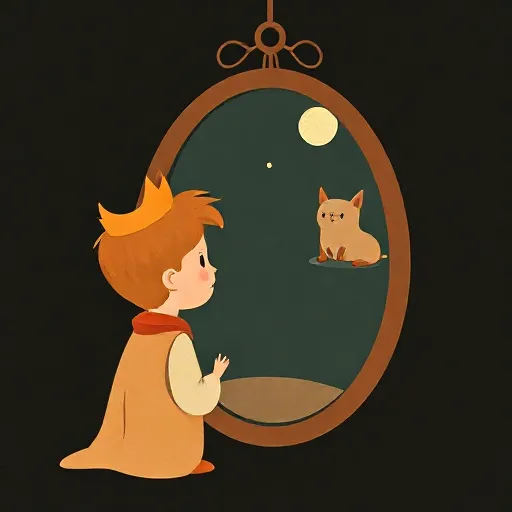

A Foolish Consistency Is the Hobgoblin of Little Minds
You Are Not a Statue
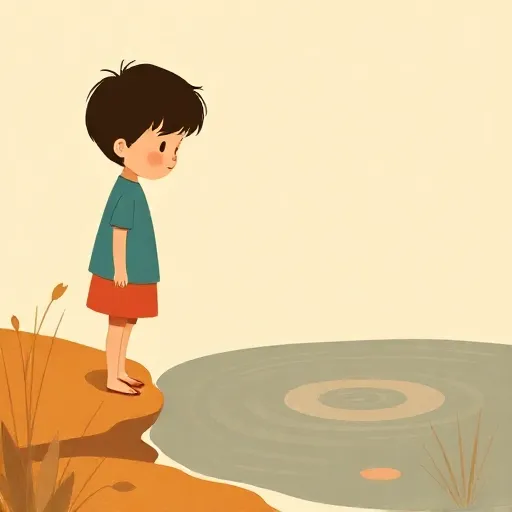
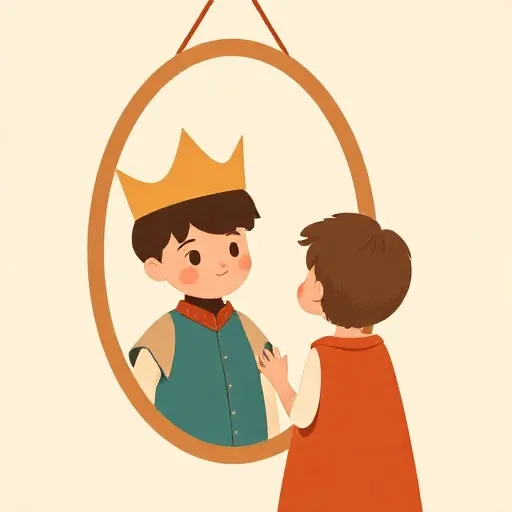
It is opening night of the school play. For weeks you have rehearsed the same lines, worn the same costume, and everyone expects you to be exactly the same person on stage. But tonight something feels different. You want to deliver the lines your own way. If you do, is that a mistake? The 19th‑century philosopher Ralph Waldo Emerson (1803–1882) would say it is no mistake at all. In fact, he would call it a sign that you are truly alive.
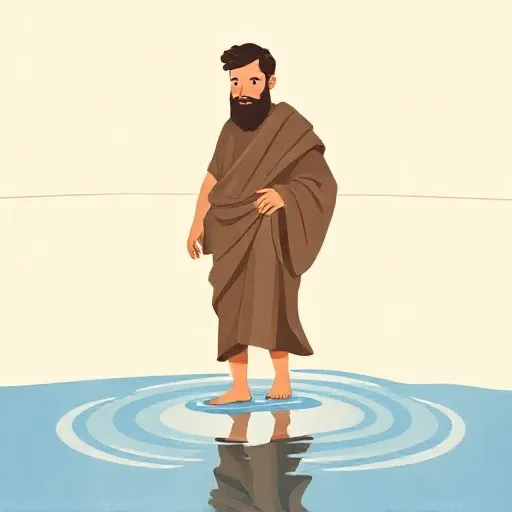
Emerson spent his life arguing that the most interesting thing about a person is not staying the same, but becoming something new. He believed the universe itself is a process — always flowing, never finished — and that we should live that way too. That is why he once wrote that “a foolish consistency is the hobgoblin of little minds.” A hobgoblin is a mischievous creature that frightens people. Emerson thought that being too attached to staying the same frightens us out of growing. To him, a person who never changes their mind is not strong; they are stuck.
The Scholar Who Dared to Walk Alone

Emerson was born in Boston in 1803. His father, a minister, died when he was eight, and he was raised by a mother who valued education. He entered Harvard College at just fourteen, studied to be a minister himself, and became pastor of a Boston church. For a while he followed the path that everyone expected. But then his young wife Ellen died, and he began to question everything. He resigned from the church, left the pulpit, and sailed to Europe.
When he returned, he started a new career: standing on lecture platforms and telling people that the world was not a fixed box. He argued that the only thing of real value in the world is what he called the active soul — the restless, creative spark inside each person that wants to question, build, and remake. Institutions, he warned, often try to quiet that spark. Churches and schools easily turn into museums, preserving dead ideas instead of awakening living ones. Emerson believed that education should not stuff students with old answers, but help them discover their own. The real scholar learns from nature, from action, and from books — but never simply copies a book. A true reader, he said, is not a “bookworm” but a “creative” reader who uses old words to find new vision.
Self-Reliance: The Self Under Construction

The idea most people associate with Emerson is self-reliance. But what he meant is easily misunderstood. He did not mean you should trust a personality that is already fully formed and never budge. In fact, he later admitted that the very phrase “self-reliance” was misleading, because it sounds as though there is a solid self already there to lean on. The self Emerson wants you to trust is the one you are in the process of creating.
He painted a picture of this in his essay “Self-Reliance” by describing a group of ordinary boys on the street, nonchalant and carefree, “sure of a dinner … who would disdain as much as a lord to do or say aught to conciliate one.” These boys, without trying to impress anyone, judge the world around them freely — calling some people silly, others interesting — as if they were lords sitting in judgment. Emerson saw in their unforced confidence a model for how we might live: saying what we actually think, not what we believe we are supposed to say.
That kind of self-reliance is not about being stubborn. It is about staying receptive to the present moment. Emerson believed that every person carries a power “new in nature” — an original gift that no one else can give. But that gift is not something you find once; it unfolds differently in different moments. You have to keep listening for it.
The Trap of Being Consistent

If Emerson could pick one vice he disliked above all others, it would be conformity — acting the way others expect just to fit in. He thought conformity shows up not only when we copy our neighbors, but also when we feel forced to stay true to the person we used to be. He called this “foolish consistency,” and it terrified him because it can smother the future us.
He warned of a deeper panic he called the terror of reform. Sometimes growing means realizing that what you once thought was a virtue — a habit you were proud of — has become a cage. In his essay “Circles,” he wrote that we occasionally discover we must “cast away our virtues, or what we have always esteemed such,” into the same pit where our worst vices have already been thrown. That does not mean anything goes, but that real growth sometimes asks you to let go even of the traits you were proudest of when they no longer fit the person you are becoming.
Emerson thought of all virtues as initial — they start something, they launch a new form of life. But they are never final. Every genuine virtue opens a door; it does not build a permanent house. This is why he could celebrate the abolitionist who fights slavery while also warning that some abolitionists become self-righteous and inflexible, loving humanity in the abstract but failing to love the real, difficult people standing next to them.
Truth Through a Bead
If the self is always in motion, what happens to truth? Emerson had a startling answer: we never see anything “straight” or in‑itself; we only ever see it through a mood. He described life as “a train of moods like a string of beads,” and each bead colors everything you look at. This is what scholars call his epistemology of moods — an account of how we know things that depends on our passing feelings and states of mind.
This helps explain something that often frustrates readers about Emerson: he contradicts himself. In one essay he says that traveling adds to experience; in another he says it does no good because you wake up in a new place only to find “the same sad self” you thought you had left behind. He did not try to smooth those edges away. “I am always insincere,” he once said, “as always knowing there are other moods.” He accepted the clang of contrary voices because each one might reveal something true that the last one missed.
Emerson called this ability to hold rival views wise skepticism. His model for it was the French thinker Michel de Montaigne (1533–1592), whom he admired as someone who was deeply curious about everything, yet never claimed to have the final answer. A wise skeptic, Emerson thought, knows that life is a storm of many elements, and so builds a ship that can bend rather than snap.
A Friend for the Journey

Why does any of this matter today? The American philosopher Stanley Cavell (1926–2018) spent much of his career showing that Emerson still gives us a language for talking about who we want to become. Cavell called Emerson’s outlook perfectionism — not the perfectionism that demands flawless grades or a spotless room, but a kind of moral perfectionism in which the self is always “on a journey,” always moving toward a wiser or better version that is not yet reached, and never will be finally finished.
In that journey, a friend is not someone who pads you with comfort and tells you you are fine exactly as you are. A friend is someone who helps you see the “unattained but attainable self” you could be. For Emerson, that friend could be a real person, but it might also be a book. He said that when you read a great thinker from any age — a Stoic philosopher, an ancient Chinese sage, a modern poet — the words describe to you “his own idea,” that is, your own idea of the self you are capable of becoming. The text becomes a companion that walks beside you and prods you forward.
This is not a self-help recipe, because Emerson never pretended the road was easy. After the death of his five-year-old son Waldo, he wrote the essay “Experience,” confessing that grief had made the world seem like a dream slipping through his fingers. Yet that essay still ends with a stubborn act of hope: “the transformation of genius into practical power.” Even when the string of beads feels dark, a new one always follows. Emerson would remind you that you are never just the person you were yesterday. You are always beginning.
Think about it
- If you could see all your possible future selves, would you choose to stay the same or to keep changing? Why?
- Can someone be your best friend if they encourage you to become a person you never expected to be?
- Emerson said a foolish consistency frightens little minds. Can you think of a time when sticking to a past choice held you back?