Is Sameness Just an Illusion? Deleuze’s Philosophy of Difference
Are You Really the Same Person You Were Yesterday?
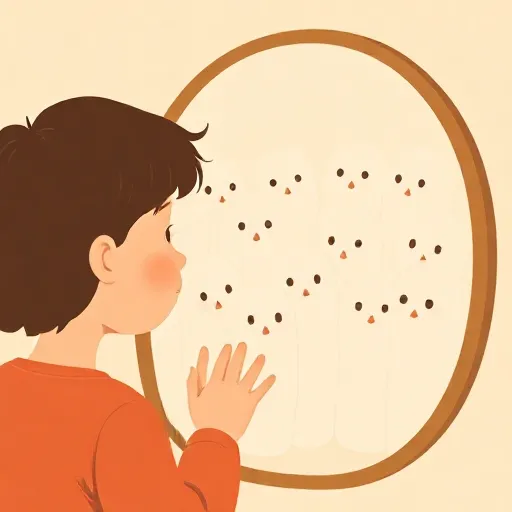
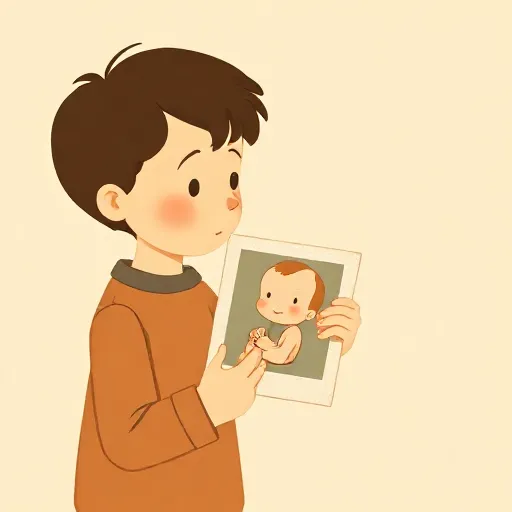
Look at a photo of yourself from two years ago. You might say, “That’s me.” But you’ve grown, learned new skills, and your cells have been replaced. Are you exactly the same person? Most philosophers, from Plato to Kant, believed that beneath all changes there is a stable identity — a core “you” that stays the same. Gilles Deleuze (1925–1995) thought this was a deep mistake. He spent his life building a philosophy of difference: the idea that reality is made not of stable things but of constantly shifting differences, and what we call identity is just a temporary effect.
Deleuze was born in Paris, lived quietly, and rarely traveled. His older brother was arrested by the Nazis and died on a train to Auschwitz; this tragedy shaped Deleuze’s sense that life is fractured and unpredictable. As a young student, he discovered that philosophical concepts could hit him with the force of literary characters. He studied the history of philosophy but felt that the tradition had always favored identity over difference. So he set out to turn that upside down.
The Big Idea: Why Identity Is Not the Ground, but a Product
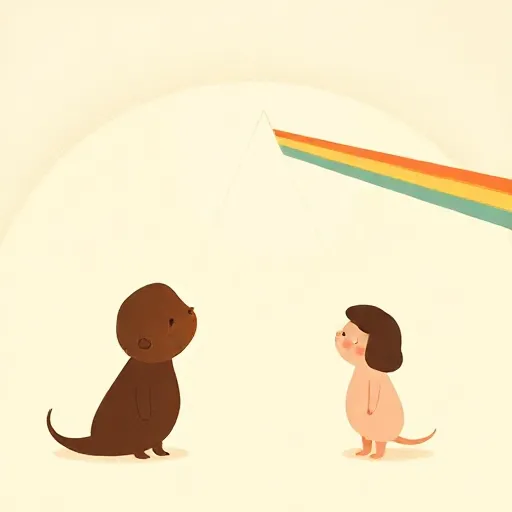
In everyday life, we recognize objects by what makes them the same as others: this is a chair, that’s a dog. Philosophy often assumes that identity comes first and difference is just the gap between two identities. Deleuze reversed this. Imagine a rainbow: pure white light contains all the colors in a virtual state; each color is an actualization of that light, not a separate thing that gets compared. White light is a multiplicity — a field of differences that are all there at once, without parts. For Deleuze, reality is like that white light: a virtual field of pure differences that produce actual things when they “fold” into specific forms.
To build this picture, Deleuze had to break with Immanuel Kant (1724–1804). Kant said that all our experiences are held together by a unified “I” — the transcendental subject — that synthesizes everything we see, remember, and think. Deleuze argued that Kant had smuggled in a hidden identity: the subject is supposed to be the source of unity, but where does the subject come from? Deleuze answered: the subject itself is produced by pre-personal processes he called passive syntheses. Before we have an “I,” our body, desires, and habits contract series of impressions and leave a trace. The “I” is a pattern that emerges from these differential syntheses, not the other way around.
This leads to Deleuze’s term transcendental empiricism. It sounds odd: how can something be both transcendental (about conditions of experience) and empirical (about real experience)? Deleuze wanted to find the real, genetic conditions under which something new can appear, not just the logical conditions that make knowledge possible. Instead of asking “What makes experience possible for a subject?” he asked: “How does experience actually get produced from a field of forces that has no subject yet?”
Deleuze also critiqued what he called the dogmatic image of thought. Most philosophy, he felt, assumes that thinking is natural, that we all just want the truth, and that we recognize objects by matching them to concepts (identity in the concept, resemblance in perception, and so on). But Deleuze insisted that thinking only happens when we are forced by an encounter with something that does not fit any category — something that can only be sensed, not recognized. A painting by Francis Bacon, a strange noise, a shocking event: these break habitual patterns and push our faculties to their limits. Only then do we truly think difference rather than just sorting things into familiar boxes.
How a Hurricane Can Explain Reality: Virtual, Intensive, Actual

Deleuze’s system has three layers: the virtual, the intensive, and the actual. You can picture it through a hurricane. A hurricane isn’t designed by anyone; it arises when differences in temperature and pressure (intensive differences) reach a critical point. Those differences are structured by a virtual Idea or multiplicity: a set of differential elements (air and water flows), relations (how changes in one affect the other), and singularities (thresholds like the formation of an eye wall). The actual hurricane is a concrete solution to this problem, but the virtual structure is real and fully present — it just doesn’t exist as a physical thing. The virtual is like a set of potentials that insist without being actual.
This is hard to grasp, so let’s use the color example from Henri Bergson (1859–1941), a major influence on Deleuze. If you want to find what all colors have in common, you could abstract a generic concept of “color” by removing differences. But you could also pass all colors through a prism and get pure white light — a concrete universal that contains all the colors virtually, making their differences stand out. Deleuze’s virtual Ideas are like that white light: they are the problematic field that gets actualized into specific, extensive things.
Intensive processes are the in-between. They cannot be divided without changing in kind. If you have a pot of water at 90°, splitting the pot doesn’t give you two halves at 45°; it gives two pots still at 90°. But if you heat the bottom, intensity differences produce convection — a new pattern with measurable size. Intensive differences drive systems to cross thresholds and enter new dynamic patterns. So intensity is the engine of actualization. The actual is what we normally see: extended things with properties. But underneath every actual thing is a virtual multiplicity and an intensive process that produced it.
Deleuze therefore offers a world where nothing has a fixed essence. Instead, everything is a temporary “solution” to a field of problems. A tree, a language, a society — all are stable patterns that emerge from differential relations and can transform when intensities reach singular points.
Why Deleuze Thought Politics Was About Desire, Not Just Power
In 1968, massive student and worker protests shook France, revealing that even the Communist Party was afraid of real revolution from below. Deleuze met the radical psychoanalyst Félix Guattari, and together they wrote Anti-Oedipus (1972), a book that became a scandalous bestseller. Their aim was to fuse Karl Marx and Sigmund Freud in a shocking way: they argued that desire is not a lack you try to fill, but a positive, productive force — desiring-production — that creates reality itself.
They described the unconscious as a factory, not a theater. Instead of a private Oedipal drama, desire connects directly with social and natural flows. Everything, even rocks and societies, engages in material syntheses. The body without organs (a term borrowed from the writer Antonin Artaud) is not a literal body but a reservoir of potential — the state of undifferentiated intensity before organs are organized into a functional organism. It’s the plane where new patterns can form.
Deleuze and Guattari traced a “universal history” of how societies code desire. Tribal societies inscribe bodies and trace production to the earth; empires overcode everything on the body of a despot; capitalism decodes flows (labor, money) and lets them run wild, only to reterritorialize desire on the private family. The Oedipus complex, they said, is not the deep truth of the psyche but the way capitalism traps desire inside the nuclear family. Their method, schizoanalysis, aimed to free desire from these traps and explore what a body can do.
This politics of desire means that change doesn’t come just from seizing state power; it comes from experimenting with new ways of connecting, feeling, and becoming. As Deleuze and Guattari wrote in A Thousand Plateaus (1980), we are always composed of lines: some segment us into rigid roles, others crack open possibilities, and still others race toward the unknown. The challenge is to invent assemblages — emergent unities of heterogeneous parts — that respect differences without imposing a single identity.
What Does This Mean for You?
Deleuze’s philosophy can feel abstract, but it changes how you see your own life. If you are not a fixed self but a process of actualizing virtual potentials, then growing up isn’t about discovering your true identity — it’s about experimenting with what you can become. Every friendship, book, or challenge you encounter might push you to a threshold where a new pattern emerges.
The same goes for creativity. Deleuze thought the best art, science, and philosophy create something genuinely new by tapping into the virtual. A great novel doesn’t just reflect the world; it invents a way of sensing that forces you to think differently. Art produces sensation, a shock to the nervous system that bypasses recognition and opens up the “being of the sensible.” That’s why encountering a powerful piece of music or an unsettling drawing can feel like it cracks you open.
Deleuze also reminds us that difference is not a problem to be solved but the very condition of life. When we treat difference as a flaw or an enemy, we fall back into the dogmatic image of thought. When we embrace it, we live in a world of becoming, where the future is never just a repeat of the past. So the next time you look at an old photo, you might think: I’m not the same person, and that’s exactly the point.
Think about it
- If you are always changing, can you ever really know yourself? Or is knowing yourself more like an ongoing experiment than a final result?
- Think of a time when a song, a painting, or an experience shook you up and made you see the world differently. Did it feel like something new was being born — and why was that unsettling?
- If difference is the ground of everything, how should we treat people who seem different from us? Does it make sense to demand that everyone fit the same mold?