
Is Your Mind the Secret Ingredient in Every Scientific Law?
The Day a Planet Was Found with a Pen, Not a Telescope
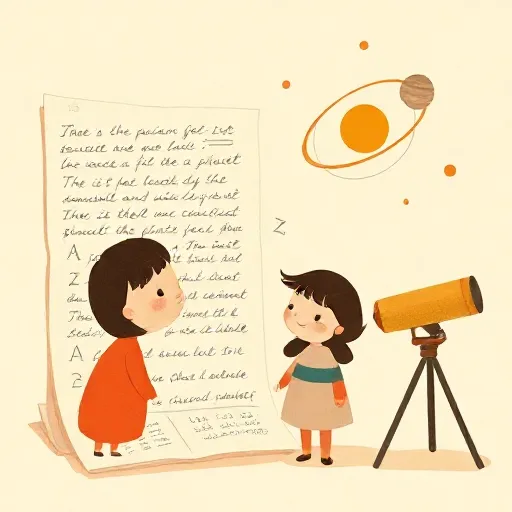
In 1846, something astonishing happened. Astronomers looked at the night sky and found a new planet — Neptune — exactly where some equations said it should be. Nobody had seen it before. It was discovered first by mathematics, then by telescope. The theory that guided them was Isaac Newton’s law of gravity. If that law were false, such a prediction would be a wild, unbelievable coincidence.
William Whewell (1794–1866), a British philosopher and scientist, loved stories like this. He didn’t just study science — he wanted to understand how science actually works. Why do some theories succeed so brilliantly? And what does that tell us about knowledge, evidence, and truth?
Whewell’s answer was bold. He argued that scientific discovery isn’t just a matter of collecting observations. Your mind brings something vital to the table: ideas. And the best theories don’t just explain what we already knew; they can predict brand-new facts, unify completely different kinds of things, and even — he believed — become necessarily true.
Two Ingredients for Every Fact: Ideas and Sensations

Whewell called his starting point the fundamental antithesis of knowledge. Every piece of knowledge, he said, has two opposite elements: Ideas and Perceptions. Perceptions come from your senses — the colors, sounds, and shapes you experience. Ideas are supplied by the mind itself. They aren’t just summaries of what you’ve seen; they are active ways of organizing your experience.
Some philosophers, like John Locke (1632–1704), focused almost entirely on the sense-perception side. They treated the mind as a blank slate that receives sense data. Others, like Immanuel Kant (1724–1804), leaned heavily on the mind’s own structure. Whewell tried a middle way. The Fundamental Ideas — such as Space, Time, Cause, and Resemblance — are not learned from experience. They come from the mind’s own constitution. But they don’t work alone. They are constantly combined with experience.
So observation is never pure. It is always “idea-laden.” When you see a ball rolling, you don’t just see a moving patch of color. You immediately — and unconsciously — bring in the Idea of Cause: you see one event causing another. Without such ideas, scientific facts would be an impossible mess. Each science, Whewell thought, has a particular Fundamental Idea that organizes its facts. Geometry’s is Space. Mechanics’ is Cause. Chemistry’s is Substance.
These ideas start out as germs in the mind. They need to be “explicated” — unfolded, clarified, and made distinct — through careful thinking and contact with observations. That unfolding is a large part of what scientists do.
How Newton Connected Falling Apples and Dancing Planets
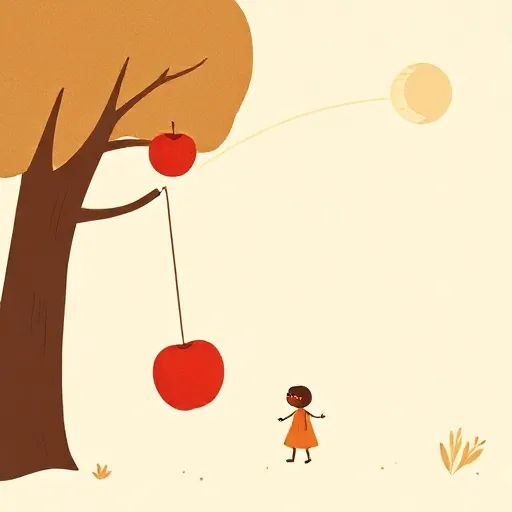
Whewell rejected the old idea that induction is just listing instances. He developed what he called Discoverers’ Induction. The crucial mental act is colligation. To colligate is to bring together a number of separate facts by superinducing a conception that unites them into a single law.
The classic example is Johannes Kepler (1571–1630). For years, the astronomer Tycho Brahe (1546–1601) had carefully recorded the positions of Mars in the sky. But those dots didn’t form an obvious pattern. Kepler tried many possible curves that might connect them. Finally, he hit on the conception of an ellipse. Once he superinduced that idea onto the observations, the scattered points suddenly snapped together into a single law: Mars travels in an elliptical orbit with the sun at one focus. The facts hadn’t changed. The organizing idea did.
The process doesn’t stop there. Once a class is colligated, the scientist generalizes the discovered property to all members of that class, including those not yet observed. Kepler generalized from the known positions of Mars to the whole orbit, and then to all planets.
Whewell saw Newton’s great achievement as a masterclass in colligation and generalization. Newton examined many separate inductive results: the moons of Jupiter, the planets orbiting the sun, falling bodies on Earth. Each of these classes of facts could be described by an inverse-square force law. Newton saw that all these different inductions “leap to the same point” — the same kind of cause. He then colligated them into a more general law: every body in the universe attracts every other body with a force that follows that same inverse-square rule. This wasn’t guesswork, Whewell insisted; it was a rational, step-by-step process of finding the right unifying conception and testing it.
The Triple Test: Prediction, Consilience, and Coherence
Once a theory is proposed, how do we know it’s true? Whewell offered three increasingly powerful confirmations.
First, prediction. A genuine law should foretell phenomena that haven’t yet been observed. The discovery of Neptune wasn’t just impressive; for Whewell, it was the kind of confirmation that makes a theory hard to doubt. If the theory were false, getting the location and mass of an unseen planet exactly right would be a miracle.
Second, consilience — a jumping together of inductions. This happens when a hypothesis that was formed to explain one class of facts also successfully explains and predicts cases of a completely different kind. Newton’s gravity didn’t just handle planetary motions. It also explained the tides and falling apples. These aren’t just more of the same; they are separate event kinds unified under one cause. Whewell called this a sign of a vera causa, a true cause that really exists in nature. Consilience shows that we’ve found a deeper, more general natural kind, and the causal unification is the strongest evidence we can get.
Third, coherence. Over time, a true theory can be extended to new classes of facts without needing awkward, made-up adjustments. Newton didn’t have to add strange extra assumptions to explain tides; the same inverse-square law did the job. Contrast this with the old phlogiston theory of combustion. When it was extended to explain why some materials gain weight when they burn, the theory had to invent an ad hoc patch — that phlogiston had “negative weight.” That sort of patch, Whewell argued, is a sign of a dying theory.
Can Science Discover Absolutely Certain Truths?
Whewell made a claim that still startles philosophers. He said that empirical science can, in the end, reach necessary truths — truths that could not have been otherwise, and that can eventually be known without relying on new experiments. At first glance, that seems impossible. How could a law discovered by watching the world turn out to be absolutely necessary?
His answer ties back to the Fundamental Ideas. Once an idea is fully explicated — once we really understand its meaning — we can sometimes see that certain truths follow from it necessarily, just like the truth that 2+3=5 follows from our concepts of those numbers. For example, Whewell suggested that once the idea of Cause is clear enough, we can see that the first law of motion (a body keeps moving in a straight line unless a force acts on it) must be true, independently of experience. In the course of science, truths that once required experiments become “idealized” — transferred from the empirical side of knowledge to the necessary side.
How can a truth in our minds match the world outside? Whewell’s justification was religious. He believed God created the universe according to divine ideas. And God formed human minds so that they contain the same germs of those ideas. When we explicate our ideas, we are uncovering the very patterns God used in designing the world. Therefore, necessary truths in the mind correspond to necessary features of reality. Science, on this view, is a progressive intuition of God’s design.
Not everyone was convinced. John Stuart Mill (1806–1873), among others, argued that what we call “necessary” truths are really just deeply ingrained habits of thought. But Whewell’s picture remains a fascinating attempt to bridge the gap between a rational mind and an orderly world.
The Same Pattern in Morality: How Reason Builds Right and Wrong
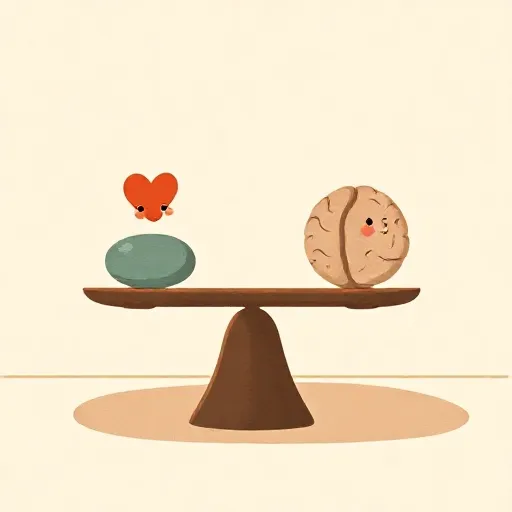
Whewell applied the same framework to morality. He believed human beings possess Fundamental Moral Ideas — Benevolence, Justice, Truth, Purity, and Order — that structure our moral experience. Conscience, he argued, is not a special feeling or a separate sense organ. It is simply reason exercised on moral subjects.
Just as in science, we must explicate these moral ideas through reflection. As we do, we gradually uncover necessary moral truths, or self-evident principles. But “self-evident” doesn’t mean everyone already knows them clearly. Like scientific ideas, moral ideas unfold over time. So morality can progress.
Mill attacked Whewell for this view, accusing him of turning the current customs of society into eternal truths. But that wasn’t Whewell’s position. Because moral explication is progressive, the fact that a rule isn’t yet fully seen doesn’t mean it isn’t a necessary truth waiting to be recognized. We can study laws and moral history as data to help clarify our ideas, but the standard of rightness comes from reason, not from whatever happens to be the status quo.
Why This Still Matters: Lego Bricks and the Universe

Whewell’s philosophy didn’t vanish into dusty books. Today, scientists still prize the kind of consilience he described. When evidence from genetics, fossils, and anatomy all converge on the same evolutionary story, that’s a modern triumph of the very test Whewell named. The idea that good theories don’t just explain old data but also take risks by predicting new facts is a cornerstone of how science works.
His biggest challenge to you is to notice the active role your mind plays every time you learn something. Think about how you figure out a pattern in a puzzle or game. You don’t just stare at the pieces; you try out ideas — about shapes, numbers, causes — and you see which one makes the pieces fit. Whewell would say you’re doing exactly what Kepler and Newton did: bringing your own concepts to the data and testing whether they create a true bond of unity.
The question of whether the deepest laws of nature are discovered or in some sense constructed by our minds is still wide open. And Whewell’s middle path — ideas and observations working together, with the hope of reaching truths that couldn’t be otherwise — remains a thrilling possibility.
Think about it
- Imagine a friend says, “Science is just looking carefully at the world. Theories are nothing but summaries of what everyone has seen.” How could you use Whewell’s story of Kepler and the ellipse to start a conversation?
- Can you think of a case in your own life where you understood something only after you found the right idea or word to organize it? Does that feel more like discovering a fact that was already out there, or like inventing something new?
- If a scientific theory predicts a surprising event that later happens exactly as predicted, does that prove the theory is definitely true, or could there be another explanation? Why might a scientist still trust it deeply?