Is Truth Just What We All End Up Believing?
A Bet About the Future
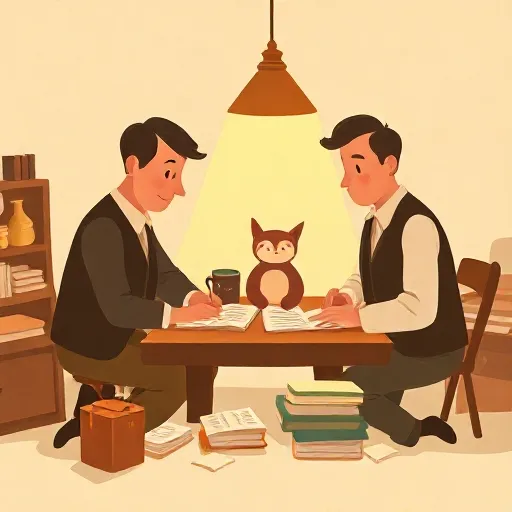
It’s 1878 in Cambridge, Massachusetts. A small group of scientists and philosophers are hunched over a worktable, arguing about a seemingly simple question: what does it actually mean to say a belief is true? One of them, Charles Sanders Peirce (1839–1914), a lean man with a quick mind and a fondness for precise language, has just offered an answer that sounds like a gamble. True beliefs, he says, are just the opinions that every investigator would agree on if they kept inquiring forever.
Peirce didn’t mean we should take a vote. He was a scientist and logician who wanted to clean up our ideas by asking what practical difference they make. If you call a belief “true,” how does that change what you do? His answer: it means you’re willing to bet that the belief will hold up under every future test, in every kind of inquiry. A true belief isn’t one you just stubbornly cling to — it’s one that would survive any challenge from doubt and evidence.
Peirce: Truth as the Limit of Inquiry
Peirce believed that the meaning of a concept like “truth” boils down to its practical bearings — the concrete effects it has on how we think and act. So what practical effect does describing a belief as true have? It marks that belief as dependable, as the kind of idea that can steer you through the world without crashing into contradictions or failed predictions.
He famously wrote that the opinion “fated to be ultimately agreed to by all who investigate” is what we mean by truth. He didn’t mean “fated” in a supernatural sense. He meant something like the inevitable result if you keep following the evidence without stopping. Over time he moderated his language, describing truth as “the ideal limit towards which endless investigation would tend to bring scientific belief.” You might not reach the limit — inquiry can go on forever — but truth is whatever you’d find if you did.
This view, called the pragmatic theory of truth, shifts attention away from abstract definitions. Peirce was skeptical of the correspondence theory of truth — the idea that true beliefs mirror reality like a photograph copies a scene. That picture might be “nominally” correct, he thought, but it tells you nothing about why we value truth or how we go about finding it. For Peirce, truth is about what happens in the messy process of moving from doubt to stable belief, not about a mysterious invisible link between a sentence and a chunk of the world.
James: Truth as What Works
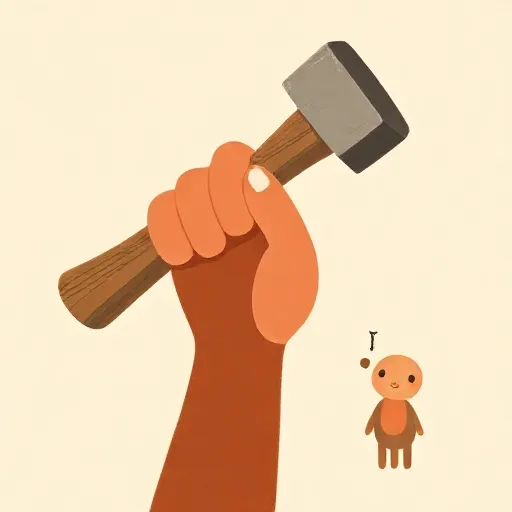
Peirce’s friend William James (1842–1910), a psychologist and philosopher with a talent for lively writing, popularized the pragmatic theory of truth — but with a twist that made many people uncomfortable. James said that true ideas help us “get into satisfactory relation with other parts of our experience.” They are like tools: they make us more efficient, helping us navigate from one piece of experience to the next without getting lost.
In his lectures collected as Pragmatism (1907), James argued that true ideas are useful and dependable. James wrote, “any idea that will carry us prosperously from any one part of our experience to any other part, linking things satisfactorily, working securely, simplifying, saving labor; is true for just so much, true in so far forth, true instrumentally.” He called this the “instrumental” view of truth. From this perspective, calling a belief true is like endorsing it as something you can rely on — and that reliability shows up in how it guides your actions.
Critics immediately pounced. Doesn’t this confuse truth with mere utility? Aren’t some false beliefs extremely useful? Imagine a comforting superstition that helps you perform better, or a lie that saves lives. And aren’t plenty of true beliefs utterly useless — like knowing the exact number of hairs on your head? James responded that truth must be understood in the long run and on the whole, not by instant gratification. But he never fully said how long the long run needed to be.
James also blurred a crucial line. He often seemed to say that verification is what makes an idea true. He wrote that truth “happens to an idea” — it becomes true through the process of being verified, just as a person becomes wealthy through acquiring money. This makes truth seem like a process or an event, not a stable property. And it opens the door to the worry that something could become true for a while and then stop being true later, which feels like saying the sunrise changes the facts.
Dewey: Truth as the Product of Inquiry
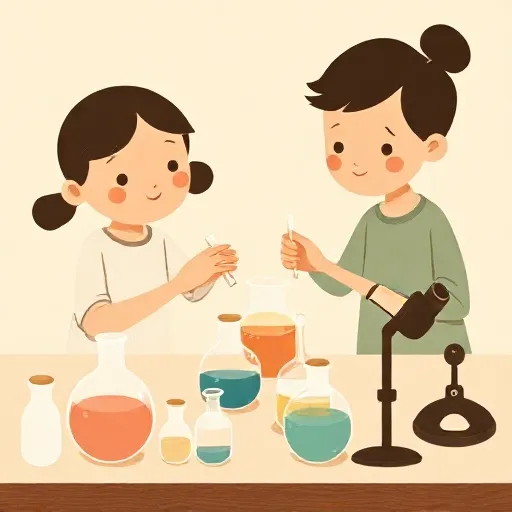
The third towering figure of classical American pragmatism, John Dewey (1859–1952), wrote surprisingly little about truth itself — his enormous book Logic: The Theory of Inquiry mentions “truth” only once. Instead he preferred to talk about warranted assertibility, a term that sounds like a mouthful but carries a down‑to‑earth idea: a claim is true exactly when we are warranted in asserting it because it has survived the best methods of inquiry we have.
Dewey saw science as an extension of ordinary trial-and-error problem‑solving. Cooking, fixing a small engine, or testing a hunch — all count as scientific in a broad sense. A truth, on his view, isn’t some eternal fact waiting out there. It’s the settled outcome of investigation. Before a claim has been tested through controlled inquiry, it’s not quite true or false; it’s just a proposal. Once the investigation is over and we have a judgment that answers our question reliably, we call it true.
Like Peirce and James, Dewey thought the correspondence theory was too abstract to be helpful. But he gave it a practical twist: correspondence isn’t about static mirroring; it’s more like a key answering to the shape of a lock, or a solution answering the demands of a problem. A true judgment “fits” reality not by copying it, but by working within it the way a well-designed gear fits a machine.
The Big Objections
From the start, the pragmatic theory of truth drew heavy fire. The most famous critic was the British philosopher Bertrand Russell (1872–1970). He pointed out a glaring problem: if truth just means usefulness, then every belief that furthers your purposes should count as true — but we all know that’s wrong. A deluded confidence that helps you win a race isn’t true. And plenty of obscure truths (like the atomic weight of some rare element) are resoundingly useless. “True” and “useful” simply aren’t the same thought.
A second objection runs deeper. Even if pragmatists aren’t defining truth as utility or assertibility, they seem to be offering criteria — ways to tell whether a belief is likely true — without first saying what truth itself is. Critics argue that you can’t have a reliable yardstick for truth unless you already have an answer to the metaphysical question “what makes a statement true in the first place?” Avoiding that question, they say, leaves the whole project incomplete.
And then there’s the charge that pragmatism makes truth too subjective. If truth is identified with being verified or assertible by us, then it seems to depend on our limited abilities to figure things out. What about buried secrets — facts that are true but that nobody will ever discover? A true statement about a forgotten event seems true now, even if all the evidence is gone. Pragmatists struggle to explain such mind‑independent truths without sliding back into the correspondence view they criticized.
Pragmatists offered replies. Some said they were never trying to define truth in the first place — they were giving a pragmatic elucidation, tracing how the concept of truth actually functions in our practices. Others challenged the idea that there’s a clean split between definitions and criteria. If meaning is tied to use, then explaining how we use “true” might be the only meaningful account we can have. Still, the debate remains unsettled. Many philosophers still think the pragmatic theory does a good job explaining why we care about truth, but a poor job saying what truth is.
Why the Fight Still Matters

You probably aren’t a 19th‑century scientist, but you face a version of Peirce’s bet every day. When you scroll past a shocking headline, hear a rumor, or try to decide which online source to trust, you’re using a rough‑and‑ready method of inquiry. You ask: does this claim fit with other things I know? Will it hold up if I dig deeper? Would other reasonable people, if they checked, end up agreeing?
Pragmatism doesn’t give you a magic formula for truth. But it reminds you that believing isn’t a private possession — it’s something that connects you to a community of inquirers. A belief that can’t withstand questioning is a fragile thing. And if you’re serious about getting things right, you have to keep testing your ideas, no matter how comfortable they feel.
The pragmatic theory also keeps the door open for truth in places where facts seem hard to locate. Moral claims, aesthetic judgments, mathematical statements — these aren’t the same as physical facts, but pragmatists argue they can still be true in a meaningful sense, because they answer to standards of evidence, coherence, and practice. Chasing an airtight definition of truth sometimes blocks the path of inquiry. Keeping that path open, as Peirce said, is the first rule of reason.
So the next time you find yourself in a lunchroom argument about what really happened, or whether a certain claim is “just true,” you’re stepping into the very puzzle that Peirce, James, and Dewey wrestled with. There’s no easy shortcut — but knowing that the argument is about more than words, about what it means to commit to a belief in front of everyone who might check, might just make the argument worth having.
Think about it
- If a belief makes you feel confident and helps you succeed, does that make it true? Why or why not?
- Can you think of something that is true but completely useless — and something false that is genuinely useful? What does that tell you about the link between truth and usefulness?
- Imagine you’re a detective with a theory that fits all the clues, but you have no way to know the real truth. How would you decide whether it’s right to act on your theory?