
What Makes Something a Sport, Anyway?
A foul the rulebook never imagined
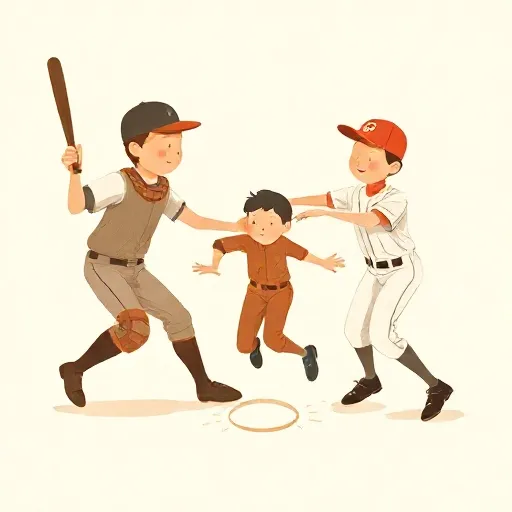
Picture a baseball game in 1887. Louisville is playing Brooklyn. A Louisville runner crosses home plate. Then, instead of heading to the dugout, he turns around and interferes with Brooklyn’s catcher — blocking him from tagging another Louisville runner who is charging toward home. The problem? The rulebook at the time said base runners could not interfere with fielders. But this player had already scored. He was no longer a runner. The written rules were silent.
The umpire had to decide: should he follow the rules exactly as written? Or should he do something the rulebook never authorized? He chose to invent a rule on the spot. He called the second runner out, because letting the interference stand would have turned baseball into a wrestling match. That umpire understood something important: a sport is more than the words in its rulebook.
This story gets at the biggest question in the philosophy of sport: what is a sport, really? Is it just a set of rules? Is it whatever players and fans agree it is? Or does every sport have a deeper purpose that the rules are supposed to serve? Three rival answers — formalism, conventionalism, and broad internalism — have been battling it out for decades. The fight matters because how you answer changes what counts as cheating, when rules should change, and why you play at all.
Suits and the grasshopper: a game of unnecessary obstacles

Bernard Suits (1926–2007) was once described as the most important philosopher of games you have never heard of. His starting point was a strange thought: what about games makes them games? Is there something every game shares — from chess to soccer to hide-and-seek — that a walk in the park does not?
Suits thought the answer was unnecessary obstacles. Imagine you want to put a little white ball into a hole in the ground. The easiest way is to walk over, bend down, and drop it. But golfers do not do that. They stand hundreds of yards away and hit the ball with a club. Then they walk after it and hit it again. The rules of golf forbid the most efficient method and demand a clumsier one. Suits called this the lusory attitude: you agree to follow those clumsy rules just so the game can exist.
For Suits, a game has four ingredients: a goal (put the ball in the hole), permitted means (a club, not your hands), rules that block efficient means, and the lusory attitude — players who accept those restrictions because they want to play. His shorthand definition: playing a game is the voluntary attempt to overcome unnecessary obstacles.
Then Suits turned to sport. He argued that sports are “games of physical skill.” That means the skill being tested has to be bodily — soccer tests running and kicking; chess does not, because you could play it by telling a computer your moves. Physical skill is what separates sports from board games and card games. But Suits later split sports into two kinds: refereed games like basketball, where you overcome rules-made obstacles, and judged performances like figure skating or diving, where you try to match an ideal of beauty and power. Not everyone agreed with the split, but Suits’ idea that sport is built around rules and physical skill became the foundation almost every later philosopher had to wrestle with.
The rulebook isn’t enough: when formalism breaks
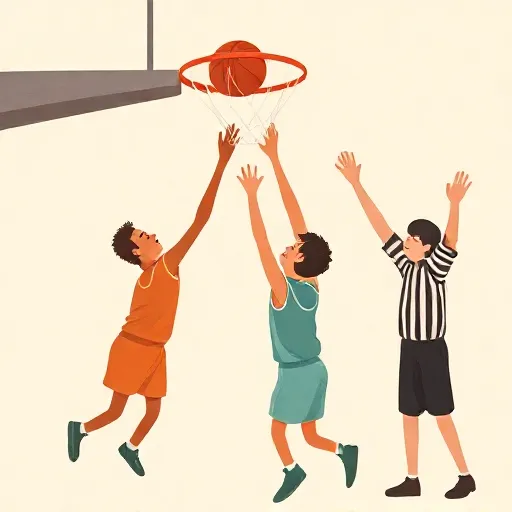
The view that sport is nothing but its written rules is called formalism. On this account, if you break a rule, you have stopped playing — end of story. This creates a problem right away. Think about a basketball player who commits a strategic foul to stop a fast break. Formalism says the game ended the moment the foul occurred. But that is not how anyone experiences it. The fouled player shoots free throws, and the game continues.
Formalists replied by distinguishing constitutive rules (ones that make the game what it is, like “soccer uses feet”) from regulative rules (ones that say what happens after a violation, like a penalty kick). But critics pushed back: where exactly does one kind of rule end and the other begin? A player who handles the ball once commits a foul governed by a regulative rule. But if every player started handling the ball, soccer would collapse into a different sport.
The deeper problem is that formalism cannot tell a good rule from a bad one. It cannot help you ask whether a rule should exist — only whether it is written. The umpire in 1887 could not be a formalist, because the rules were silent. He needed something more.
Unwritten pacts: the conventions that really govern the game
Conventionalism steps into the gap. Its pioneer, Fred D’Agostino, argued that every sport has an ethos: a set of unwritten, shared conventions that determine how the formal rules actually get applied. When a soccer player kicks the ball out of bounds so an injured opponent can receive treatment, no rulebook requires it. But everyone understands the obligation. Fail to do it, and you will hear about it from both teams.
Conventionalism explains something formalism cannot: why the same sport looks different in different contexts. Amateur pickup players often ignore the offside rule. In the World Cup, it is everything. The traveling rule in basketball gets called tightly in one league and loosely in another. Conventions fill the gaps left by the written word.
But here is the problem: if conventions determine what counts as “right,” then a genuinely horrible convention — say, an unspoken agreement to never pass to a teammate of a certain race — would seem to be justified, simply because it exists. This is the critical edge objection. Conventionalism describes how sport is played, but it struggles to say how it should be played. Some conventionalists, like William J. Morgan, have tried to fix this by identifying deep conventions — shared values, like the amateur ideal of playing for the love of the game, that can be used to critique the surface conventions that grow around them. But critics wonder whether the problem just gets pushed down a level: what judges the deep conventions themselves?
The umpire’s gamble: sport as a quest for excellence

The third answer, broad internalism (also called interpretivism), says both formalism and conventionalism miss something essential. Sport has intrinsic principles — values that precede both rules and conventions and make the whole practice make sense. Robert L. Simon, one of the view’s founders, argued that without principles like justice and the pursuit of competitive excellence, sport would be unintelligible.
On this view, the 1887 umpire was not just making things up. He was interpreting the rules in light of the sport’s deeper purpose: baseball tests running, throwing, and batting — not wrestling. To protect that purpose, he had to read a new rule into existence. John S. Russell, another broad internalist, put it this way: rules should be interpreted so the excellences the game is built to test are preserved and celebrated.
Simon’s version of broad internalism, called mutualism, goes further. It says competition is not really a “zero-sum” fight where only the winner benefits. Instead, it is a cooperative, “non-zero-sum” quest. You push me to be better; I push you. Even the losing player gains, because the challenge has called forth a higher level of performance. This is an ancient idea — Aristotle would have recognized it — and it echoes the Olympic ideal that sport cultivates human flourishing, not just gold medals.
Broad internalism has its own trouble, though. Critics say its central principles are too vague. What exactly does “competitive excellence” demand in a tight call? And can one set of principles capture everything sport is worth — or does sport have many goods, only some of which are about excellence?
Why it still matters: eSports, fairness, and your own backyard game

You might not be writing a rulebook or umpiring a professional game, but the questions at the heart of this debate show up all the time. When you play a video game competitively — an eSport — is it a sport? Suits said sport requires physical skill; a chess move means the same thing whether you whisper it or type it. But what about a game that demands millisecond reactions and precise thumb control? Is that enough to count?
When you commit a small foul in your own backyard soccer match because the other team did it first, are you cheating — or restoring fairness? Is it ever okay to break a rule if everyone else is already breaking it? And when you watch a gymnast nail a perfect routine, are you appreciating athletic excellence, or is something closer to the experience of looking at a painting happening in your mind? Philosophers of sport ask whether sport and art are cousins — and whether a scrappy, ugly win can ever be as valuable as a graceful loss.
These arguments are not just for academics in tweed jackets. They are for anyone who has ever argued about a bad call, felt a swell of admiration for an opponent who pushed them to their limit, or wondered whether winning really is the whole point.
Think about it
- If your favorite activity had perfectly clear rules and no one ever disagreed about them, would the game be more fair — or more boring? Could a game be so rigidly fair that nobody wanted to play it?
- Imagine you are the 1887 umpire. You know the written rules do not cover what just happened, but you also know what kind of contest the players signed up for. What would you do, and how would you justify it?
- You are playing a team sport, and you know several of your opponents are secretly breaking a rule that is rarely enforced. Do you have a duty to your teammates to break it too? Or do you have a duty to the game to stay clean, even if it means losing?