Is There a Hole in Spacetime? The Puzzle of Singularities
A Tear in the Cosmic Fabric
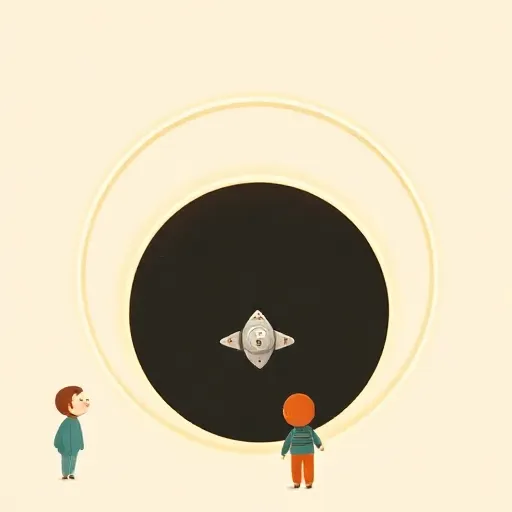
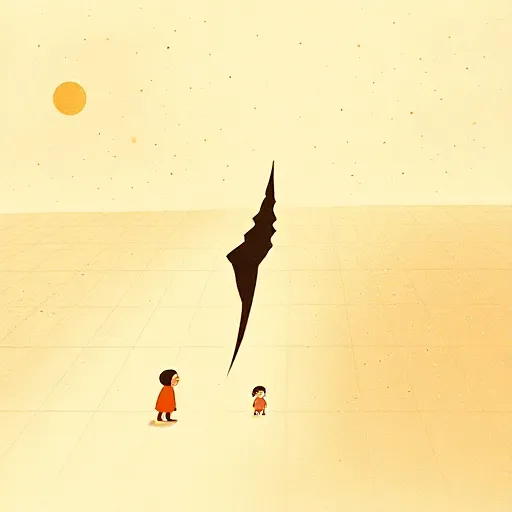
Imagine you’re piloting a spaceship toward the darkest thing in the universe: a black hole. Outside your window, stars smear into arcs of light. The black sphere ahead swallows everything. You know that once you cross its edge — the event horizon — no signal, no engine, not even a laser beam can pull you back. You drift inward, and your clocks start behaving oddly. Then, in the very center, something impossible happens. The whole grid of space and time seems to tear. The laws of physics stop giving answers. That catastrophic edge is a spacetime singularity.
A singularity is not just an explosion or a very heavy lump. It is a place — or maybe not even a place — where curvature (the bending of spacetime that we feel as gravity) grows without limit. Time and space as we know them break down. For a physicist, that thought feels like a road suddenly ending in midair. But what exactly is that edge? Is it a real thing? And if it’s real, can we ever understand what happens there?
Paths That Run Out
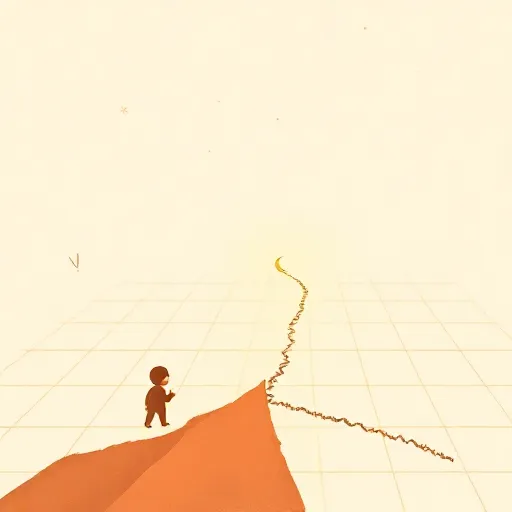
Philosophers and physicists often describe a singularity with one of two pictures. The first is an incomplete path. Think of your life as a line through spacetime, a world-line. Each event — your first day of school, your last birthday — is a point on that line. In an ordinary universe, that path can always be extended further into the future or the past. But a singular spacetime contains paths that, after a finite time, simply stop. You run out of universe. It’s like walking down a corridor and finding no door, no wall, just nothing. The path is inextendible: you cannot continue, not even by imagining the corridor stretching further.
The famous singularity theorems of Roger Penrose (born 1931) and Stephen Hawking (1942–2018) used this idea. They showed that if some very general conditions hold (like energy never being negative), then certain paths must be incomplete. Our own universe provides an example: trace any past-pointing path backward, and you eventually hit the Big Bang. Before that, there is no “before.” The path simply begins a finite time ago.
But there’s a catch. What if the path ends only because our model of spacetime is too small? Imagine a flat sheet of paper with a hole cut out of it. A path that passed through that missing spot would appear to stop. But if we fill the hole, the path continues. Physicists therefore usually demand that spacetime is maximally extended — as big as it can possibly be. If even then a path can’t be continued, we have a real singularity. This way of thinking relies on the notion of path incompleteness, which today is the most widely used definition of a singularity.
Missing Points and the Big Bang

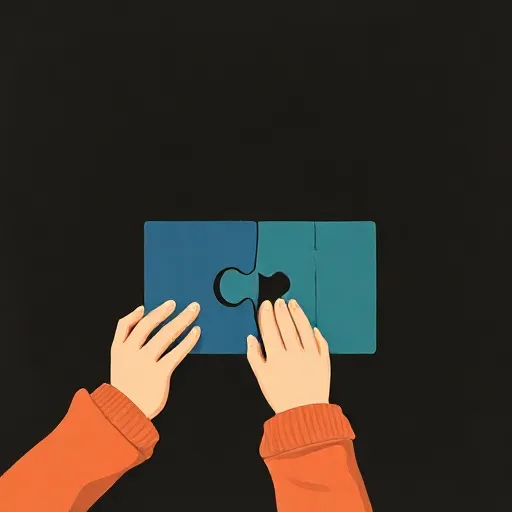
The second picture is perhaps more intuitive: a singularity is a set of missing points in spacetime. A hole. Couldn’t we just glue in a boundary and mend the tear? That turns out to be deeply puzzling.
Consider the Big Bang again. We often say it happened “13.8 billion years ago,” but that language can mislead. There is no moment labeled “cosmic time zero” that we can point to. The early universe unfolds after the Big Bang, but the Bang itself sits outside time as if the first page of a book were missing. If we try to add a point for the Bang, we run into trouble. Any such boundary point would end up being infinitely close to every event in the later universe — a kind of weird blender where the beginning of everything touches your own head right now.
Compact regions offer an even stranger problem. Some spacetimes are compact, meaning they “already contain every point they could possibly be expected to contain,” like a closed loop with no loose ends. Yet they can still have incomplete paths. There’s no obvious place to staple on extra points. For these and other reasons, the missing-points approach remains highly controversial. Most physicists rely on path incompleteness as the default definition, even though it doesn’t give us a neat place to hang the name “singularity.”
Black Holes and the Cosmic Censor
Once a massive star collapses into a black hole, its matter is trapped behind the event horizon. General relativity predicts that, inside, all paths are forced inward, ending at a central singularity. Nothing escapes. But what if a singularity could form without an event horizon? A naked singularity would be one visible to the whole universe, uncloaked by any horizon.
Penrose and others worried that naked singularities would wreck our ability to predict anything. The breakdown of physics at the singularity could spew out unpredictable garbage — old TV shows, lost socks — into the causally connected universe. In that case, determinism would fail completely. So Penrose proposed the Cosmic Censorship Hypothesis: physically realistic singularities are always hidden behind an event horizon. In a sense, nature has a safety lock that keeps the breakdown quarantined.
The idea is not yet proven, and challengers have pointed to possible counterexamples. Still, the hypothesis shapes how we think about black holes. It also raises a deep question: if we can never observe a naked singularity, in what sense can we claim it doesn’t exist? The debate remains one of the liveliest in all of relativistic physics.
Singularities: Real Parts of the World, or Signs of a Broken Theory?
You might wonder: do physicists actually believe singularities live inside black holes or at the Big Bang? That depends on whom you ask. One camp argues that singularities are real, astonishing features of our universe — places where the fabric of reality truly tears. The No-Hair Theorems, for instance, tell us that black holes are absurdly simple objects: they’re described only by mass, spin, and electric charge, no matter how complicated the stuff that fell in. That eerie simplicity hints that something profound is going on.
Another camp, however, insists that singularities are a warning. They signal that general relativity has pushed past its limits. When a theory predicts an infinite bend in spacetime, maybe it’s whispering: “I can’t go further. You need a better theory.” Many physicists hope that a future theory of quantum gravity — merging Einstein’s ideas with quantum mechanics — will smooth out the sharp edges and show that the singularities were just artifacts of an incomplete model. If that’s true, then singularities aren’t real; they’re the places where our current map of the world simply runs out.
Neither side has yet won. The puzzle persists because it forces us to confront what a physical theory can tell us, and what it means for a piece of mathematics to “exist.” The debate over singularities is, at its heart, an argument about the very edge of knowledge.
Think about it
- If a theory predicts a point where it stops working, should you trust that prediction? Why or why not?
- Can something be real if it has no location — like a hole in spacetime that is nowhere exactly?
- If we could never see a naked singularity even if one existed, would there be any reason to believe it’s there? Or would it be like an invisible dragon that leaves no tracks?