
Are You Seeing the World—or Just Colored Patches in Your Mind?
What Are You Really Seeing?

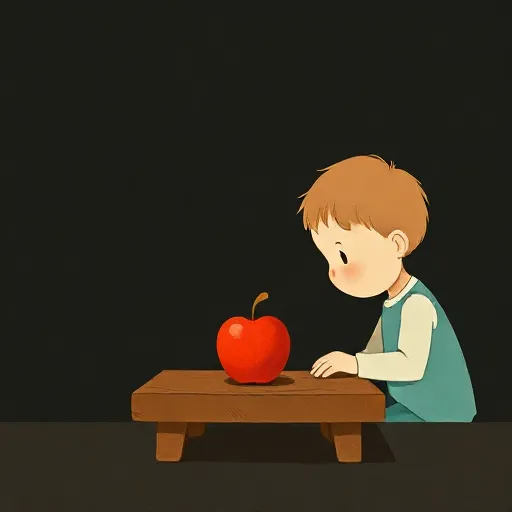
Imagine you are sitting at a table in a garden. On the table sits a white coaster, and next to it rests a cut daisy with bright yellow petals. Now, instead of seeing a coaster and a flower, try to see only shapes and colors. If you look from a slight angle, the coaster becomes an oval white patch. The daisy is a yellow circle with white leaf-like shapes. In that moment, you are focusing on what early twentieth-century philosophers called sense data—the simplest bits of color and shape that appear to you before your brain labels them as objects.
The term was made famous by G. E. Moore (1873–1958) and Bertrand Russell (1872–1970). They suggested that these patches are what you are directly and immediately aware of. The coaster, the flower, the table—those come later, after your mind makes a leap from colored patches to full objects. This raises a big question: are we ever in direct contact with the real world, or do we only ever see a private show of shapes and colors inside our own minds?
The Penny That Looks Oval—and Other Head‑Scratchers

Take a round penny and hold it flat so you look straight down. It looks perfectly circular. Now tilt it away from you. It looks oval—maybe even a thin rectangle when seen from the edge. Yet you know the penny hasn’t changed shape. Russell used observations like this to support what is called the Argument from Perceptual Variation. He reasoned: what you see changes shape as you move, but the real penny does not. Therefore, what you directly see cannot be the real penny. You must be seeing something else—a sense datum, an oval patch of brownish copper that shifts as you tilt.
David Hume (1711–1776) had already made a similar point. He noticed that a table seems to shrink as you walk away from it. The real table stays the same size. So what shrinks must be an image in your mind. Add in illusions, like a straight stick that looks bent when partly underwater. In that case you surely aren’t seeing the stick itself, because the stick is still straight. So the immediate object of your perception appears to be a sense datum, not the physical thing.
The Sense‑Data Picture

The early sense-data philosophers, including Moore, Russell, C. D. Broad (1887–1971), and H. H. Price (1899–1984), mostly agreed on a few core ideas. First, sense data are what we perceive directly, without anything in between. You are acquainted with them, much like meeting a friend face-to-face. Second, they have exactly the properties they seem to have. If you experience a reddish-brown patch, that patch really is reddish-brown in your awareness. Third, being aware of a color patch doesn’t automatically tell you there is an object like a table or a penny behind it—that’s a separate mental step. Fourth, you cannot be wrong about the color and shape of your own sense data while you have them. You know them with certainty. Fifth, your sense data are private; no one else can peer into your mind and see your patches. Finally, the act of sensing and the datum sensed are two different things. Seeing red is not the same as the red you see.
Many early theorists even thought sense data weren’t mental. Russell sometimes treated them as “third things,” neither physical objects nor mental states, that exist whether anyone senses them or not. He called possible but unsensed patches sensibilia. Later, many philosophers came to view sense data as mental objects, like pictures in a private gallery.
When Ordinary Language Talks Back

Not everyone was convinced. J. L. Austin (1911–1960) argued that the whole talk of sense data ignores how we actually use words. When the penny looks oval, we don’t say, “I see an elliptical sense datum.” We say, “The penny looks elliptical.” He warned against the sense‑datum fallacy: jumping from “X appears F” to “There is an F thing.” Just because something appears oval doesn’t mean an oval object exists.
Austin also pointed out that things like cats don’t have a single fixed shape—they’re always stretching, curling, or flattening. If perception gave us a shape patch for a cat, which patch would it be? Such puzzles led to alternative theories. In adverbialism, the shape isn’t an object you see—instead you see the penny oval‑ly, just as you might walk slowly. The “oval‑ly” is a way of perceiving, not a thing. In intentionalism, your mind represents the world as containing an oval shape, but that representation is a state of mind, not a literal oval object inside you. Both views explain variation and illusion without positing sense data.
Seeing the World in 3D: The Gibsonian Challenge

Another big challenge came from psychologists and philosophers who insisted that we don’t start with flat patches. The perceptual psychologist James J. Gibson (1904–1979) argued that normal seeing is of a three‑dimensional world directly. When you look at a dinner plate from an angle, you see a round plate at a slant—not an elliptical blob. It takes a special effort, like the squinting stare artists use to draw, to see the flattened shape. Gibson claimed the traditional “snapshot” of two‑dimensional patches is artificial, not the raw material of perception.
Earlier, Gestalt psychologists had shown that we experience size constancy. A friend standing far away doesn’t look tiny; she looks normal‑sized, just farther off. If perception gave us only a patch of a certain size, that patch would shrink with distance. The fact that we see a stable, three‑dimensional world full of objects suggests the sense‑data picture gets the starting point wrong. You’re already in touch with the world, not with colored shadows inside your head.
Why This Still Matters: Pixels, VR, and the Real World

So does the argument still matter? Yes. If all you ever directly know are sense data, then you must infer the existence of the real world outside your mind. That’s a shaky bridge. When you put on virtual reality goggles, you see colored patterns that seem like a solid world, but you know they’re created by a computer. Right now, you might be having dinner, reading this, or sitting in a garden—but how do you know you aren’t in a perfect simulation? The sense-data view makes the question feel urgent. However, if perception is direct, as Gibson and many contemporary philosophers argue, then we really do see the table, the coaster, and the daisy themselves. The debate connects directly to how we understand knowledge, technology, and even what it means to be a person in a world of things.
Think about it
- If you look at a round cup from an angle and it looks oval, do you believe there’s an oval thing in your mind? Or do you just see the cup differently? What would be the difference?
- Imagine you are in a perfect VR simulation that feels exactly like real life. Could you ever know for sure that you aren’t in a simulation? What does your answer say about how perception works?
- Your friend claims she saw a transparent, floating shape and thinks it was a ghost. Another friend says it was just a trick of the light. Can there be sense data that don’t come from real objects? How would you decide?