The Secret Assumptions Hiding in Every Sentence You Speak
The King of France Is Bald—But There Is No King
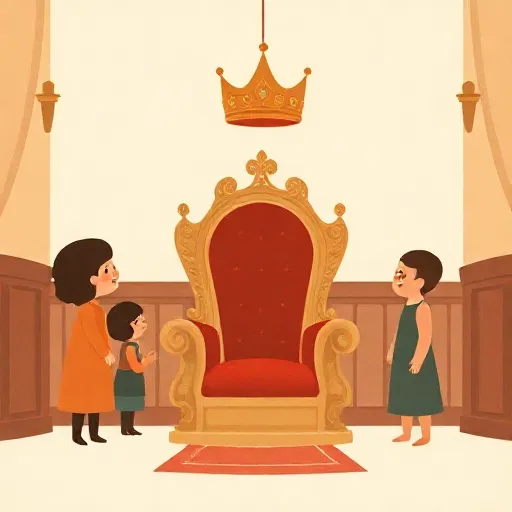
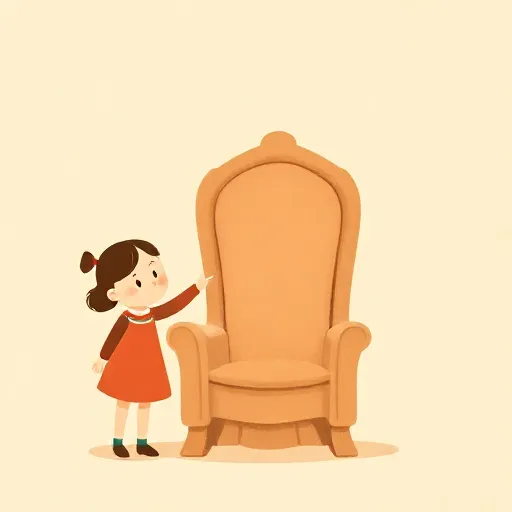
It is 1905. The mathematician and philosopher Bertrand Russell (1872–1970) asks you to think about a simple sentence: “The present king of France is bald.” One problem: France is a republic. There is no king. So is the sentence false? Russell said yes. He argued that inside the sentence lurks a hidden claim: “There is a king of France.” Since that hidden claim is false, the whole sentence is false.
Decades later, the philosopher P. F. Strawson (1919–2006) disagreed—hard. He said the sentence isn’t false; it is broken. It tries to refer to something that doesn’t exist, and because of that it doesn’t even get to be true or false. It is like asking a friend “What color is the music?” when music doesn’t have a color. The question just doesn’t work.
Strawson was following a trail blazed by Gottlob Frege (1848–1925). Frege noticed that certain words—like “the”—carry an extra requirement. When you say “the X,” you take it for granted that there is an X. Philosophers now call these hidden requirements presuppositions. A presupposition is a piece of information a sentence quietly assumes in order to be meaningful. If that assumption fails, the sentence may sound weird or even fall apart logically.
This tiny puzzle about a king who doesn’t exist launched a century of argument. What are presuppositions? Where do they come from? And what happens when they are wrong?
How Hidden Assumptions Survive “Not” and “If”
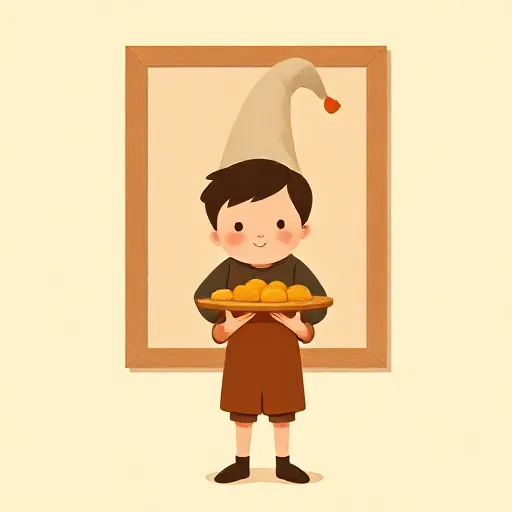
Presuppositions have a special trick. Imagine your friend says, “It wasn’t the knave who stole the tarts.” Even though she denies the stealing, you still walk away knowing two things: there is a knave, and there are some tarts. Those hidden bits didn’t disappear. Philosophers call this projection: the presupposition survives when you wrap the sentence inside words like not, if, maybe, or turn it into a question.
Contrast this with an ordinary entailment—the plain information a sentence directly states. From “The knave stole the tarts” you can conclude “The knave did something illegal.” But if you say “It wasn’t the knave who stole the tarts,” that conclusion vanishes. Entailments are fragile; presuppositions are stubborn.
Certain words act like triggers that fire off presuppositions. A presupposition trigger is any expression that automatically loads a hidden assumption into a sentence. Opening a sentence with “the” (the knave, the tarts) assumes the thing exists. The verb “stop” (I stopped eating candy) assumes you used to do it. “Regret” (She regrets shouting) assumes the shouting happened. Even the word “too” (I like it, too) assumes someone else likes it. Sentences are packed with these triggers without us noticing.
This projection behavior gives philosophers a tool, often called the negation test. If a piece of meaning hangs around after you add “not,” it is probably a presupposition. But the test isn’t perfect. Sometimes you can explicitly cancel a presupposition. “It wasn’t the knave who stole the tarts—there is no knave here!” then the assumption evaporates. That’s cancellation, and it shows presuppositions aren’t always bulletproof. Real conversation is messier than a tidy rule.
Maybe It Isn’t the Words—It’s the Speakers

The philosopher Robert Stalnaker (b. 1940) looked at these stubborn hidden meanings and flipped the question. He said: stop asking what sentences presuppose. Ask what people presuppose when they talk. Stalnaker introduced the idea of pragmatic presupposition. A presupposition isn’t glued into a word like “the.” It’s an expectation a speaker has about the common ground—the set of facts both people in a conversation already accept.
Suppose you say, “I know that it’s raining.” You’re treating “it’s raining” as something you and your listener both agree on. If your listener actually has no idea whether it’s raining, you’ve made a conversational misstep. The problem isn’t that the word “know” broke; it’s that you guessed wrong about what’s shared.
Stalnaker’s view explains why some presuppositions seem to vanish. A news reporter says, “I don’t know that Mullah Omar is alive. I don’t know if he’s dead either.” The verb know usually triggers the presupposition that its complement is true. But the speaker here makes it clear she does not assume Omar is alive, and that’s fine—the common ground wasn’t set up that way. No meaning failure happens; the conversation simply adapts.
For Stalnaker and the philosophers who followed him, presuppositions live in the shared mental space between speakers. That shifts the mystery: instead of asking why certain words force hidden meanings, we ask how hearers figure out what speakers are taking for granted on the fly.
Updating the Conversation as You Go
Stalnaker’s common ground is a set of possibilities—all the ways the world might be that everyone accepts. The philosopher Irene Heim (b. 1954) made that idea dynamic. In her picture, every sentence you hear is an instruction to update that shared picture. When someone says, “The knave stole the tarts,” you check whether your common ground already contains the required presuppositions. If yes, you add the new information. If no, the update might fail, or you might quietly fix the context—more on that soon.
The clever part is how this handles complex sentences. Take “If there is a knave, then the knave stole the tarts.” A static approach would say the whole sentence presuppose there is a knave, but that feels wrong—the sentence doesn’t commit you to a knave’s existence. Heim’s dynamic system changes the context as it processes each piece. First you temporarily add “there is a knave” to the context. Then you evaluate the second part inside that enriched local context. The presupposition that there is a knave is now satisfied right there, inside the “if.” So it never needs to be part of the original global context. The presupposition is, in effect, trapped inside the conditional.
This idea—that presuppositions must be satisfied in the local context where their trigger sits—explains a lot. It predicts that “If the knave stole the tarts, then there was trouble” doesn’t presuppose a knave; rather, it carries a weaker conditionalized presupposition: “If there was trouble, then there is a knave.” Real speakers don’t always walk away with that exact conditional, but the machinery shows how meaning builds itself step by step rather than arriving all at once.
When Assumptions Are Missing—We Just Add Them

Real conversation is sloppy. People blurt out sentences whose presuppositions aren’t yet in the common ground. If someone says, “My brother is a wizard,” and you didn’t know they had a brother, you don’t freeze. You quietly adjust your mental picture: okay, they have a brother, and he’s supposedly a wizard. Philosophers call this silent fix accommodation. The listener treats the new information as if it had been there all along.
Heim and others found that hearers prefer to accommodate presuppositions at the top level—global accommodation—rather than tucking them into a small corner of the sentence. If I say, “Maybe Betty is trying to give up drinking,” and you didn’t know Betty used to drink, you’ll add “Betty used to drink” to the overall conversation, not just to the “maybe” possibility. That preference is so strong it has become a rule of thumb: global accommodation comes first.
But accommodation isn’t always easy. Some triggers resist. If I walk up to you and say, “I’m twelve, too,” without anyone mentioning an age, it sounds bizarre. The word “too” demands a very specific, salient hook. Descriptive phrases like “the lonely carpenter” are also hard to accommodate out of the blue—they want a connection to something already in the conversation. Rich descriptions with obvious links (like “Fred’s sister”) accommodate smoothly. The challenge is to explain why: it seems that for accommodation to work, the new information must be uncontentious and easy to tie to what you already know.
A tricky issue called the proviso problem shows that sometimes a conditionalized presupposition gets strengthened into a flat claim. “If Theo is in a generous mood, he will bring his wetsuit” can end up simply conveying that Theo has a wetsuit, not just “if generous then has wetsuit.” Sorting out when and why that happens remains one of the open questions that keeps philosophers busy.
Why It Still Matters: The Unsaid Shapes Your World
You hear presuppositions every day. A friend says, “I’ve finally stopped procrastinating.” She just told you she used to procrastinate. An advertisement claims, “We know that you deserve the best.” That quietly plants the idea that you deserve the best, as if it’s already settled. A politician says, “I have not stopped fighting for working families.” Even in the denial, the sentence slips in the suggestion that fighting was happening before, and maybe still is.
Being able to spot presuppositions is like having X-ray vision for language. It helps you notice when someone is stacking the deck without arguing. It also helps you understand how fiction works. When you read, “The dragon breathed fire,” you don’t need to believe dragons exist. You simply accommodate that assumption inside the story. This is the same machinery philosophers study, repurposed for make-believe.
For over a hundred years, thinkers have disagreed about whether presuppositions are baked into the meaning of words, or float between speakers as shared expectations, or get computed on the fly as we update the conversation. There’s no final answer yet. But the question touches everything: how we tell truth from nonsense, how we negotiate what we believe together, and how we squeeze whole background stories into a single sentence. The secret assumptions hiding in your words are doing real work—and now you can see them.
Think about it
- Your friend says, “I finally finished that video game.” What does she assume you know, without ever saying it? If she had never started the game, should you call her a liar, or just confused?
- A social media post says, “I regret that people still ignore this problem.” What hidden claim is being slipped in, and how could you gently challenge it without sounding rude?
- When you read “The wizard’s spell saved the village,” you don’t object that wizards aren’t real. Instead, you play along. What does that tell you about how presuppositions work in games, stories, and jokes?