Do You Figure Out Right from Wrong, or Just Feel It?
A Cold Morning in Cologne, 1250
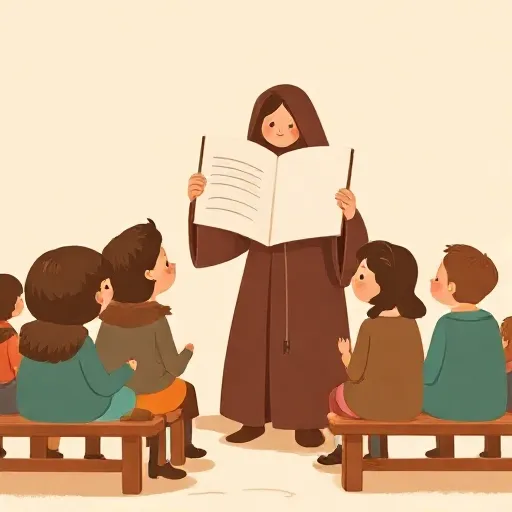
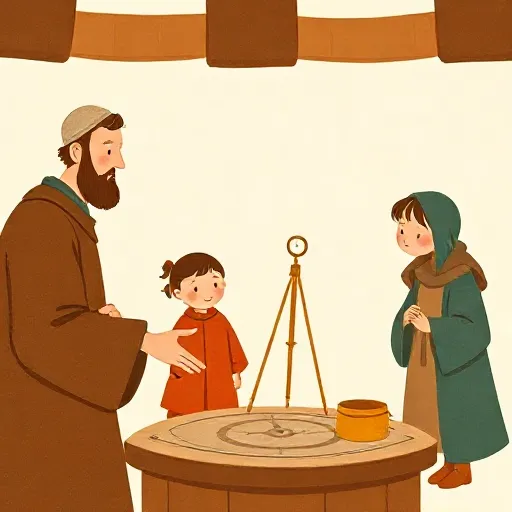
You sit on a hard wooden bench in a lecture hall. The teacher, Albert the Great (c. 1200–1280), lifts a newly translated book — Aristotle’s Nicomachean Ethics — and asks how we know what’s good. Some students whisper that you just feel it, like wanting a warm fire on a cold day. Others insist you figure it out step by step, the way you solve a math puzzle. This question split the sharpest minds of the Middle Ages into two rival camps. The fight was about practical reason: the part of your mind that decides what to do.
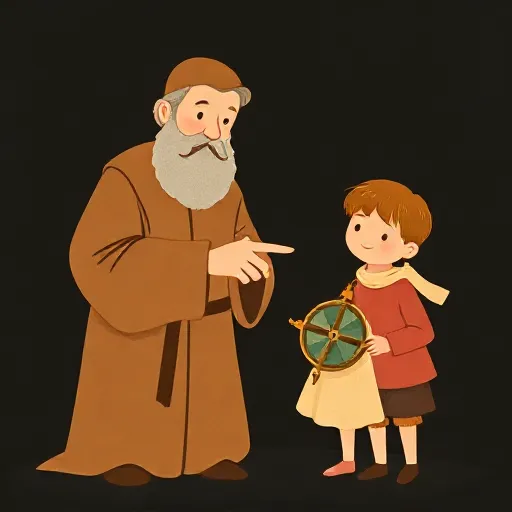
One group, led by Albert and his famous student Thomas Aquinas (1225–1274), thought moral choices work like a silent deduction. Your mind starts from an obvious rule and draws a conclusion — almost like a scientist. The other group, Franciscans like John Duns Scotus (c. 1266–1308) and William of Ockham (c. 1287–1347), said that picture robs you of freedom. For them, the will is so free it can leap right past what reason recommends and choose something else entirely.
The Dominican Idea: Moral GPS
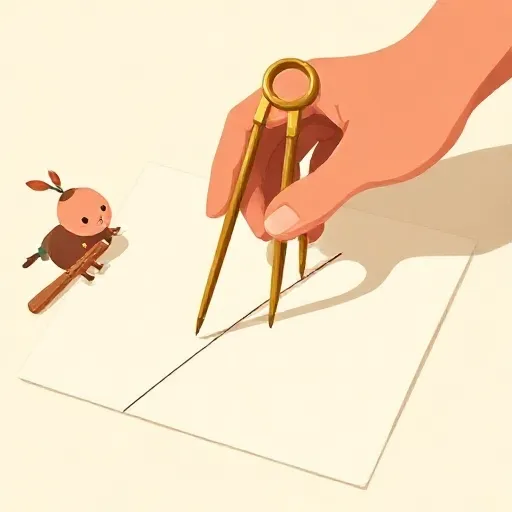
Aquinas and Albert built their theory on a simple observation: every action aims at something we think is good. Even stealing a cookie aims at the goodness of sweetness; the problem is that it tramples on other goods like fairness. So if you could strip away mistakes, you’d find a built-in compass. Practical reason is the mind working out what to do by applying a first principle the way geometry applies “things equal to the same thing are equal to each other.”
The absolute starting point, they argued, is: do good and avoid evil. This isn’t a rule you learn from parents; it’s something your mind just sees when it understands what “good” means. Good is “that which all things seek,” so any choice necessarily chases a good. From that seed, your reason can grow more specific rules — call them natural law — like “return what you borrow” or “don’t harm an innocent.” Aquinas called the mental habit that spots these first principles synderesis (sin-DAIR-uh-sis), a built-in detector of universal moral lights.
The actual skill of figuring out what to do in a messy situation is prudence — not caution in the modern sense, but the ability to deliberate, decide, and steer the whole process toward action. Prudence takes the universal rule and works out the proper conclusion for right here, right now. But here’s the catch: because human actions are tangled and changeable, practical reason never gets the perfect certainty of pure math. The further you move from the big rule down to the concrete case, the more wiggle room and possible error creep in.
For Aquinas, the will — the part of you that wants and chooses — isn’t a loose cannon. It’s rational appetite: it hungers for what the intellect presents as good. You can’t choose something that looks completely evil to you. The will is free only in the sense that it can pick between different goods, or make a mistake in reasoning and chase a good in the wrong way. The entire machine is measured by eternal law, the order in God’s mind that sets what genuinely leads to human fulfillment. So a truly free choice and a truly good choice never clash; to choose against the natural law would be like choosing to stub your toe for fun — possible only through a slip in the intellectual deduction, not a grand act of freedom.
The Franciscan Explosion: The Will Fights Back

Not everyone bought this tidy picture. Scotus looked at the Dominican moral machine and asked a devastating question: if your intellect forces you to choose the good it detects, where is praise or blame? A calculator that spits out the right answer isn’t good; it’s just working. For an act to be morally good, Scotus insisted, the will must be free to choose against the intellect’s advice. Even when you do the right thing, you could have done otherwise — and that power is what makes you responsible.
Scotus still kept one anchor: the first principle “God should be loved” is so deeply woven into reason that not even God could release you from it. The first two commandments of the Decalogue — worship God and reverence God — are absolutely unalterable. But beyond that, Scotus opened the door to the idea that moral laws depend on God’s free commands rather than on a necessary rational structure. The will, in his eyes, remains radically self-determining; it commands itself, and that self-command is the root of morality.
Ockham walked through that door and slammed it behind him. He thought the will is so free it can choose something that is neither really nor apparently good — it can say no to happiness itself. Even after death, Ockham held, the will could refuse its own perfection. Morality, on this view, doesn’t bubble up from the nature of things; it rests entirely on God’s command. God could, in sheer power, command a human being to hate him, and that command would be morally binding. That doesn’t mean Ockham thought God would actually do that, but the point is loud: the goodness of an action isn’t a fact we discover; it’s a relationship of obedience between a free will and a free God. An act that follows every rational rule perfectly still isn’t virtuous unless the will freely consents to obey the divine command. Virtue lives in the will’s “yes” to God, not in the intellect’s correct map.
Not Quite Aristotle, Not Yet Kant
The medieval debate didn’t stay medieval. When Immanuel Kant (1724–1804) described practical reason centuries later, he sounded startlingly familiar. For Kant, a rational being can act according to principles it gives itself — the will just is practical reason, not a separate appetite nudged by natural inclinations. A good will isn’t good because it achieves some pleasant end; it’s good simply because it wills in accordance with universal law. That self-legislating autonomy was Kant’s gold standard.
Aquinas and Albert had already argued that practical reason, when it works properly, conforms to a universal law that matches human nature. In that sense, they share something of Kant’s esteem for law-shaped freedom. But they never gave up the idea that the will naturally inclines toward the good, like a plant toward light. Kant would have called that a dangerous reliance on subjective desire. Scotus and Ockham, meanwhile, agreed with Kant that freedom is central — but they grounded it in obedience to divine commands, which could in principle change, whereas Kant’s moral law is necessary and the same for all rational beings. So the medieval battlefield prefigures modern arguments: is morality discovered through reason, commanded by a free will, or some mix of both?
Why the Old Feud Still Sits Next to You

You face the same puzzle the Cologne students faced. When you share your lunch with a friend who forgot theirs, did you deduce that sharing respects a natural law about kindness, or did something in you simply leap toward the good without a mental proof? Maybe both descriptions feel partly true. The Dominicans were onto something: your mind does hunt for reasons, and you feel weird when your actions don’t match your best judgment. Yet the Franciscans were onto something too: sometimes you stand in front of a choice and feel a raw, almost stubborn sense that you could do the opposite, no matter what your reasons say — and that feeling seems central to being a person, not a robot.
This isn’t just dusty history. It shapes how we think about blame, praise, and second chances. If you’re just a reason-following machine who bungled the deduction, should anyone be angry at you? If your will is a radical, uncaused chooser, what does it even mean to “grow” in wisdom? The medieval thinkers didn’t settle the fight, but they gave us the words — practical reason, natural law, synderesis, will — and the sharp questions that keep the dinner table conversation alive. Next time you pull your blanket off in the morning, ask yourself: am I figuring out the good day, or am I freely deciding what it will be?
Think about it
- If someone does a good deed only because they logically worked out it was correct, do you admire them less than someone who just naturally felt like doing it? Why or why not?
- Imagine a button that makes you always obey your best judgment. Would you press it? What would you gain, and what might you lose?
- Could a rule be morally right even if the most powerful authority in the universe commanded the opposite? Would you still follow the rule, and why?