

Is There Really Such a Thing as Mexican Philosophy?
A Nun Who Dared to Think for Herself

In 1690, a convent in Mexico City was not a quiet place. Inside, Sor Juana Inés de la Cruz (1651–1695) filled her cell with books, maps, and scientific instruments. She was a nun, but she was also a poet, a scientist, and one of the most daring thinkers in the Americas. The Royal and Pontifical University of Mexico would not let a woman enroll. So Sor Juana taught herself. She wrote a long poem called Primero sueño (“First Dream”) that shows a soul journeying through the night, using both science and a hunger for God. It was philosophy wrapped in verse.
Sor Juana did something new. She asked what it means to think as a woman born in the Americas. She argued that women had the same right as men to study philosophy and theology. She joked that if Aristotle, the great Greek thinker, had ever had to cook, he would have written even more. And she insisted that American-born people—not just Europeans—could create knowledge. In her, you can already hear a question that would echo for centuries: Is there such a thing as a truly Mexican philosophy, or is it just ideas from somewhere else, repeated in a new place?
The Great Debate: Philosophy in Mexico or Mexican Philosophy?

Many philosophers today refuse to talk about “Mexican philosophy.” They say there is only philosophy that happens to be done in Mexico. These thinkers point out that for over 500 years, people in Mexico have used ideas from Europe—Scholasticism, Enlightenment liberalism, and later existentialism and Marxism. The questions, methods, and even the terminology, they claim, are borrowed. A few, like the writer Roger Bartra (born 1942), have even suggested a “post-Mexican” kind of thought: philosophy produced in Mexico that no longer aims to represent anything specially Mexican.
But others disagree sharply. They argue that beneath the surface, certain themes truly belong to Mexico. Think about the shock of conquest, the mixing of Indigenous and Spanish cultures, and the long experience of being treated as less than fully human by colonial powers. Those experiences, they say, have generated unique ways of thinking about identity, about being “in-between” worlds, and about liberation. Some even speak of a trans-Mexican philosophy—philosophical work done by Mexicans and Mexican-Americans together across borders, not defined by a map. So the quarrel is not just about facts. It is about what philosophy itself is allowed to be.
Before the Spanish: Poets Who Questioned the Gods
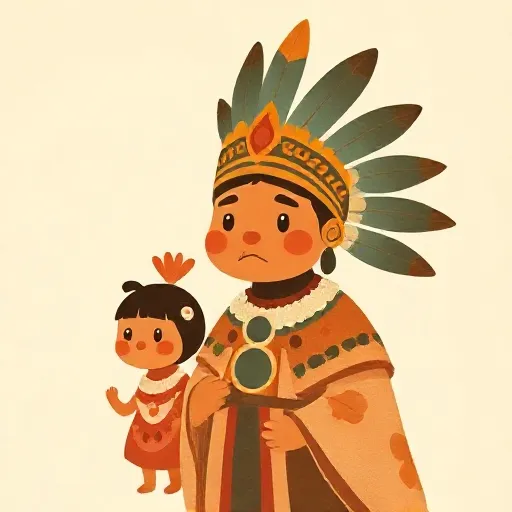
Long before the Spanish arrived, the original peoples of Mesoamerica had sophisticated systems of belief. For centuries, most historians did not call those systems philosophy. They saw them as religion or mythology. Then, in 1955, the scholar Miguel León-Portilla (1926–2019) published a book with a provocative title: La filosofía náhuatl—Náhuatl philosophy. He gathered ancient texts and showed that the Mexica (the people we often call Aztecs) asked deep questions: What lasts in a world of change? How should a human life be lived?
A powerful example is King Nezahualcóyotl (1402–1472) of Tezcoco. In his poetry, he doubted that gods or human works could escape death. Gold and jade can break. A human body withers. Yet he found meaning not in permanent things, but in flor y canto—“flower and song,” his name for art and beauty. Poetry, he believed, outlasts even the gods’ secret plans. Some scholars compare him to ancient Greek thinkers like Heraclitus. Others insist that calling this “philosophy” is a mistake—that the ancient poets did not argue, critique, or reflect self-consciously in the way Socrates did. The debate is alive. However, the very resistance to calling this philosophy may say more about our own narrow definitions than about the richness of pre-Hispanic thought.
Positivism: When Mexico Tried to Replace Religion with Science

After Mexico won independence from Spain in 1821, a new fight began: What kind of nation should Mexico become? For much of the later 1800s, one answer dominated—positivism. Positivists, following the French thinker Auguste Comte, believed that humanity progressed through stages. First people explained the world with religion, then with abstract metaphysical ideas, and finally with science. The most energetic positivist in Mexico was Gabino Barreda (1818–1881). In a famous civic speech in 1867, he argued that Mexico’s future depended on tossing out theology and speculative philosophy from public schools. Truth, he said, must be built on experiments and observable laws.
Barreda had a stark idea of freedom. He said true freedom is not doing whatever you want. That would be like a rock “choosing” to float instead of falling. Just as a falling stone obeys the law of gravity, a free society must obey moral and scientific laws. This view shaped education for decades. Later positivists added the ideas of Herbert Spencer, who compared nations to animal species that evolve slowly or die. They used this to argue that Mexico needed gradual, planned progress, not more violent revolutions. Positivism gave the country a scientific self-image. But critics asked: Can a data chart really capture the soul of a people?
The Hyperion Group and the Search for Mexican Being

By the middle of the 20th century, a circle of young philosophers known as the Hyperion Group had grown tired of simply importing European ideas. They wanted to study something closer to home: the lived experience of being Mexican. They used a toolkit from European existentialism—ideas about anxiety, authenticity, and the meaning of existence—but aimed it at their own culture.
The boldest of them was Emilio Uranga (1921–1988). In his 1952 book Análisis del ser del mexicano (Analysis of Mexican Being), he borrowed an old philosophical word: accidentality. In traditional terms, a substance is the real, lasting thing. An accident is something that can change without destroying the substance—like the color of a table. Uranga claimed that Mexicans had been treated as accidents, as less real, especially by European colonizers. But then he flipped the argument. What if all humans are essentially accidents? What if feeling insecure, caught between cultures, and never quite finished is the real human condition? In that case, Mexicans were not inferior—they were closer to the truth of what it means to be human than the proud Europeans. This was not just a description. It was a philosophical act of defiance. The Hyperion Group’s work, sometimes called the philosophy of Mexicanness (filosofía de lo mexicano), sparkled for a decade and still inspires thinkers who want philosophy to grow from their own soil.
Why a Right to Think Still Matters
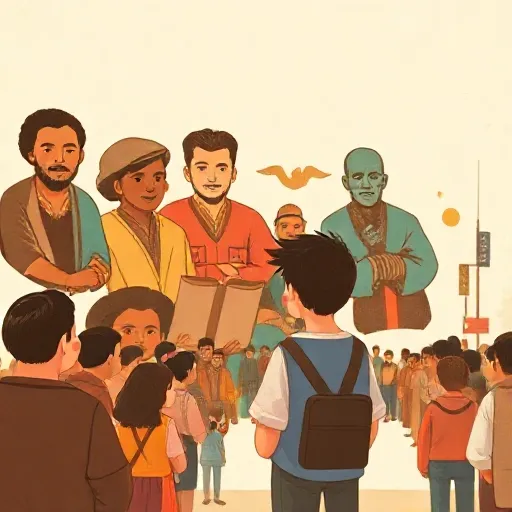
In 2009, the Mexican government tried to remove philosophy from public high schools. Many politicians saw it as useless, a luxury when the country needed engineers and businesspeople. But a group of professors and students formed the Observatorio Filosófico de México and pushed back. They argued that without training in asking deep questions—about justice, truth, and the good life—a society loses its ability to examine itself. Their campaign worked. In 2019, Mexico amended its constitution to declare that studying philosophy is a right of all Mexicans.
That modern victory echoes the whole history we have traveled. Sor Juana insisted that the right to think belongs to anyone, not just the powerful. The Hyperion Group showed that a people can turn even painful experience—colonialism, marginalization—into a thinker’s gold. Today, young philosophers in Mexico and the United States work together, translating old texts and writing new ones. They ask: What does it mean to live between cultures, in the state that Nahuatl speakers called nepantla, the “in-between”? That is not just a Mexican question. Every person who has ever felt a little out of place is already inside it. The fight to think for yourself, from the place you actually stand, never stops being important.
Think about it
- If you grew up in a place that others call “less important,” could your way of thinking be just as valuable as anyone else’s? How would you argue for it?
- Imagine a thinker from a conquered nation uses the language and ideas of the conquerors to argue for freedom. Is that original thinking, or is it just re-arranging borrowed pieces?
- Can a country’s whole personality be captured in a single philosophical idea, or does that oversimplify the millions of different lives inside it?